

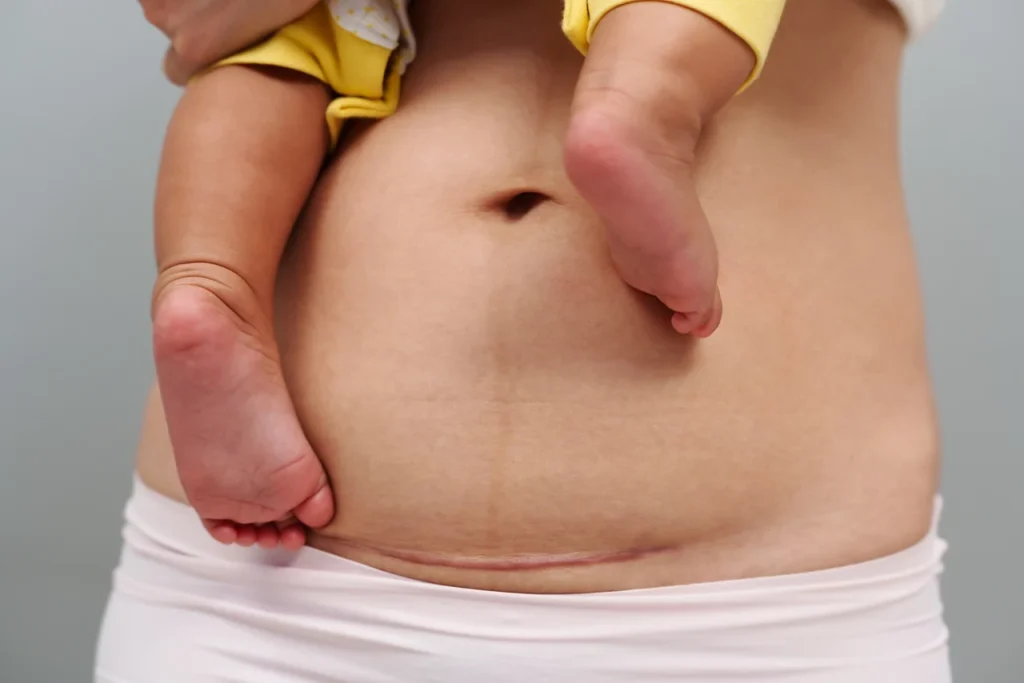
A cesarean section, often called a C-section, is a surgical procedure used to deliver a baby through an incision made in the abdomen and uterus. It may be planned before labor begins or become necessary during labor when a vaginal birth could pose a concern for the mother or baby.
For many families, hearing that a cesarean delivery may be needed can bring questions about why it is recommended, what happens during surgery, and how recovery will feel. Understanding the process can make the experience less uncertain and help expectant parents prepare for the days and weeks after birth.
What Is a Cesarean Section?
A cesarean section is an operation in which an obstetrician delivers the baby through surgical openings in the abdomen and uterus rather than through the birth canal.
A C-section can be planned (scheduled) or unplanned/emergency, depending on the circumstances. The decision is based on factors such as the mother’s health, the baby’s condition, pregnancy complications, previous delivery history, and how labor is progressing.
Although it is a common method of childbirth, a cesarean section is still major abdominal surgery and requires appropriate preparation and postoperative care.
Why Might a Cesarean Section Be Recommended?
A C-section may be recommended when a vaginal delivery is not considered the safest option for the mother, baby, or both. The specific reason varies from one pregnancy to another.
Some common situations include:
Baby Is in an Unfavorable Position
Most babies move into a head-down position before delivery. If the baby remains breech or lies sideways, the healthcare team may discuss cesarean delivery depending on the circumstances.
Labor Is Not Progressing
Sometimes the cervix does not continue to open despite adequate contractions, or the baby does not move down through the birth canal as expected. If continued labor could create additional concerns, a cesarean may be considered.
Concerns About the Baby
Changes in the baby’s heart rate or other signs of possible distress may lead the medical team to recommend delivery without further delay.
Placenta-Related Problems
Certain placental conditions can make vaginal delivery unsafe. For example, placenta previa, in which the placenta covers or is very close to the cervix, may require cesarean delivery.
Previous Uterine Surgery or Cesarean Delivery
A previous C-section does not automatically mean another cesarean is necessary. Depending on the type of previous uterine incision and other factors, some patients may be candidates for a vaginal birth after cesarean (VBAC). This decision should be discussed individually with an obstetrician.
Certain Maternal or Pregnancy Complications
Conditions affecting the mother or pregnancy may sometimes make cesarean delivery the safer option. The healthcare team considers the overall clinical situation rather than relying on a single factor.
Planned vs Emergency Cesarean Delivery
A planned cesarean is scheduled in advance when there is already a clear medical reason to expect that cesarean delivery will be the safest approach.
An emergency cesarean may become necessary during labor or pregnancy when circumstances change unexpectedly. This could include concerning changes in the baby’s condition, significant bleeding, or labor that is not progressing safely.
The term “emergency” can sound alarming, but the medical team will assess the situation quickly and explain what is happening as much as possible.
What Happens During a Cesarean Section?
Knowing what to expect can help reduce uncertainty.
1. Preparation Before Surgery
Before the procedure, the medical team reviews the pregnancy history, medications, allergies, and relevant health information. Monitoring is usually placed to check the mother’s vital signs and the baby’s heart rate.
An intravenous line may be used to provide fluids or medications, and the abdomen is prepared for surgery.
2. Anesthesia
Most cesarean deliveries are performed using regional anesthesia, such as a spinal or epidural anesthetic. This allows the mother to remain awake while preventing pain in the lower part of the body.
In certain circumstances, general anesthesia may be required.
3. Abdominal and Uterine Incisions
The obstetrician makes an incision in the lower abdomen and then creates an opening in the uterus. The baby is carefully delivered through these openings.
4. Delivery of the Baby
Once the baby is delivered, the umbilical cord is managed and the newborn is assessed by the appropriate medical team. When mother and baby are doing well, early skin-to-skin contact may be possible depending on the hospital’s procedures and clinical circumstances.
5. Closing the Incisions
After delivery, the placenta is removed and the uterus and abdominal incision are carefully closed. The surgical team monitors the mother throughout the procedure and afterward.
How Long Does Recovery Take?
Recovery after a cesarean section is different for every person. Because the procedure involves abdominal surgery, it generally requires more physical recovery than an uncomplicated vaginal birth.
During the first few days, it is common to experience:
- Pain or tenderness around the incision
- Tiredness and reduced mobility
- Difficulty getting comfortable while moving or changing position
- Vaginal bleeding after delivery
- Abdominal soreness when coughing, laughing, or getting out of bed
Pain relief and other medications may be provided according to the individual’s needs and medical situation.
As healing progresses, walking gradually and following postoperative instructions can support recovery. However, activities that place significant strain on the abdominal muscles may need to be avoided until the healthcare professional confirms they are appropriate.
Caring for the Incision After a C-Section
Looking after the surgical wound is an important part of recovery.
Keep the incision clean and follow the hospital’s instructions regarding bathing and wound care. Avoid unnecessary pressure on the area and wear comfortable clothing that does not irritate the wound.
Seek medical attention if there are signs such as:
- Increasing redness, swelling, or warmth around the incision
- Pus or unusual discharge
- Worsening pain
- Fever
- Opening of the wound
- Heavy bleeding or other concerning symptoms
These signs do not necessarily mean there is a serious complication, but they should be assessed promptly.
Returning to Everyday Activities
Recovery does not happen overnight. Many people gradually become more mobile over the first several weeks.
Practical steps can include:
- Walk gently as advised. Light movement can help with mobility and circulation.
- Avoid lifting heavy objects until your healthcare provider says it is safe.
- Accept help at home. Support with meals, household tasks, and childcare can make recovery easier.
- Rest when possible. Newborn care can make adequate rest difficult, so use opportunities to recover.
- Attend follow-up appointments. These visits allow your healthcare team to check healing and address concerns.
- Ask before restarting strenuous exercise. Your recovery should guide when you return to more demanding activities.
Emotional Recovery Matters Too
Physical healing is only one part of recovery after childbirth. Some parents may feel relieved, disappointed, anxious, exhausted, or emotionally overwhelmed after a cesarean delivery. These feelings can occur whether the procedure was planned or unexpected.
If difficult emotions persist or interfere with daily life, speaking with a healthcare professional is important. Emotional wellbeing deserves the same attention as physical recovery.
When Should You Seek Medical Help?
After a C-section, contact your healthcare provider promptly if you develop symptoms that concern you, particularly fever, worsening abdominal pain, significant wound changes, heavy bleeding, breathing difficulties, chest pain, severe headache, or swelling or pain in a leg.
Urgent symptoms such as severe breathing difficulty, chest pain, fainting, or heavy bleeding require immediate medical attention.
How Can You Prepare for a Cesarean Section?
If a planned C-section has been recommended, preparation can make the experience easier to manage.
Ask your obstetrician about:
- Why cesarean delivery is recommended
- What type of anesthesia is expected
- How the procedure will be performed
- Hospital stay and discharge arrangements
- Pain management after surgery
- Wound-care instructions
- When normal activities can be resumed
- Follow-up appointments
- Future pregnancy considerations
It can also help to arrange transportation, prepare essential items for the hospital, and organize support at home for the first days after delivery.
Frequently Asked Questions
Is a cesarean section painful?
Anesthesia is used during the operation to prevent pain during surgery. Afterward, soreness and discomfort around the incision are expected, but pain can usually be managed with medications recommended by the healthcare team.
How long does a C-section take?
The surgical delivery itself is often relatively quick, although the complete process includes preparation before surgery and monitoring afterward. The exact duration varies according to the circumstances and whether additional procedures are required.
Can I have a vaginal birth after a previous C-section?
Some people may be candidates for vaginal birth after cesarean (VBAC), while others may be advised to have another C-section. The decision depends on factors such as the previous uterine incision, medical history, current pregnancy, and available emergency care.
How long does it take to recover from a cesarean section?
Recovery varies from person to person. Many people gradually return to normal daily activities over several weeks, but complete healing can take longer. Your healthcare provider can give more personalized guidance based on your recovery.
What should I watch for after a C-section?
Pay attention to symptoms such as increasing pain, fever, worsening redness or discharge from the incision, heavy bleeding, breathing problems, chest pain, or significant swelling or pain in a leg. Contact a healthcare professional promptly if these occur.
Conclusion
A cesarean section can be an important and sometimes necessary method of childbirth when medical circumstances make it the appropriate option. Understanding why it may be recommended, what happens during the procedure, and how recovery works can help expectant parents approach delivery with greater preparation and realistic expectations.
Every pregnancy is different, so decisions about delivery should be made after discussing individual circumstances with a qualified obstetrician. For patients seeking professional guidance about pregnancy and childbirth, Dr. Mahsa Aghaei can help provide individualized medical assessment and discuss appropriate options based on each patient’s needs.