

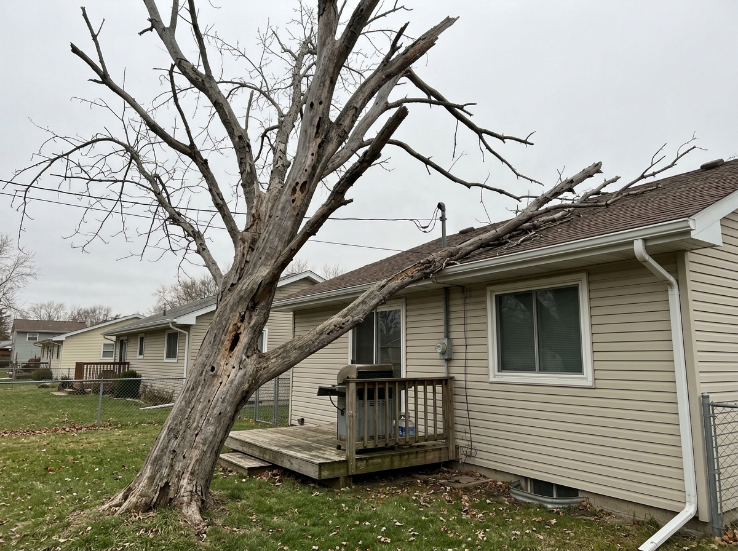
A dead tree can look harmless when it is standing quietly in the yard. The real danger often comes from what is happening inside the trunk and branches. As wood decays, the tree can lose the strength needed to support its own weight, making sudden breakage more likely.
The risk becomes more serious when the tree stands close to a house, garage, fence, driveway, or utility equipment. A falling trunk or heavy branch can cause major damage even when the tree is not especially large. Knowing the warning signs can help property owners take action before a failure happens.
Decay Can Weaken a Tree Without Making the Problem Obvious
A dead tree does not always show severe damage from the outside. Some of the internal wood may already be soft, hollow, or weakened while the outer surface still appears solid.
Cracks, peeling bark, fungal growth, cavities, and areas of missing wood can all point to advanced decay. However, the absence of these signs does not prove that the tree is stable. Internal deterioration can continue quietly and reduce how much weight the tree can safely carry.
Why Hollow Areas Matter Near Structures
A cavity does not automatically mean a tree will fall. The concern is how much sound wood remains around the weakened section and where that weakness occurs.
A large hollow near the trunk base, a major branch union, or another load-bearing section can reduce structural strength. When the tree is close to a structure, even a limited area of weakness deserves more attention because the consequences of failure are greater.
Dead Branches Can Fall Before the Main Trunk Does
One of the biggest risks around a dead tree may come from its branches rather than the entire tree. Dead limbs can become brittle and detach during wind, rain, or even minor movement.
A large branch can damage roof shingles, gutters, windows, vehicles, and fences when it drops. Branches hanging above walkways or frequently used parts of a property also create a direct safety concern.
Look for Branches With Visible Breakage
Large cracks, split limbs, missing bark, and branches that hang lower than they normally would deserve attention. Dead branches can also become loose at their attachment points as decay progresses.
Branches resting on other limbs can be especially difficult to judge from the ground. What looks stable may shift suddenly once wind or additional weight is applied.
Wind and Storms Can Turn a Weak Tree Into an Immediate Hazard
A tree that appears stable on a calm day may behave very differently during strong weather. Wind places additional force on the trunk and branches, while wet soil can reduce how firmly the root system holds the tree.
Storm conditions can also expose weaknesses that were already present. A dead tree beside a house has much less room for error when heavy limbs begin moving toward the structure.
Why Trees Near Roofs Need Extra Attention
Trees that lean toward a roof create a different level of concern than trees standing in an open part of the yard. A falling branch or trunk has a clear path toward the building.
Even smaller dead limbs can damage vents, gutters, siding, skylights, and other exposed areas. The closer the tree is to the structure, the more important careful removal planning becomes.
Roots Can Affect the Stability of a Dead Tree
The trunk is not the only part that matters. The root system helps anchor the tree, and decay or soil problems can reduce that support.
Signs of root-related trouble can include exposed roots, soil movement, a noticeable lean, or raised ground near the base. These symptoms should not be ignored when a dead tree is already weakened.
A dead tree with compromised roots can become unstable faster than expected, especially after heavy rain or strong winds. Its location should be considered along with its visible condition.
When Dead Tree Removal Becomes the Safer Choice
Some dead trees may be monitored for a period when they are away from people and structures. That situation changes when the tree can reach a building, driveway, power equipment, or another frequently used area.
Dead tree removal may be the safer option when the trunk is badly decayed, large branches are breaking, the tree is leaning toward a structure, or the root area appears unstable. The decision should focus on both the tree’s condition and what could be damaged if it fails.
Avoid Trying to Force a Risky Tree Down
Cutting into a dead tree without understanding how it is weakened can create unpredictable movement. Decayed wood may not respond like healthy wood, and compromised branches can break during cutting.
Trees close to buildings also leave little room for mistakes. The goal is not simply to get the tree onto the ground. It is to control where the trunk and branches can move while protecting nearby property.
Prepare the Property Before Work Begins
A safe removal plan should account for everything within the tree’s potential fall and drop zones. This may include roofs, fences, sheds, vehicles, landscaping, driveways, and overhead lines.
Moving vehicles and keeping people away from the work area can reduce unnecessary risks. It is also useful to identify access points before work begins so equipment and cut sections can be handled without creating additional property damage.
Consider What Happens After the Tree Comes Down
The cleanup should be part of the plan from the start. Large trunk sections and branches can block driveways, damage turf, or create another set of hazards if they are left in awkward locations.
Planning the final placement, cutting, hauling, and cleanup helps keep the property usable after the tree is removed. It also prevents a dangerous tree from being replaced by an equally difficult debris problem.
Conclusion
A dead tree becomes a serious property concern when decay, weak branches, poor root stability, or a dangerous location combine to increase the chance of failure. Trees standing near homes and other structures deserve closer attention because even one falling limb can cause expensive damage. Understanding structural integrity helps explain why visible damage is only part of the problem. A careful assessment and properly planned removal can reduce the risk before the tree causes an emergency.