

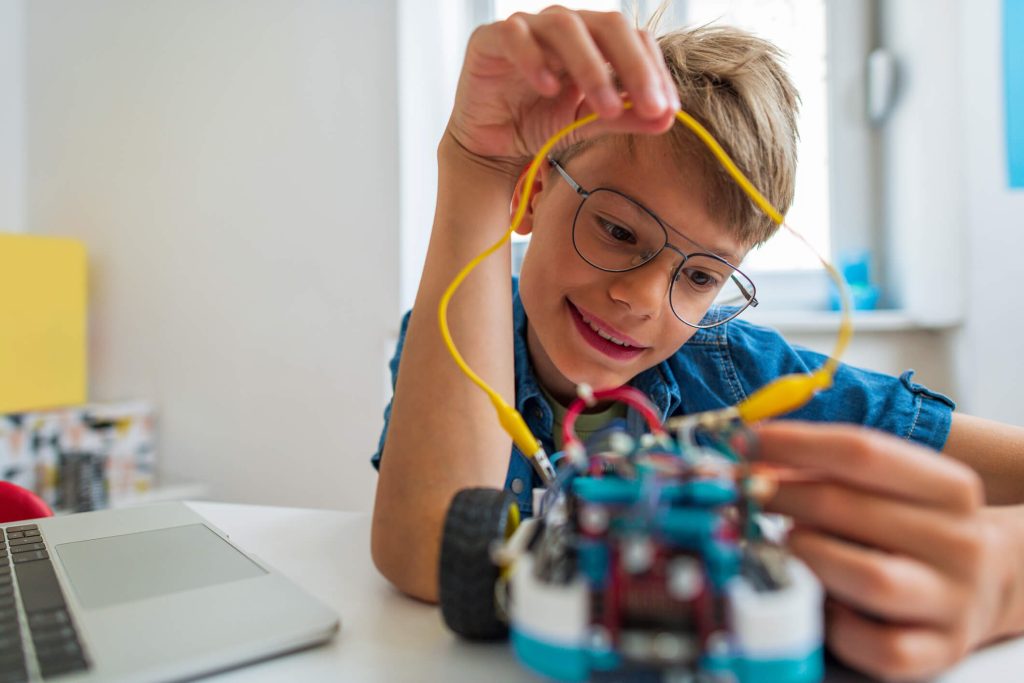
Choosing the right learning program for your child can feel like searching for the right puzzle piece. There may be plenty of options for robotics courses for kids, but not every program offers the same quality, teaching approach, projects, or learning environment. If you are looking for a robotics program in New Jersey, it is worth taking some time to understand what makes a training center genuinely valuable.
Robotics is no longer just about assembling a robot and watching it move. Today’s programs can introduce children to coding, engineering, electronics, problem-solving, artificial intelligence, automation, mathematics, and creative design. A good program should make these concepts understandable and exciting while giving children opportunities to build things with their own hands.
Parents searching for a robotics course in New Jersey often compare location, curriculum, class schedules, fees, instructors, projects, and age groups. Those factors matter, but there is another important question: will your child actually enjoy learning there? When children are curious and engaged, technical skills become much easier to develop.
Why Robotics Education Matters for Kids
Robotics gives children an opportunity to turn ideas into something they can see and test. Instead of only reading about how machines work, they can design, build, program, troubleshoot, and improve their own creations. That hands-on process can make STEM concepts much more meaningful.
A strong robotics program can also develop skills that extend beyond technology. Children learn how to approach problems logically, work through mistakes, communicate ideas, cooperate with teammates, and keep trying when the first solution does not work.
Robotics Builds Problem-Solving Skills
A robot rarely works perfectly on the first attempt. A child might write code that does not run, connect a component incorrectly, or discover that the robot does not respond as expected. Each problem becomes an opportunity to investigate what happened and find a solution.
This is one reason quality robotics courses for kids should include practical challenges rather than focusing entirely on lectures. Children learn best when they can experiment, make mistakes, ask questions, and try again.
Robotics Connects Multiple STEM Subjects
Robotics naturally brings several subjects together. Coding controls behavior, mathematics supports measurements and logic, engineering influences construction, and science helps children understand movement, energy, sensors, and systems.
That combination makes robotics an excellent foundation for broader STEM learning. A child who starts with a simple robot today may later become interested in programming, artificial intelligence, mechanical engineering, electronics, or automation.
Start by Understanding Your Child’s Interests
Before comparing a robotic training center for kids in NJ, think about what your child actually enjoys. Does your child love building things? Are they interested in computers? Do they enjoy solving puzzles, experimenting, or creating games?
Some children are naturally drawn to mechanical construction, while others become excited by coding and software. The best learning environment gives children room to explore different parts of robotics instead of forcing every student through exactly the same experience.
Consider Your Child’s Age and Experience
Age is an important factor when choosing robotics training. A beginner who has never programmed before needs a very different introduction than a teenager who already understands coding concepts.
Look for programs that divide learning appropriately by age, experience, and skill level. A well-structured program should be challenging enough to encourage growth without becoming so difficult that a child loses confidence.
Look for Beginner-Friendly Programs
Your child does not need to know programming before joining robotics. In fact, many children begin because they are curious and want to discover how robots work.
Beginner-friendly robotics classes near me should introduce concepts gradually. Instructors can start with simple building and programming activities before moving toward more complicated challenges involving sensors, automation, algorithms, or advanced robotics.
Check the Curriculum Before Enrolling
A robotics center may look impressive from the outside, but the curriculum tells you much more about what your child will actually learn. Ask whether the program has a structured learning path and what skills students are expected to develop.
A good curriculum should progress naturally. Children might begin with basic robotics concepts, move into programming and problem-solving, and eventually work on increasingly complex projects.
What Should a Robotics Curriculum Include?
A well-rounded program can include robotics fundamentals, coding, engineering concepts, electronics, sensors, automation, computational thinking, and project-based learning. Depending on age, it may also introduce artificial intelligence and advanced programming.
The curriculum should not simply consist of disconnected activities. Each project should build upon skills learned previously so children can see their progress and understand why they are learning each concept.
Hands-On Projects Matter
Ask how much time students spend actually building and programming. Hands-on work is one of the most important parts of effective robotics education.
If children spend most of the class listening to explanations while rarely touching equipment, they may not receive the practical experience parents expect from a robotics program.
Evaluate the Teaching Method
The instructor can make or break a robotics class. Even an excellent curriculum can become frustrating if the teaching style does not match the needs of children.
Look for instructors who can explain technical concepts in simple language. More importantly, they should encourage children to think instead of immediately giving them every answer.
Ask About Class Size
Class size can significantly affect the learning experience. In a very large class, an instructor may struggle to provide individual guidance when students encounter technical problems.
Smaller groups can give children more opportunities to ask questions, receive feedback, and participate directly in projects. When evaluating robotics courses center for kids in New Jersey, ask about the typical student-to-instructor ratio.
Look for Mentorship and Encouragement
Children need encouragement when learning something unfamiliar. Robotics involves trial and error, so instructors should create an environment where mistakes are treated as part of learning rather than something embarrassing.
A supportive instructor can help a child develop confidence while still encouraging independent thinking. That balance is especially valuable for children who are initially nervous about technology.
Compare Different Robotics Programs in New Jersey
Do not choose the first program you find simply because it appears nearby. Compare several options and look at what each one offers.
When searching for robotics courses camp New Jersey, you may encounter after-school programs, weekend classes, holiday camps, summer camps, and specialized robotics workshops. Each format can serve a different purpose.
Check Class Schedules and Location
Convenience matters. Even an excellent program may not work well if the commute is difficult or the schedule conflicts with school and family activities.
When searching online for robotics classes near me, check the actual location, class timing, transportation requirements, and whether the center offers online options where appropriate.
Compare Short-Term Camps With Long-Term Courses
A robotics camp can be an excellent way for a child to explore robotics for the first time. However, a longer-term course can provide greater continuity and allow children to develop skills progressively.
If your child becomes genuinely interested, consider moving from a short camp experience into a structured program. Consistent practice can help turn initial curiosity into meaningful technical ability.
Look for Project-Based Learning
One of the strongest signs of a quality robotics program is the presence of real projects. Children should have opportunities to build something, test it, identify problems, and improve the design.
Project-based learning makes robotics feel less like a traditional classroom subject and more like a creative workshop. Instead of memorizing information, children learn by doing.
Ask What Students Actually Build
Before enrolling, ask for examples of previous student projects. You can ask whether children build autonomous robots, sensor-based systems, programmable machines, or other engineering projects.
The specific project will depend on age and curriculum, but the important point is that children should have tangible outcomes from their learning.
Look for Challenges Instead of Repetitive Activities
A good robotics course should become progressively more challenging. If students repeatedly complete nearly identical activities without learning new concepts, their growth may be limited.
The best programs introduce new problems that encourage students to apply what they already know in creative ways.
Check Whether the Center Uses Modern Technology
Technology changes quickly, and children’s STEM education should reflect that reality. When evaluating the best robotics courses for kids, ask whether the center regularly updates its tools, projects, and teaching methods.
Modern robotics education can connect robotics with coding, artificial intelligence, machine learning, IoT, automation, and digital design. Children do not need to master everything at once, but exposure to current technologies can help them understand where STEM skills can lead.
Coding Should Be Part of Robotics
Robotics and coding naturally complement each other. A child can physically build a robot, but programming is what allows that robot to make decisions and perform tasks.
A strong program should introduce programming at an age-appropriate level. Younger students may begin with visual or block-based programming, while older learners can gradually move toward text-based languages and more advanced concepts.
Consider Safety and the Learning Environment
Parents should also evaluate the physical learning environment. Robotics involves hardware, tools, electronic components, batteries, and sometimes mechanical equipment.
The training center should maintain an organized environment where children can work safely. Equipment should be appropriate for the students’ age and experience, and instructors should explain safe handling procedures.
A Positive Environment Encourages Creativity
Children learn more effectively when they feel comfortable asking questions and sharing ideas. A robotics center should encourage experimentation rather than making children afraid of getting something wrong.
Think of the classroom as a laboratory. A failed experiment is not wasted time if the child understands what went wrong and learns how to improve the next attempt.
Ask About Progress and Assessments
Parents naturally want to know whether their child is actually improving. A quality training center should have some way of monitoring learning progress.
This does not necessarily mean traditional exams. Project reviews, practical challenges, demonstrations, skill milestones, and instructor feedback can all help show development.
Look for Visible Skill Development
Over time, you should be able to see your child’s confidence increasing. They may begin explaining how a sensor works, writing their own code, troubleshooting a robot, or suggesting improvements without being prompted.
Those moments can be more meaningful than a test score because they demonstrate practical understanding.
Why Brainy n Bright Stands Out in New Jersey
When parents are looking for a robotics training center for kids in NJ, Brainy n Bright is an option worth considering for children who want hands-on STEM and robotics learning.
Brainy n Bright focuses on helping young learners explore technology through practical education. Its approach connects robotics with broader STEM skills, encouraging children to develop creativity, logical thinking, problem-solving, and technical confidence.
A STEM-Focused Learning Approach
Robotics works best when children understand that it is part of a larger technology ecosystem. Brainy n Bright’s STEM-oriented approach can help learners explore the relationship between robotics, coding, engineering, science, and technology.
Rather than treating robotics as an isolated activity, children can use it as a pathway toward understanding how real-world technology is designed and developed.
Designed for Young Technology Learners
Children have different learning styles, and robotics education should give them room to explore. Brainy n Bright aims to make technology learning approachable and engaging for young learners through practical activities and structured instruction.
For parents searching for a best robotics training institute for kids, the combination of STEM education, hands-on learning, and skill development is an important factor to consider.
Questions to Ask Before Choosing a Robotics Center
Before making your final decision, prepare a short list of questions. A few minutes of research can prevent you from choosing a program that does not match your child’s needs.
Ask about curriculum, instructor experience, class size, projects, equipment, age groups, schedules, progress tracking, and trial opportunities. You can also ask how the program supports beginners who have never taken robotics classes before.
Can You Visit or Try a Class?
If possible, visit the center or ask whether a trial class is available. Watching an actual class can tell you a lot about the teaching environment.
Pay attention to whether children are actively participating, whether instructors interact with students, and whether the classroom feels organized and encouraging.
How to Identify the Best Robotics Courses for Kids
The phrase “best” means different things to different families. The closest center is not automatically the best, and the most expensive program is not necessarily the most effective.
The right choice should match your child’s age, interests, experience, learning goals, schedule, and personality. If your child enjoys hands-on activities and leaves class excited to tell you what they built, that is a very positive sign.
Think About Long-Term Learning
Robotics should ideally be viewed as a journey rather than a one-time activity. Children can start with simple projects and gradually progress toward coding, automation, AI, engineering, and advanced robotics.
A center that offers room for progression can be more valuable than a program that focuses only on short-term entertainment.
Benefits of Choosing a Dedicated Robotics Training Center
A dedicated robotic training center for kids in nj can provide a more focused environment than occasional technology activities. Children can develop consistent skills while working with instructors who understand STEM education.
Regular classes also allow students to revisit concepts, build on previous projects, and become increasingly independent. That continuity can make a significant difference in how confidently a child approaches technical challenges.
Robotics Can Build Future-Ready Skills
Nobody can predict exactly which technologies today’s children will use in their future careers. However, skills such as problem-solving, computational thinking, creativity, collaboration, and adaptability are likely to remain valuable.
That is why robotics education can be more than a fun extracurricular activity. It can help children develop the mindset needed to understand and participate in a technology-driven world.
Making the Final Decision
Once you have compared several options, narrow your choices to two or three programs. Look beyond marketing claims and focus on what your child will actually experience every week.
Consider curriculum quality, instructors, projects, class size, learning environment, convenience, and opportunities for progression. Most importantly, consider whether the program creates genuine curiosity.
If you are searching for a robotics courses center for kids in New Jersey, Brainy n Bright can be considered as a STEM and robotics learning option for families looking to introduce children to hands-on technology education.
Conclusion
Choosing the right robotics program for your child in New Jersey does not have to be complicated. Start with your child’s interests, identify an age-appropriate curriculum, evaluate the instructors, check the learning environment, and look closely at the projects students actually complete.
The best robotics courses for kids should do more than teach children how to make a machine move. They should encourage curiosity, creativity, logical thinking, experimentation, collaboration, and confidence. When children are given the freedom to build, test, fail, and improve, robotics becomes a powerful way to learn.
For parents searching for a robotics course in New Jersey, robotics classes near me, or a reliable robotics training center for kids in NJ, Brainy n Bright is worth exploring as a STEM-focused learning option. With the right guidance, a simple robotics project today can become the first step toward a much bigger interest in coding, engineering, AI, and technology tomorrow.
FAQs About Robotics Training Centers for Kids in NJ
1. What should I look for in robotics courses for kids?
Look for an age-appropriate curriculum, experienced instructors, hands-on projects, suitable class sizes, modern equipment, and opportunities for children to progress. A good program should also make learning enjoyable rather than turning robotics into another stressful academic activity.
2. Are robotics courses suitable for beginners?
Yes. Children do not need previous robotics or programming experience to begin. Beginner programs should introduce basic concepts gradually and give students plenty of opportunities to practice through simple projects.
3. How can I find robotics classes near me in New Jersey?
You can search for robotics classes near me online and then compare centers based on location, curriculum, age groups, schedules, instructor experience, projects, and reviews. It is also helpful to contact the center directly and ask about trial classes or program details.
4. Is a robotics camp different from a regular robotics course?
Yes. A robotics courses camp New Jersey program is often shorter and more intensive, making it useful for exploration during school breaks. Regular courses generally provide more consistent learning over a longer period and may allow students to progress through increasingly advanced topics.
5. Why consider Brainy n Bright for robotics training?
Brainy n Bright focuses on STEM and technology education for young learners, with robotics serving as an important part of hands-on learning. Parents looking for a robotic training center for kids in NJ can explore its approach to robotics and STEM education to determine whether it fits their child’s age, interests, and learning goals.