

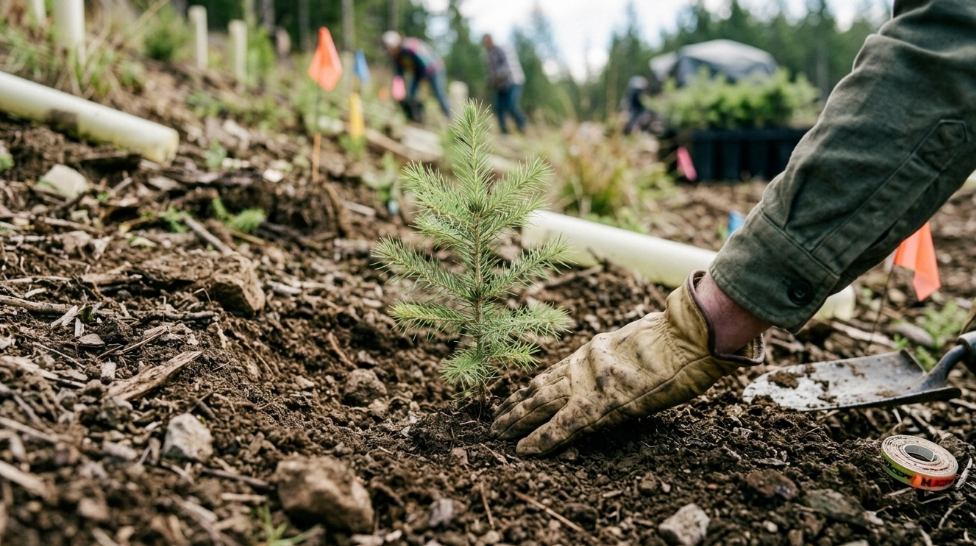
A tree can look perfectly healthy when it is first planted, yet still struggle because of what is happening below the soil. The roots need enough space, air, moisture, and suitable soil to expand beyond the original root ball. When those conditions are poor, growth can slow, leaves may wilt, and the tree may remain unstable.
Root depth plays an important role, but it is often misunderstood. Many people assume that planting a tree deeper gives the roots more room to grow. In reality, most tree roots develop through the upper soil layers where oxygen and moisture are easier to access. Planting too deeply can actually create problems.
Soil conditions matter just as much. Dense clay, loose sand, compacted ground, and poorly drained areas all affect how roots develop. Understanding these conditions before and during tree planting can make a major difference in how quickly a young tree becomes established.
Why Root Depth Matters During Establishment
A young tree depends heavily on its existing root ball during the early period after planting. At the same time, it needs to produce new roots that extend into the surrounding soil. That expansion determines whether the tree can eventually access more water and nutrients and develop enough structural support.
The goal is not to place the tree as deep as possible. The goal is to position the root system at the depth where it can function normally while giving roots room to spread outward.
Most Tree Roots Grow Outward More Than Downward
Tree roots usually form a broad network close to the soil surface rather than growing straight down like a stake. This allows them to access oxygen and moisture within the upper soil profile.
That broad pattern is one reason a tree can become unstable when the surrounding soil is poorly prepared. Roots need lateral space to develop a strong support system. A narrow or heavily compacted planting area can restrict that growth even when the original planting hole looks large.
Roots can still grow deeper when the soil below is loose and conditions are favorable. However, deeper growth should happen naturally rather than being forced through excessive planting depth.
The Root Flare Helps Identify the Proper Depth
One of the easiest ways to judge planting depth is to look for the root flare. This is where the trunk begins to widen before the major roots extend into the soil. The flare should generally remain visible above the finished soil level. When the trunk enters the ground with no visible widening, the tree may be sitting too deeply.
This matters because the lower portion of a tree trunk is not meant to remain buried. Constant contact with damp soil can create conditions that stress the bark and reduce healthy air exchange around the root system.
Planting Too Deep Can Create Long-Term Stress
Deep planting does not simply put roots farther from the surface. It changes the environment surrounding the trunk and roots. Deeper soil layers can contain less oxygen, particularly when drainage is poor. Water may also remain around the root zone for longer periods. These conditions can interfere with normal root function and may not become obvious until the tree has been struggling for some time.
A tree can therefore receive enough water and still show signs of stress because the roots cannot use that water effectively.
How Soil Type Changes Root Growth and Water Movement
Soil affects nearly every part of root development. Its texture determines how easily water moves, how much air remains in the soil, and how much resistance roots encounter as they expand.
A healthy root zone needs a useful balance. Roots need moisture, but they also need air. Soil that stays saturated for too long can be as problematic as soil that becomes dry too quickly.
Clay Soil Can Restrict Roots When It Becomes Dense
Clay soil contains very small particles that pack closely together. This allows it to retain moisture, but dense clay can become difficult for roots to penetrate. When wet, clay may stay saturated for extended periods. When it dries hard, it can become difficult for new roots to move through. Compaction makes both problems worse.
This does not mean trees cannot grow in clay soil. Many can. The bigger concern is whether the clay has enough structure and drainage to support healthy root expansion.
Sandy Soil Loses Moisture More Quickly
Sandy soil has larger spaces between particles, allowing water to drain more easily. That can be useful in areas where heavy soil causes drainage problems, but it also means moisture may disappear quickly during hot or dry weather.
A young tree has a limited root system, so it cannot always reach deeper or farther soil in search of water. This can make newly planted trees more sensitive to dry conditions in sandy locations.
The answer is not to keep the soil constantly wet. Instead, the planting area should be managed so roots receive adequate moisture while still having enough oxygen.
Soil Structure Matters Beyond Soil Texture
Two yards can have similar soil types and still provide very different conditions for roots. One may have loose, well-structured soil while the other has been compressed by construction equipment or repeated traffic.
That is why simply identifying soil as clay, sand, or loam does not tell the whole story. The condition of the soil at the actual planting site is what matters.
How Soil Compaction Limits Root Development
Compaction is common around homes, especially on properties that have recently been built, renovated, graded, or landscaped. Heavy equipment can press soil particles together long before a tree is planted.
The problem may not be visible from the surface. The ground can look normal while a dense layer below prevents roots from expanding.
Compacted Soil Leaves Less Room for Air
Healthy soil contains spaces filled with both water and air. Compaction reduces those spaces and makes it harder for oxygen to move through the root zone.
Roots need oxygen for normal function. When the soil remains dense and poorly aerated, root activity can decline and establishment can become much slower.
This is particularly important for young trees because their new roots are still developing and have fewer options for moving around unfavorable conditions.
A Loose Planting Hole May Not Solve Compaction
One common mistake is preparing a soft, loose hole and leaving the surrounding soil untouched. The tree may grow well inside that small area at first, but roots eventually reach the compacted ground outside the hole.
When that happens, root expansion may slow dramatically.
A better approach is to improve the broader planting area when possible. Roots benefit from a connected zone where they can move naturally into surrounding soil rather than becoming trapped in a small pocket of loose material.
How Drainage and Moisture Affect Root Establishment
Water is one of the most important resources for a newly planted tree, but watering needs to be balanced with drainage. Roots cannot function well in soil that is either extremely dry or saturated for long periods.
Good establishment depends on keeping enough moisture available while allowing excess water to move away.
Poor Drainage Can Keep Roots Under Stress
Low areas, heavy soils, and compacted layers can cause water to collect around the roots. After rainfall, check whether water remains in the planting area for an unusually long time.
Persistent puddling is a warning sign. So is soil that stays muddy long after surrounding areas have dried.
If drainage is a problem before planting, it is better to address the site conditions first than to assume frequent watering will solve everything later.
Overwatering Can Be Harder to Notice Than Underwatering
Wilting does not always mean a tree needs more water. Roots exposed to saturated soil can also become stressed, which may produce symptoms that look similar to drought stress.
Before watering, check the soil rather than relying only on the appearance of the leaves. Moisture should be available within the root zone without leaving the area constantly saturated.
Watering should also change with weather. A young tree planted during a rainy period has different needs from one planted during a hot, dry stretch.
Preparing the Soil for Better Root Expansion
Good establishment starts with giving roots a reasonable environment from the beginning. The planting hole, root ball, surrounding soil, and finished grade all need to work together.
The process does not require complicated techniques. It mainly requires attention to the conditions that roots actually need.
Inspect the Root Ball Before Planting
Container-grown trees can develop roots that circle around the inside of the container. These roots may continue following the same pattern after planting if they are left tightly compressed.
Before planting, inspect the root ball and look for circling or densely packed roots. Also check whether soil has been piled against the trunk and hidden the natural root flare.
Handling the root system carefully matters because damaged roots can reduce the tree’s ability to establish quickly.
Prepare the Surrounding Soil, Not Just the Hole
The planting hole should allow the roots to spread comfortably, but the surrounding ground also needs to be usable.
If roots leave the hole and immediately encounter dense, compacted soil, their expansion can be restricted. Where site conditions allow, loosening the broader planting area can create a more continuous root zone.
Soil amendments should also be used thoughtfully. Creating a dramatically different soil pocket inside the hole can encourage roots to remain there instead of moving naturally into the surrounding ground.
Keep the Trunk and Root Flare at the Correct Height
Once the tree is positioned, the soil should support the root system without burying the lower trunk.
Do not pile excess soil against the trunk. The root flare should remain visible, and the finished grade should not leave the trunk sitting in a deep depression that collects water.
The final surface should provide stable support while allowing rainfall and irrigation to move away appropriately.
How to Recognize Healthy Establishment After Planting
A newly planted tree does not need to produce rapid top growth to be considered healthy. Much of its early energy may be directed toward rebuilding and extending the root system.
Instead of looking for dramatic changes, pay attention to consistent signs that the tree is adapting to its new environment.
Useful signs include:
- New growth appearing during the normal growing period
- Foliage that remains reasonably firm and healthy
- Soil that stays moist without remaining saturated
- Gradual improvement in stability as roots spread
- No persistent damage around the trunk flare
- Growth that continues without repeated unexplained decline
Some temporary transplant stress is normal. A tree may slow its visible growth after being moved because its root system has been disturbed.
The bigger concern is a pattern of continued wilting, declining foliage, poor stability, or soil that remains excessively wet or dry. Those signs suggest the root environment may need attention.
How Root Conditions Affect the Tree for Years After Planting
The effects of poor root conditions are not always immediate. A tree may survive its first season and still develop structural or health problems later because the root system never had enough room or suitable soil to establish properly.
A tree with restricted roots may have difficulty handling drought, strong winds, and seasonal stress. It may also grow more slowly than expected because its ability to access water and nutrients remains limited.
That is why planting decisions should be viewed as long-term decisions rather than short-term landscaping tasks.
The quality of the root zone influences how the tree performs years after the original planting. Giving roots the right depth, usable soil, moisture balance, and room to expand creates a stronger foundation for future growth.
Conclusion
Root depth and soil conditions work together to determine how successfully a newly planted tree becomes established. Planting too deeply can create oxygen and moisture problems around the roots and trunk, while compacted or poorly drained soil can restrict root expansion even when the tree receives proper care.
The strongest results come from paying attention to the entire root environment rather than focusing only on the size of the planting hole. Soil structure, drainage, root flare position, moisture, and surrounding space all influence how well a tree adapts.
The rhizosphere is the soil zone directly influenced by plant roots, where roots interact with moisture, nutrients, microorganisms, and surrounding soil. Understanding this small but important underground environment helps explain why the conditions around a tree’s roots can determine its health long after planting is finished.