

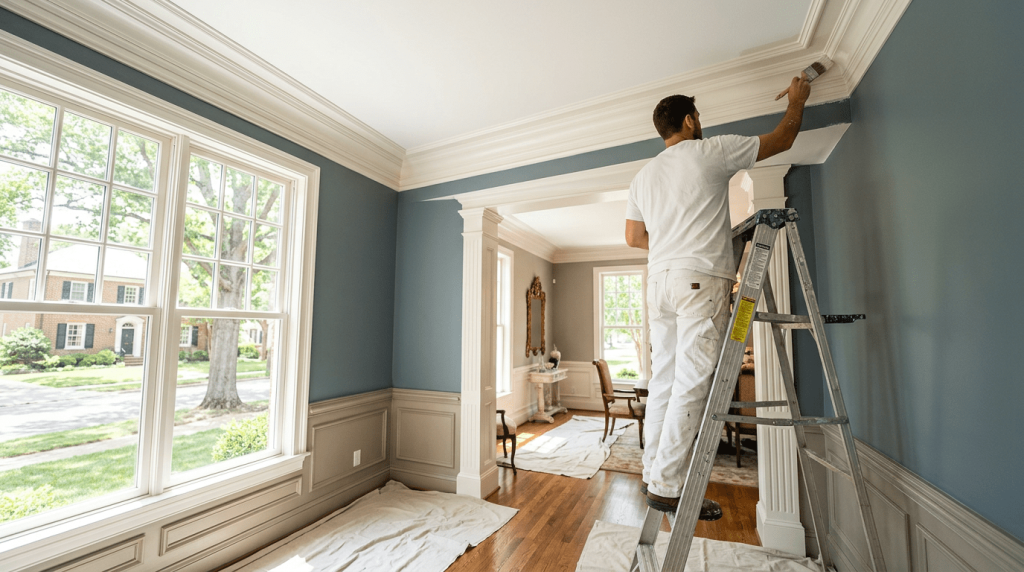
When a business needs a fresh interior finish, proper wall preparation makes a major difference in the final result. Commercial interior painters in Cleveland, OH, do more than apply paint to walls. They inspect the surface, identify damage, remove dirt, repair imperfections, and create a clean base for the new coating. Good preparation helps paint adhere properly and gives the finished walls a smooth and consistent appearance. It can also help reduce problems such as peeling, cracking, uneven coverage, and visible patches. The process may vary depending on the condition and type of wall, but professional painters generally follow several important preparation steps before opening a paint can.
Inspecting the Walls Before Painting
Commercial painters begin by checking the walls carefully. They look for cracks, holes, loose paint, stains, moisture damage, uneven surfaces, and other conditions that could affect the coating. This inspection helps determine what preparation work the surface needs before painting begins.
Checking Surface Conditions
A wall may look ready from a distance but still have small defects that become obvious after fresh paint is applied. Painters check drywall, plaster, concrete, and previously painted surfaces for damage and weak areas. They also examine corners, seams, and repaired sections.
Tip, Never use fresh paint to hide major wall damage. Repairing the surface first usually produces a cleaner and longer lasting finish.
Cleaning and Removing Surface Contaminants
Walls collect dust, fingerprints, grease, dirt, and other contaminants during normal business operations. Painters clean these materials before applying primer or paint. A clean surface gives the coating a better chance to bond properly and helps prevent uneven results.
Surface Cleaning and Preparation
Depending on the building and wall condition, painters may use appropriate cleaning solutions, sanding methods, scraping tools, or other preparation techniques. Loose paint and surface residue need to be removed instead of being covered with another layer. Commercial painting contractors also protect nearby floors, fixtures, doors, and equipment during preparation.
Important preparation steps can include
Removing loose or peeling paint.
Cleaning dust, dirt, and grease.
Sanding rough or uneven sections.
Protecting floors and nearby surfaces.
Preparing repaired areas for primer and paint.
Repairing Cracks Holes and Imperfections
After cleaning, commercial interior painters repair visible wall imperfections. Small holes, cracks, dents, and damaged drywall can affect the appearance of the finished coating. Filling and smoothing these areas creates a more uniform surface and helps prevent repaired sections from standing out after painting.
Drywall Repair and Smoothing
Painters may fill nail holes, repair minor cracks, smooth damaged drywall, and sand rough patches. Larger problems may require additional drywall repair before painting can continue. Once repairs are complete, the surface is sanded and cleaned so loose dust does not interfere with the coating.
Tip, Pay close attention to repaired sections because fresh paint can make uneven patches more noticeable when the surrounding wall has a smooth finish.
Priming and Final Surface Checks
Priming is an important part of commercial interior painting when the wall condition or existing coating requires it. Primer can help create a consistent base and improve paint adhesion. It can also help cover repaired sections and differences between old and new surfaces.
Applying the Right Primer
Painters select primer based on the wall material, existing finish, and type of paint being applied. After priming, they inspect the walls again for remaining imperfections. Any areas that still need attention are corrected before the final coating begins. This final check helps maintain consistent coverage across offices, hallways, retail spaces, and other commercial interiors.
A properly prepared wall gives interior paint a stronger foundation. Professional preparation also makes the actual painting process more efficient because fewer surface problems need attention after the coating is applied.
Frequently Asked Questions
What Is Wall Preparation in Commercial Painting.
Wall preparation includes cleaning, sanding, repairing, priming, and checking surfaces before applying interior paint.
Why Do Commercial Painters Sand Walls.
Sanding helps smooth rough areas, remove loose material, and create a better surface for paint and primer.
Do Commercial Painters Repair Drywall.
Many commercial interior painters handle minor drywall repairs, while larger structural damage may require specialized repair work.
Is Primer Always Necessary.
Primer is not required for every project. Painters determine whether it is needed based on the wall condition, existing coating, and selected paint.
How Long Does Wall Preparation Take.
The time depends on the size of the building, wall condition, repairs required, and preparation methods used.
Can Dirty Walls Be Painted Directly.
Painting over dirt, grease, or loose material can lead to poor adhesion and an uneven finish. Proper cleaning should come first.