

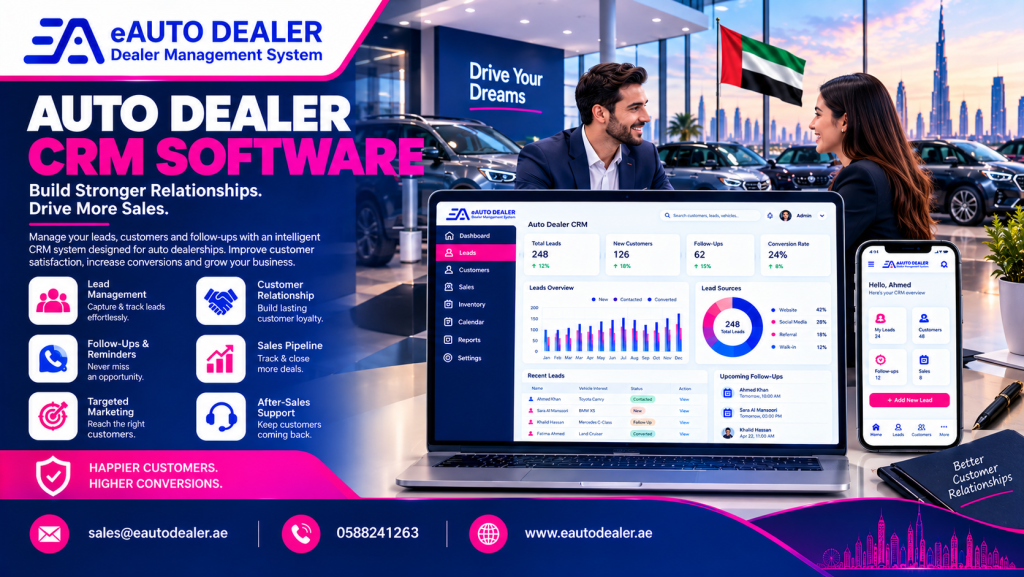
Managing customer relationships is one of the most important parts of running a successful car dealership. Sales teams handle leads from websites, social media, phone calls, online marketplaces, and showroom visits, while also managing vehicle inquiries, test drives, quotations, negotiations, and follow-ups. When this information is scattered across spreadsheets and different applications, important opportunities can be missed. A centralized CRM can bring these activities together and create a more organized sales process. For dealerships looking to improve lead management and customer engagement, Auto Dealer CRM Software provides a dedicated solution for managing automotive sales and customer relationships.
What Is Auto Dealer CRM Software?
Auto Dealer CRM Software is a customer relationship management platform designed specifically for car dealerships, used-car businesses, vehicle traders, and automotive sales teams. It helps businesses capture leads, organize customer information, track interactions, manage follow-ups, and monitor sales opportunities.
Unlike a general CRM, an automotive-focused platform can connect customer information with vehicle inventory and dealership processes. Sales representatives can view customer requirements alongside available vehicles, helping them provide more relevant options throughout the buying journey.
A dealership CRM can typically manage:
- Customer profiles
- Sales leads and inquiries
- Vehicle preferences
- Follow-up activities
- Test-drive appointments
- Quotations
- Sales opportunities
- Communication records
- Sales pipeline stages
- Performance reports
Why Do Car Dealers Need CRM Software?
A customer may interact with a dealership several times before purchasing a vehicle. They may ask for vehicle details, compare different models, schedule a test drive, request a quotation, negotiate the price, and return later to complete the purchase.
Without a structured system, sales representatives may lose track of conversations or forget pending follow-ups. CRM software creates a centralized environment where customer information and sales activities can be organized.
An auto dealer CRM can help businesses:
- Capture leads from multiple channels
- Assign leads to sales representatives
- Track customer preferences
- Manage follow-ups
- Connect customers with suitable vehicles
- Monitor sales opportunities
- Analyze salesperson activity
- Maintain customer history
Key Features of Auto Dealer CRM Software
Lead Capture and Management
Lead management allows dealerships to collect inquiries from different sources and organize them according to their status, source, vehicle interest, and assigned salesperson.
Managers can monitor new, active, qualified, converted, and closed leads from a centralized dashboard.
Customer Profile Management
A detailed customer profile can contain contact information, vehicle preferences, previous inquiries, communication history, appointments, quotations, and sales records.
Having this information in one place helps sales representatives understand the customer’s requirements before continuing the conversation.
Follow-Up Management
Car sales often require several follow-ups. A potential buyer may need additional vehicle information, financing details, a second appointment, or more time before making a decision.
CRM software can help sales teams create follow-up tasks, schedule reminders, and monitor pending activities. This creates a more consistent approach to customer communication.
Vehicle Inventory Integration
Connecting CRM with vehicle inventory is particularly valuable for automotive businesses. Sales representatives can search available stock based on customer requirements.
Common search criteria include:
- Make and model
- Vehicle type
- Price range
- Model year
- Mileage
- Features
- Location
- Availability
This allows sales teams to quickly identify vehicles that may match a customer’s needs.
Test Drive Management
Test drives are an important step in the automotive sales process. A CRM can help schedule appointments, assign them to sales representatives, and record relevant customer feedback.
After the appointment, the salesperson can create a follow-up task and continue managing the opportunity through the sales pipeline.
Quotation Management
Dealerships can use CRM workflows to organize quotations and keep them associated with the relevant customer and vehicle.
This makes it easier to track previous offers and understand where each customer stands in the negotiation process.
Sales Pipeline Management
A CRM provides a structured view of where customers are in the purchasing journey.
A typical automotive sales pipeline may look like:
New Lead → Contacted → Qualified → Vehicle Selected → Test Drive → Quotation → Negotiation → Won/Lost
This gives sales managers greater visibility into active opportunities and helps teams understand which leads require attention.
Communication History
A centralized record of customer communication can help sales teams maintain continuity. Notes, calls, appointments, messages, and other relevant activities can be stored against the customer record, depending on the platform.
This is especially useful when customers interact with multiple members of a dealership team.
Sales Reporting and Analytics
CRM dashboards can provide information about lead sources, follow-up activity, sales conversions, pipeline stages, and salesperson performance.
Managers can use these insights to understand sales activity and identify areas where processes may need improvement.
Benefits of Auto Dealer CRM Software
Better Lead Organization
A centralized CRM reduces dependence on spreadsheets, paper notes, and separate customer lists. Sales teams can manage inquiries through a consistent process.
Faster Customer Response
When customer and vehicle information is easily accessible, sales representatives can respond to inquiries more efficiently.
Consistent Follow-Ups
Scheduled reminders and tasks help salespeople maintain communication throughout the buying journey.
Improved Sales Productivity
Automating repetitive administrative tasks can allow sales teams to spend more time engaging with customers and managing active opportunities.
Better Customer Experience
Access to previous interactions and customer preferences helps sales representatives provide more relevant information and recommendations.
Greater Sales Visibility
Managers can monitor the sales pipeline, active leads, follow-up activities, and conversion data through centralized reports.
How CRM Supports the Automotive Sales Journey
An automotive CRM can connect the main stages of the customer journey:
Lead Generation → Qualification → Customer Requirements → Vehicle Matching → Communication → Test Drive → Quotation → Negotiation → Sale → Follow-Up
For example, a customer may submit an inquiry through a dealership website. The CRM can record the inquiry, assign it to a salesperson, identify matching vehicles, schedule a test drive, record the quotation, and track the opportunity until the final outcome.
This connected workflow helps reduce information gaps and gives sales teams a complete view of the customer journey.
Auto Dealer CRM for Used Car Dealerships
Used-car dealerships often manage vehicles with different purchase prices, mileage, specifications, preparation costs, and selling prices. Connecting CRM with inventory can help sales teams match customer requirements with suitable used vehicles.
A dealership can maintain customer inquiries while viewing information about vehicle availability and status. This can make it easier to manage conversations around specific vehicles and continue follow-ups after inspections or test drives.
For used-car businesses, CRM can therefore connect customer management, vehicle inventory, sales activities, and deal tracking within one workflow.
Emirates Auto Dealer Management System for CRM and Dealership Operations
Emirates Auto Dealer brings customer relationship management together with core dealership functions, including vehicle inventory, sales, purchasing, accounting, reporting, branch management, and digital integrations.
This integrated approach allows sales teams to manage customer leads while accessing relevant vehicle information from the same dealership environment. Managers can also monitor sales activities, inventory, and business performance through centralized dashboards.
For UAE automotive businesses, connecting CRM with dealership operations can create a more organized workflow from the initial customer inquiry to vehicle selection, quotation, sale, and ongoing customer engagement.
Auto Dealer CRM for Multi-Branch Dealerships
Multi-branch dealerships need a way to manage customer activity across different showrooms while maintaining centralized oversight.
A suitable CRM can provide branch-level permissions, lead assignments, salesperson access, and consolidated reporting. Managers can monitor sales activity across locations without requiring each branch to operate completely separate customer databases.
Useful multi-branch capabilities may include:
- Branch-level lead management
- Centralized customer records
- Salesperson permissions
- Cross-branch inventory visibility
- Consolidated sales reports
- Management dashboards
Auto Dealer CRM Software for UAE Dealerships
The UAE automotive market includes new-car dealers, used-car showrooms, vehicle traders, importers, and multi-branch dealership groups. These businesses can receive customer inquiries through websites, social media, online marketplaces, telephone calls, and physical showrooms.
CRM software can help UAE dealerships centralize these interactions while connecting customer requirements with available inventory. For businesses operating several locations, branch-level access and centralized reporting can provide additional operational visibility.
When CRM is connected with inventory, accounting, purchasing, sales, reporting, and digital showroom functions, dealerships can manage customer relationships as part of a broader dealership management workflow.
How to Choose the Right Auto Dealer CRM Software
Evaluate Lead Management
Check whether the CRM can capture leads from your main channels and assign them to the right sales representatives.
Check Vehicle Inventory Integration
The system should ideally allow sales teams to connect customer requirements with available vehicles and current stock information.
Review Follow-Up Tools
Look for features such as reminders, tasks, appointment scheduling, notifications, and workflow automation.
Consider Multi-Branch Functionality
If your business has multiple showrooms, check whether the system supports branch-level permissions and centralized reporting.
Examine Reporting
Useful dashboards should provide information about leads, conversions, sales activity, pipeline stages, and salesperson performance.
Review Security
Role-based permissions can help control access to customer, financial, and dealership information.
Consider Future Growth
Choose a platform that can support more users, vehicles, leads, and branches as your dealership expands.
Frequently Asked Questions
What is Auto Dealer CRM Software?
Auto Dealer CRM Software is a customer relationship management system designed for automotive dealerships. It helps manage leads, customer profiles, follow-ups, vehicle inquiries, appointments, quotations, and sales opportunities.
How can CRM software help car dealers?
It can help dealerships organize customer information, track leads, schedule follow-ups, manage sales pipelines, and connect customer requirements with available vehicles.
Can an auto dealer CRM integrate with vehicle inventory?
Yes. Many automotive CRM platforms can integrate with inventory management, allowing sales representatives to search available vehicles and match them with customer requirements.
Can CRM software support multiple dealership branches?
Many modern automotive CRM systems support multi-branch operations through user permissions, branch-level access, centralized customer records, and consolidated reporting.
Is CRM useful for used-car dealerships?
Yes. Used-car dealers can use CRM to manage customer inquiries, vehicle preferences, test drives, quotations, negotiations, and sales opportunities while connecting these activities with used-vehicle inventory.
Conclusion
Auto Dealer CRM Software provides a centralized way for automotive businesses to manage leads, customers, follow-ups, vehicle inquiries, quotations, and sales opportunities. By connecting CRM with inventory and broader dealership operations, businesses can improve information flow and gain better visibility into their sales pipeline. A CRM designed around automotive workflows can help dealerships create a more organized customer journey, improve sales coordination, and support efficient long-term dealership operations.