

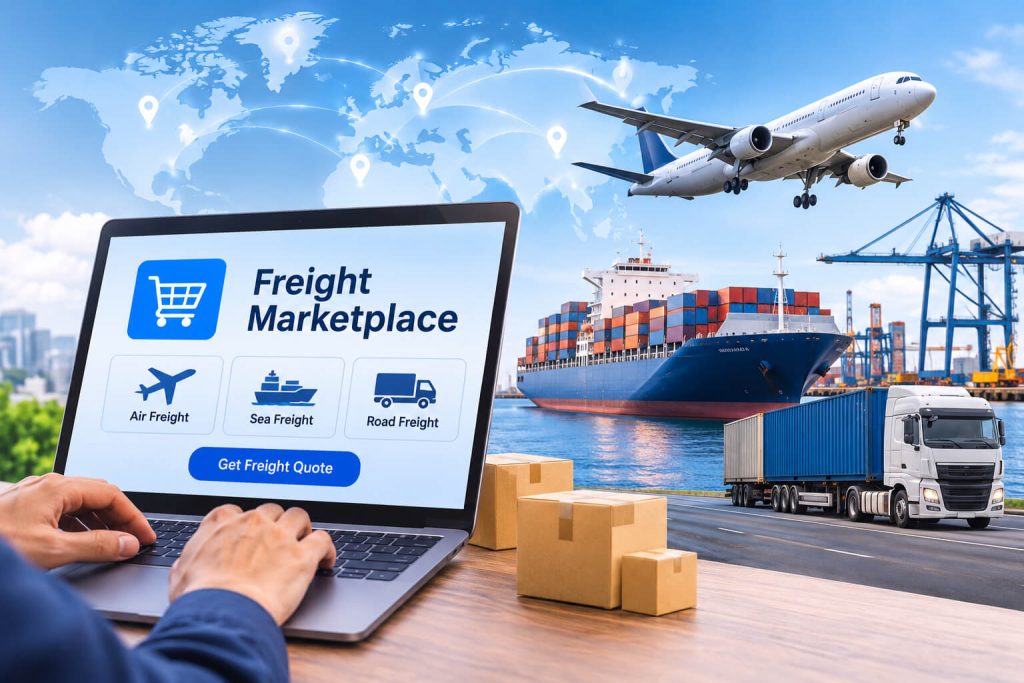
The freight marketplace is changing how businesses, individuals, freight forwarders, and transport providers connect to arrange cargo transportation. Traditionally, finding a suitable shipping partner involved contacting multiple logistics companies, comparing prices manually, and coordinating transportation through separate communication channels. Digital freight marketplaces simplify this process by bringing shipping requirements and logistics service providers together on one platform. They help users explore transportation options, manage shipments, improve visibility, and make better decisions for domestic and international cargo movement.
What Is a Freight Marketplace?
A freight marketplace is a digital platform that connects businesses and individuals looking to transport goods with freight carriers, shipping companies, logistics providers, and freight forwarders. It creates a central environment where users can explore available transportation services according to their shipping requirements.
These platforms support different types of freight transportation, including air freight, sea freight, and road freight. Depending on the platform’s features, users may be able to compare shipping options, request freight quotes, find suitable logistics partners, arrange cargo transportation, and monitor shipment progress.
For businesses that regularly ship products across different locations, a digital marketplace can make logistics management more organized and accessible. It reduces the need to search for transportation providers individually and helps users understand the available shipping solutions.
How Does a Freight Marketplace Work?
A digital freight marketplace generally works by connecting shipment requirements with available logistics services. Although features differ between platforms, the process usually involves several important steps.
1. Enter Shipment Requirements
The first step is providing accurate shipment information. Users may need to enter the pickup location, delivery destination, cargo weight, dimensions, package quantity, and type of goods being transported.
These details help logistics providers understand the shipment requirements and identify suitable transportation options.
2. Explore Available Freight Services
After entering shipment information, users can explore relevant freight services. Depending on the platform, available options may include air, sea, and road transportation.
Each method has different advantages based on delivery time, shipping distance, cargo characteristics, and transportation costs.
3. Compare Shipping Options
Comparing freight options helps users make informed transportation decisions. Businesses can consider estimated delivery times, freight charges, service availability, handling requirements, and additional logistics services before selecting a provider.
4. Arrange Transportation
Once a suitable option is selected, users can coordinate the shipment with the relevant logistics provider. This may involve confirming the booking, preparing shipping documents, arranging cargo collection, and organizing transportation.
5. Track and Manage Shipments
Shipment visibility is another important part of modern freight management. Depending on the available tracking capabilities, users can monitor shipment progress and receive updates about important transportation stages.
Different Types of Freight Services Available
A freight marketplace can support different transportation methods to accommodate various cargo requirements. Understanding these options helps businesses select the right solution.
Air Freight Services
Air freight is commonly used for urgent shipments, high-value products, and goods that require faster international transportation. It is particularly useful when delivery time is an important consideration.
However, air freight costs can be higher than other transportation methods. Cargo weight, dimensions, airline capacity, and destination requirements can influence the final shipping price.
Sea Freight Services
Sea freight is a practical option for transporting large quantities of goods across international destinations. It is widely used by importers, exporters, manufacturers, and businesses handling bulk cargo.
Two common sea freight options include:
- Full Container Load (FCL): Suitable for businesses that require an entire shipping container for their cargo.
- Less than Container Load (LCL): Suitable for smaller shipments that share container space with other cargo.
Sea freight is generally more economical for large shipments, although transportation usually takes longer than air freight.
Road Freight Services
Road freight supports domestic transportation and cross-border cargo movement. It is commonly used for retail products, commercial goods, industrial equipment, and general shipments.
Road transportation offers flexibility because vehicles can collect cargo from specific locations and deliver it to designated destinations. Delivery time depends on distance, traffic conditions, border procedures, and road accessibility.
Key Benefits of Using a Freight Marketplace
Digital freight platforms provide several advantages for businesses and individuals involved in shipping and logistics.
Access to Multiple Logistics Providers
Finding a suitable shipping company can take considerable time. A marketplace brings different logistics providers and transportation options together, making it easier to explore available services.
Better Freight Cost Comparison
Shipping costs can vary depending on cargo dimensions, weight, destination, transportation method, and service requirements. Comparing available options helps users understand potential costs and select transportation that matches their budget.
Simplified Shipping Management
Managing shipments through different service providers can create unnecessary administrative work. A centralized platform can help organize shipment information, service selection, and transportation arrangements.
Improved Shipment Visibility
Tracking capabilities allow users to monitor cargo movement and stay informed about shipment progress. Better visibility can help businesses plan inventory, communicate with customers, and respond to unexpected delays.
Support for International Trade
Businesses involved in international trade often require multiple transportation services and logistics partners. A freight marketplace can help them explore international shipping options and coordinate transportation across different regions.
Important Factors to Consider When Choosing a Freight Marketplace
Not every digital freight platform offers the same features. Before selecting one, users should evaluate several important factors.
Transportation Options: Check whether the platform supports air, sea, and road freight according to your shipping requirements.
Service Coverage: Review the destinations and regions supported by the available logistics providers.
Pricing Transparency: Look for clear information about freight charges, additional fees, and potential costs associated with handling or customs procedures.
Tracking Capabilities: Choose a platform that provides useful shipment updates and tracking information.
Provider Reliability: Consider the experience, service quality, communication, and operational capabilities of the logistics providers.
Customer Support: Accessible support can help resolve booking questions, documentation issues, and transportation concerns.
Shipping Documentation: International shipments may require commercial invoices, packing lists, certificates, and other customs-related documents. A good logistics process should help users understand these requirements.
How Small Businesses Can Benefit from a Freight Marketplace
Small businesses often face challenges when arranging transportation because they may not have dedicated logistics departments or established relationships with multiple freight companies.
A digital marketplace can make freight services more accessible by helping smaller businesses explore different shipping methods and compare available options.
For example, an online retailer exporting products to another country may need air freight for urgent customer orders and sea freight for larger inventory shipments. Instead of depending on one transportation method, the business can explore suitable alternatives based on delivery requirements and shipping budgets.
Manufacturers can also benefit by finding transportation solutions for raw materials, equipment, and finished products. Having better access to logistics services can support purchasing decisions, inventory planning, and international business expansion.
The Role of Technology in Modern Freight Marketplaces
Technology is making freight transportation more efficient by improving how shipping information is collected, processed, and shared.
Digital booking systems help simplify shipment arrangements, while tracking technologies provide better visibility into cargo movement. Automated communication can also help users receive shipment updates without repeatedly contacting logistics providers.
Artificial intelligence and data analytics are increasingly useful for evaluating transportation information, identifying potential delays, and supporting logistics planning. Digital documentation can reduce manual administrative tasks and help businesses organize important shipping records.
As technology continues to develop, freight platforms are expected to provide more connected and convenient logistics experiences.
How Postkodes Supports Modern Freight and Shipping Requirements
Choosing suitable transportation is important for businesses that handle domestic and international shipments. Postkodes provides access to air freight, sea freight, road freight, worldwide courier tracking, and parcel pickup and delivery services.
These logistics solutions support different shipping requirements, from smaller parcels and urgent deliveries to larger commercial cargo movements. Access to multiple transportation services helps users explore options according to their shipment size, destination, and delivery expectations.
Shipment tracking also plays an important role in maintaining visibility throughout the transportation process. By combining different logistics services with shipment management capabilities, businesses and individuals can approach their shipping requirements more conveniently.
Common Mistakes to Avoid When Using a Freight Marketplace
Even with digital shipping solutions, users should avoid common mistakes that can create transportation problems.
- Providing Incorrect Cargo Dimensions: Inaccurate measurements can affect freight calculations and lead to unexpected charges.
- Ignoring Shipping Regulations: Certain products require special permits, packaging, or documentation for international transportation.
- Choosing Only the Cheapest Option: Low prices should not be the only consideration. Delivery time, service reliability, and cargo handling are equally important.
- Overlooking Additional Charges: Customs duties, insurance, storage, and handling fees may increase the overall shipping cost.
- Not Checking Tracking Availability: Shipment visibility can help users identify delays and manage delivery expectations.
Providing accurate information and reviewing shipping requirements before booking can help prevent unnecessary complications.
Conclusion
A freight marketplace makes it easier to connect with logistics providers, explore transportation options, compare shipping costs, and manage cargo movement. By bringing different freight services into a digital environment, these platforms simplify important logistics activities for individuals, small businesses, and large organizations.
Whether shipping through air, sea, or road transportation, selecting the right service requires careful consideration of cost, delivery time, cargo requirements, and destination regulations. As digital technology continues to improve logistics operations, freight marketplaces will remain an important part of modern shipping and international trade.