

Embroidery has always depended on one basic limitation: thread color. Traditional machines usually require different thread colors to create colorful designs. That means more thread changes, more setup time, and more planning.
The Guide to Coloreel Embroidery starts with a different idea. Instead of keeping dozens of pre-colored threads ready, Coloreel technology can color a single embroidery thread as the design is produced. This creates new possibilities for detailed, colorful, and personalized embroidery.
For businesses, digitizers, and embroidery professionals, understanding how this technology works can help them decide where it fits into their workflow.
What Is Coloreel Embroidery?
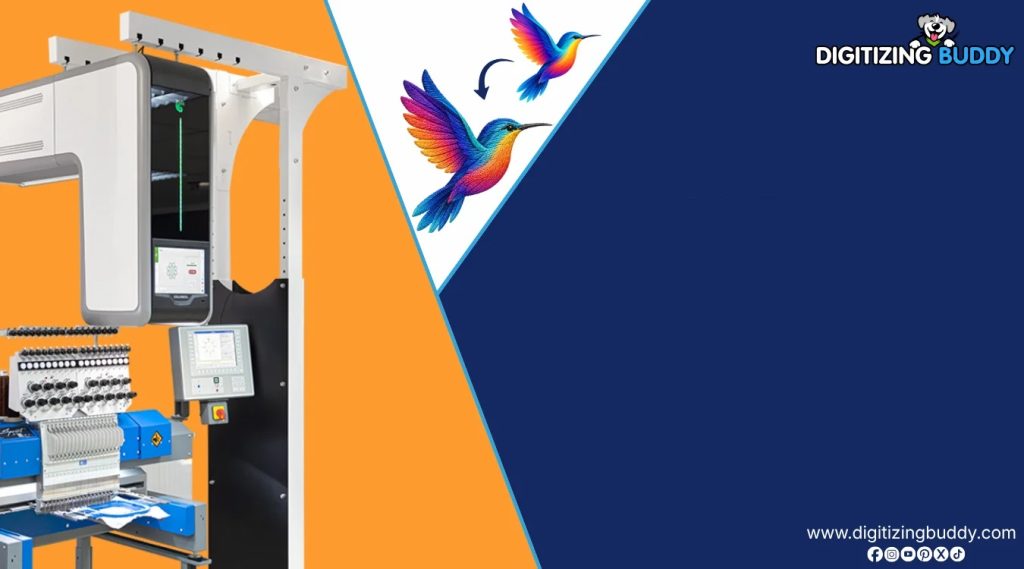
Coloreel is an on-demand thread-dyeing technology designed for embroidery production. Its system colors embroidery thread in real time instead of relying only on multiple pre-dyed thread cones.
According to Coloreel, its technology uses one thread and one needle while providing access to millions of colors. The system is designed to work with modern single-head and multi-head embroidery machines.
Think of it like a printer for embroidery thread. A normal printer creates different colors from its ink system, while Coloreel creates different thread colors during embroidery.
This approach can be particularly useful for:
- Personalized embroidery
- Fashion designs
- Small production batches
- Logos with many color variations
- Sampling and product development
- On-demand embroidery
- Detailed artwork with gradients
How Does Coloreel Embroidery Work?
Understanding the process is one of the most important parts of this Guide to Coloreel Embroidery.
1. The Design Is Digitized
First, artwork needs to be converted into an embroidery-ready design. Digitizing determines stitch types, stitch direction, density, sequencing, and other production details.
A good digitized design is still essential. Coloreel technology does not remove the need for professional embroidery digitizing.
2. The Design Is Prepared for Color
The design is then prepared for Coloreel’s digital color workflow. Coloreel Studio can be used to colorize embroidery designs and work with color libraries and effects.
This gives designers more flexibility when experimenting with colors.
3. One Thread Is Dyed During Production
Instead of changing between different colored threads, the system colors the thread as it passes through the unit.
The thread can therefore move from one color to another during the embroidery sequence.
4. The Machine Embroiders the Design
The colored thread is then stitched onto the garment or other material.
Because the thread color is produced digitally, the design can include a much wider range of color combinations without storing a large collection of pre-colored threads.
Key Benefits of Coloreel Embroidery
There are several reasons embroidery professionals may be interested in this technology.
More Color Freedom
Traditional embroidery can require careful planning around available thread colors. Coloreel provides access to millions of possible colors through its digital coloring process.
This can be useful when a design contains subtle color changes, gradients, or detailed artwork.
Fewer Thread Changes
One of the major differences is the reduced need for traditional thread changes.
Coloreel states that its workflow can minimize trims and lock stitches and eliminate thread reel changes between different colors.
For production teams, fewer interruptions can simplify the embroidery workflow.
Better for Small Batches
Imagine producing ten personalized products where every design uses slightly different colors.
With a traditional workflow, preparing multiple thread colors for every variation can become inconvenient. An on-demand color system can make small-batch and personalized production more flexible.
Easier Color Experimentation
Designers can experiment with different shades without needing to physically organize every possible thread color.
This can be especially helpful when developing fashion pieces, promotional products, limited editions, or personalized merchandise.
Reduced Thread Inventory
A traditional embroidery operation may need a large inventory of thread colors.
Using a single digitally colored thread can reduce the need to keep every possible shade in stock. Coloreel describes this as an on-demand approach where producers can create the colors they need when they need them.
Coloreel Embroidery and Color Matching
Color matching deserves special attention.
A color displayed on a computer screen does not always look exactly the same when it becomes physical thread on fabric. Screen colors, fabric color, thread properties, stitch direction, lighting, and other factors can affect the final appearance.
For professional work, do not assume that a screen preview will perfectly match the finished embroidery.
Practical Color-Matching Tips
- Check the design on the actual fabric whenever possible.
- Use appropriate color-management tools.
- Consider the effect of fabric color on the final result.
- Test important brand colors before large production runs.
- Use realistic embroidery previews during approval.
- Keep customer expectations realistic.
These steps can reduce surprises during production.
How to Digitize for Coloreel Embroidery
Coloreel changes some aspects of embroidery digitizing, particularly thread management.
According to Coloreel’s guidance, digitizers can use regular DST files with Coloreel Studio, while the workflow handles color through its digital thread system.
Plan the Stitch Sequence Carefully
The stitch sequence remains important.
A poorly planned sequence can create unnecessary movement, trims, or other production issues. The goal should be a clean and efficient stitch path.
Consider Underlay Carefully
Underlay provides structure and stability to the embroidery. With a digital thread workflow, the way colors are managed within the design sequence also matters.
A professional digitizer should consider how color transitions interact with the underlying stitches.
Keep Small Details Practical
More available colors do not automatically mean every tiny detail should be reproduced.
Very small elements may still become difficult to embroider. Stitch length, fabric type, density, and design size all affect the final result.
Test Before Large Production
Always test an important design before committing to a large production run.
A test stitch-out can reveal:
- Color differences
- Poor registration
- Excessive density
- Fabric distortion
- Small-detail problems
- Unexpected stitch behavior
Professional digitizing and testing remain important even with advanced embroidery technology.
Coloreel Embroidery vs. Traditional Thread Workflows
The main difference is how thread color is handled.
| Feature | Traditional Workflow | Coloreel Workflow |
|---|---|---|
| Thread colors | Uses pre-dyed colors | Colors thread during production |
| Color selection | Depends on available threads | Digital color creation |
| Thread changes | Often required | Greatly reduced |
| Color experimentation | More limited | Highly flexible |
| Inventory | Multiple thread colors | Less dependence on color inventory |
| Small-batch personalization | Can require more setup | Designed for on-demand flexibility |
This does not mean one workflow is suitable for every embroidery business. Production volume, equipment, design requirements, materials, and budget should all be considered.
Is Coloreel Embroidery Suitable for Every Design?
No.
Coloreel can expand color possibilities, but embroidery still has physical limitations.
For example, extremely fine details may not translate well to stitches. Fabric type, backing, stitch density, needle selection, and design size continue to influence the final result.
Color limitations also still exist. Coloreel explains that its CMYK-based process can produce millions of colors, but not every possible color, such as certain neon or metallic effects. Traditional pre-dyed threads can be combined with Coloreel thread when required.
The best approach is to choose the production method according to the actual design.
Sustainability Considerations
Another important part of this Guide to Coloreel Embroidery is sustainability.
Coloreel states that its technology can reduce water consumption by up to 97% compared with traditional dyeing methods. It also promotes on-demand production to reduce unnecessary thread waste and inventory.
The company’s current thread is described as 100% recycled polyester made from post-consumer PET bottles.
However, sustainability should be evaluated across the complete production process rather than based on one feature alone.
What Does Coloreel Mean for Embroidery Digitizers?
Advanced machinery does not eliminate the importance of skilled digitizing.
In fact, better technology can make good digitizing even more valuable.
A digitizer still needs to understand:
- Stitch density
- Underlay
- Pull and push compensation
- Stitch direction
- Fabric behavior
- Design sequencing
- Small lettering
- Color transitions
- Embroidery size
- Production limitations
Coloreel provides greater color flexibility, but the design still needs to be built correctly.
For businesses that need production-ready embroidery files, working with an experienced service such as Digitizing Buddy can help turn artwork into properly structured embroidery designs.
Tips for Getting Better Results
If you are planning to use Coloreel embroidery, keep these practical tips in mind:
- Start with clean artwork.
Clear artwork makes the digitizing process easier. - Plan the design around embroidery.
Not every detail in a digital image needs to become a stitch. - Use realistic color expectations.
Screen colors and embroidered colors can differ. - Test important designs.
A sample stitch-out can identify problems before production. - Pay attention to fabric.
The same design can look different on different materials. - Work with production-ready digitizing.
Correct stitch planning remains essential. - Keep the final application in mind.
A fashion design, logo, patch, and personalized garment may need different digitizing approaches.
The Future of Digital Embroidery
Technology is changing how embroidery businesses approach design and production.
The ability to digitally control thread color opens opportunities for personalization, short runs, fashion applications, and complex color effects.
For embroidery businesses, the biggest advantage may not simply be having more colors. It is having more flexibility in how designs are produced.
That flexibility can make it easier to experiment, personalize products, and respond to changing customer demands.
Conclusion
This Guide to Coloreel Embroidery shows why real-time thread dyeing is an interesting development in modern embroidery.
Coloreel combines digital color management with embroidery production, allowing a single thread to produce a wide range of colors while reducing the need for traditional thread changes. Its workflow can be useful for personalization, small batches, fashion, sampling, and designs that require extensive color options.
Still, technology does not replace good embroidery fundamentals. Professional digitizing, proper stitch planning, color management, fabric testing, and quality control remain essential.
If you want to explore this workflow, start with a well-prepared design, test it on the intended material, and adjust the embroidery file based on the actual stitch-out.
FAQs About Coloreel Embroidery
What is Coloreel embroidery?
Coloreel embroidery uses real-time thread-dyeing technology to create different thread colors during embroidery. It is designed to provide a broad range of colors while reducing the need for traditional thread changes.
How many colors can Coloreel produce?
Coloreel states that its CMYK-based technology can produce more than 12 million colors, covering roughly 80% of the Pantone palette.
Does Coloreel require a special embroidery machine?
Coloreel describes its system as a standalone unit that can work with modern single-head and multi-head embroidery machines.
Can existing embroidery files be used with Coloreel?
Coloreel states that its workflow can work with regular DST files through Coloreel Studio, allowing designs created with different digitizing software to enter the Coloreel workflow.
Does Coloreel replace embroidery digitizing?
No. Digitizing is still important because the design must contain suitable stitch types, density, sequencing, and other embroidery settings. Coloreel mainly changes how thread color is produced and managed during production.