

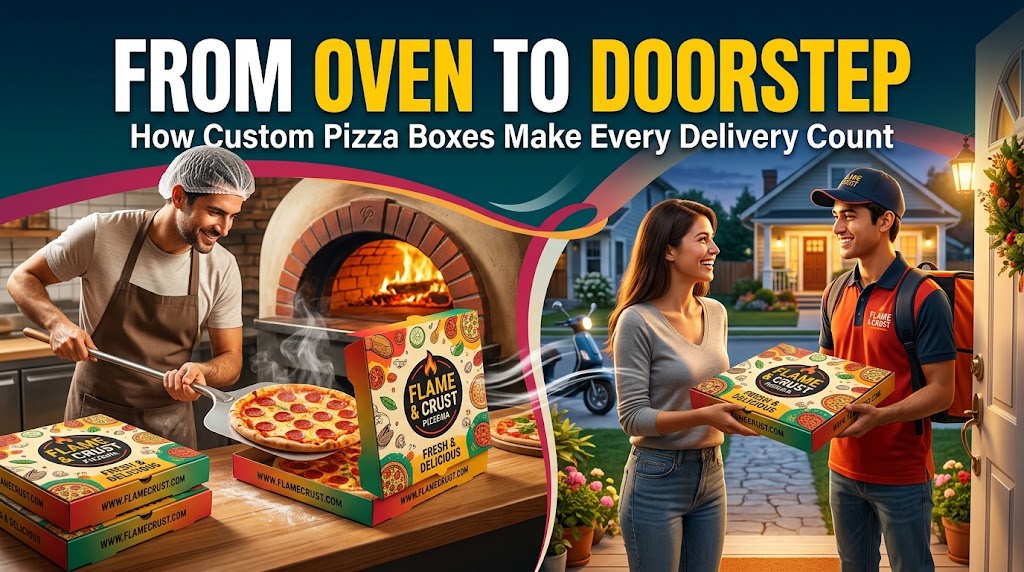
The moment a pizza leaves the oven, a small race begins. Heat, steam and the journey to the customer all influence the first bite. But before the lid opens, the box has already made an impression: it can protect the food, introduce the restaurant and turn a routine takeaway into a recognisable brand experience.
That is why pizza box printing is about more than placing a logo on cardboard. For UK food businesses, well-planned packaging brings together practical protection and clear brand communication. Custom Box Packaging Labels helps businesses explore branded packaging that reflects their identity while meeting the everyday demands of takeaway and delivery.
What is pizza box printing?
Pizza box printing is the process of adding a business’s logo, colours, messaging and other design elements to pizza packaging. Depending on the supplier and specification, a business may be able to select different sizes, board types and print approaches.
The goal is not to cover every available surface with information. It is to make the box easy to recognise and useful to the customer. A clear logo, a memorable visual style and practical details—such as contact information or an ordering prompt—can make packaging work harder without making the design feel crowded.
For a customer collecting dinner in Manchester, ordering from a local pizzeria in Bristol or sharing a delivery at home in Glasgow, a distinctive box can help connect the meal with the business behind it.
Why do custom pizza boxes matter?
A pizza box has two jobs: carry the food and represent the business. If the packaging is flimsy, poorly sized or inconvenient to handle, it can undermine the experience. If it looks considered and consistent, it can reinforce a sense of care before the customer tastes the pizza.
Custom pizza boxes can help businesses:
- Build recognition through consistent use of logos, colours and design.
- Present pizzas more professionally at collection, delivery or events.
- Share useful details such as a website, social media handle or promotion.
- Create a more cohesive experience across menus, bags and other packaging.
- Give customers a visual reminder of the restaurant after the meal.
Packaging cannot replace good food or reliable service. It can, however, support both by making the overall experience feel more joined up.
Start with the journey, not the artwork
A striking design is only successful if the box suits the way the business operates. Before choosing colours or adding a slogan, consider the pizzas themselves and how they travel.
Measure the products you sell, including any specialty sizes. Think about the weight of the pizza, the toppings, the distance deliveries usually travel and how boxes are stacked during busy periods. A box that fits the product appropriately can help reduce unnecessary movement, while a sturdy construction can better suit demanding takeaway use.
Ventilation and closure are also worth discussing with a packaging supplier. Freshly cooked food releases steam, so the box design should be considered as part of the journey from kitchen to customer. The right specification depends on the product, box construction and intended use; avoid assuming one format works equally well for every menu.
Design for a quick, clear impression
Customers often see a pizza box for only a few seconds before opening it. A strong design should communicate quickly.
Begin with one focal point: usually the business name or logo. Build a simple visual system around it, using brand colours and typography consistently. Then decide whether any additional details genuinely help. A QR code could direct customers to an online menu or ordering page; a short message could introduce a signature pizza or invite customers to follow the business.
Keep essential information legible. Small text, excessive graphics and too many competing messages can make packaging harder to understand. If the box is used for several products or promotions, a flexible design may be more practical than artwork tied to a short-lived campaign.
For a new independent takeaway, the box might use a bold logo and a simple local identity. A more established restaurant group may prefer a consistent design across locations, with a small area reserved for branch-specific information.
Choosing materials and print details
The material and print choices should follow the packaging’s purpose. Businesses can ask suppliers about suitable board options, strength, available sizes and how printing will appear on the selected surface. Requesting a proof before production gives the team a chance to check artwork placement, spelling, colours and overall readability.
Food packaging also calls for care around materials and printing. In the UK, businesses should use packaging suitable for its intended food-contact application and request relevant compliance information from their supplier. The UK government notes that food packaging must be suitable for food use, and that certain materials require supporting compliance documentation. Printing inks and other packaging components can also fall within food-contact materials rules.gov+1
Sustainability claims need equal attention. Cardboard or paperboard is commonly collected for recycling at the kerbside by many UK local authorities, but the actual outcome depends on the packaging’s design, condition and local facilities. A business should check the complete package—including coatings, added components and food residue—before describing it as recyclable or making broader environmental claims.www
How can a pizza business make its box more useful?
A well-designed box can do more than carry a meal, but every extra detail should earn its place. Consider these practical additions:
- A QR code that leads to a menu, ordering page or loyalty programme.
- A short brand line that reflects the restaurant’s personality.
- A clear social media handle for customers who want to share their meal.
- A seasonal design that can be used for a limited campaign.
- Simple reheating or serving guidance, where relevant to the product.
Test the design at full size. What looks sharp on a laptop may be difficult to read when printed, folded and viewed under restaurant lighting. A physical sample or supplier-approved proof can help reveal issues before a larger order is produced.
A practical checklist before ordering
Before approving custom pizza boxes, confirm that the design and specification match daily operations:
- Box dimensions suit the full range of pizzas and menu items.
- The construction is appropriate for the product and delivery routine.
- Branding remains clear when the box is assembled and stacked.
- Artwork files, colours and spelling have been checked.
- The supplier has provided relevant food-contact information.
- Environmental statements are accurate for the finished packaging.
- Minimum quantities, lead times and storage needs fit the business.
These checks can help avoid a design that looks impressive but proves awkward in a busy kitchen.
Make every delivery part of the brand
Great pizza earns attention through flavour; thoughtful packaging helps carry that impression beyond the oven. With purposeful pizza boxes printing, UK takeaways and restaurants can bring practical design, clear branding and a more memorable customer experience together in one package.
For independent pizzerias, growing delivery brands and established food businesses, custom pizza boxes are an opportunity to make every collection and doorstep delivery feel unmistakably their own. Custom Box Packaging Labels supports businesses looking to develop branded packaging that is distinctive, considered and shaped around the way they serve customers.