

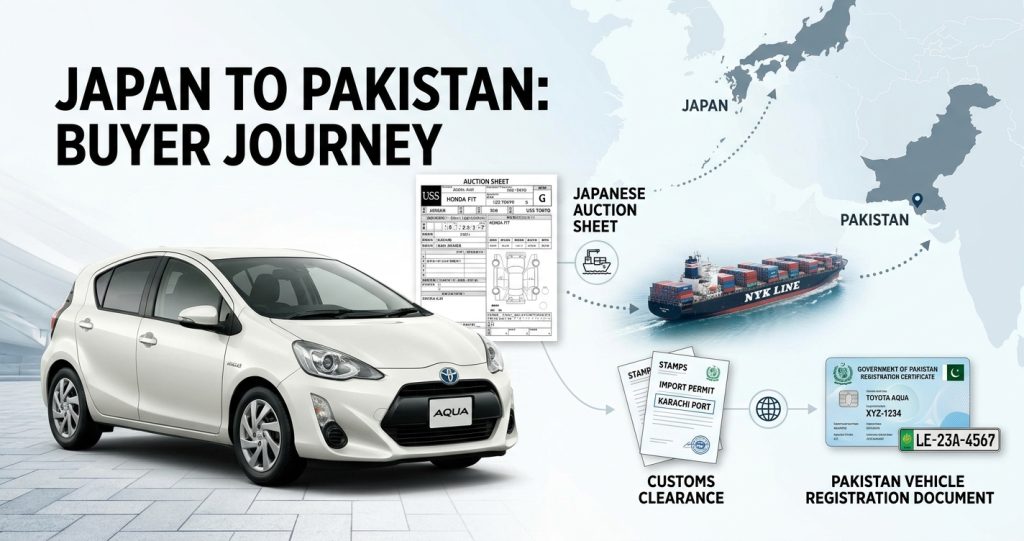
Buying a Japanese used car in Pakistan involves far more than selecting a model and arranging payment. The journey typically moves through several stages, including vehicle selection, auction or stock verification, booking, shipping, customs clearance, and local registration. Understanding each step helps buyers anticipate costs, documentation requirements, and potential delays.
For anyone exploring Japanese cars in Pakistan, having a clear roadmap is particularly useful because the final ownership cost depends on decisions made long before the vehicle reaches a local road.
1. Start With the Right Budget and Car
The first step is to establish a realistic budget. Instead of considering only the advertised vehicle price, buyers should account for auction or purchase cost, exporter charges, freight, insurance where applicable, customs duties and taxes, port expenses, registration, and possible maintenance.
The choice of vehicle should also reflect local driving conditions and ownership priorities. Hatchbacks may suit urban commuting, while SUVs and MPVs can offer greater cabin space for families. Hybrid models can appeal to buyers seeking fuel efficiency, although battery condition and replacement considerations deserve attention.
Model year, mileage, auction grade, accident history, specifications, and available service records should all be evaluated before booking.
2. Verify the Vehicle Before Booking
Once a suitable vehicle has been identified, verification becomes crucial. Japanese auction cars generally come with auction documentation containing information about condition, mileage, equipment, and recorded defects.
Buyers should carefully examine:
- Auction grade and interior/exterior condition
- Mileage and mileage verification
- Previous repair or accident indicators
- Chassis and vehicle identification details
- Engine and transmission information
- Optional equipment and specifications
- Inspection or auction-sheet information
A photograph can reveal only part of a vehicle’s condition. Documentation provides additional context and can help prevent misunderstandings between the buyer and seller.
3. Choose the Exporter and Confirm the Order
The next stage is selecting an exporter or supplier. Working with a direct Japanese car exporter can provide a more straightforward purchasing channel, particularly when the exporter handles auction sourcing, inspection documentation, export paperwork, and shipping coordination.
Before confirming an order, the buyer should understand exactly what the quoted amount includes. A written quotation should ideally distinguish between the vehicle price and other charges rather than presenting one unexplained figure.
Important questions include:
- What is included in the purchase price?
- Is auction bidding included?
- What shipping method will be used?
- Which destination port is specified?
- What documentation will be supplied?
- Which taxes and duties remain payable in Pakistan?
- What happens if the selected auction vehicle is not secured?
Clear communication at this stage can prevent costly surprises later.
4. Booking and Payment
After selecting the vehicle, the buyer normally proceeds with booking and payment according to the seller’s terms. Payment arrangements can differ depending on whether the vehicle is already in stock or needs to be purchased through an auction.
Buyers should retain invoices, payment confirmations, booking documents, and correspondence related to the transaction. These records can become valuable references during later stages of the import process.
If an auction purchase is involved, timing also matters. Auction inventory changes continuously, so the desired specification, grade, mileage, and budget should be communicated clearly before bidding.
5. Inspection, Export and Shipping From Japan
After purchase, the vehicle enters the export preparation stage. The exporter arranges the required Japanese-side documentation and prepares the car for shipment.
Depending on the arrangement, this stage may involve:
- Vehicle inspection and documentation review
- Export certificate preparation
- Port transportation
- Shipping arrangements
- Loading onto the vessel
- Issuance of shipping-related documents
The shipping schedule depends on vessel availability, port operations, destination, and other logistical factors. Buyers should therefore avoid assuming that every vehicle will arrive within an identical timeframe.
6. Arrival and Customs Clearance in Pakistan
When the vehicle reaches Pakistan, the import process enters one of its most important stages: customs clearance.
The applicable duties, taxes, and documentation requirements can depend on factors such as vehicle type, engine capacity, model year, import scheme, and prevailing government regulations. Because these rules can change, buyers should verify the current requirements and payable amounts before committing to a purchase.
At this stage, accurate documentation is particularly important. Discrepancies in vehicle details, invoices, shipping documents, or other paperwork can complicate clearance.
7. Calculate the Real Landed Cost
The vehicle’s Japanese purchase price should never be confused with its final cost in Pakistan.
A practical calculation can include:
Vehicle price + exporter charges + freight + customs duties/taxes + port-related charges + clearance expenses + registration + initial maintenance = approximate ownership entry cost
This approach gives buyers a more realistic financial picture.
It is also wise to keep a contingency amount for expenses that may arise after arrival, such as tyres, fluids, battery replacement, detailing, or routine servicing.
8. Complete Local Registration
After customs clearance and the required documentation process, the vehicle can proceed toward registration with the relevant provincial excise and taxation authority.
Registration requirements and procedures can vary by province and may change over time, so buyers should verify the latest official requirements for their jurisdiction.
Documentation may include import and customs records, proof of purchase, identification documents, and vehicle-related certificates or forms. The exact requirements should be confirmed before visiting the relevant authority.
Once the registration process is completed and the applicable taxes and fees have been paid, the imported vehicle can move into normal local ownership and use.
9. Inspect and Service the Car After Registration
Registration is not the end of the buyer journey. A newly imported vehicle should receive a sensible mechanical inspection before becoming part of the owner’s daily routine.
A workshop can check:
- Engine fluids and filters
- Brakes and suspension
- Tyres
- Battery
- Cooling system
- Air conditioning
- Transmission performance
- Hybrid-system condition where applicable
- Warning lights and diagnostic codes
Even a well-maintained Japanese vehicle may require basic servicing after transportation and extended storage.
Final Thoughts
The journey from booking to registration involves several interconnected stages. The most important principle is to evaluate the entire transaction, rather than focusing exclusively on the vehicle’s advertised price.
Careful verification, transparent documentation, realistic landed-cost calculations, and an understanding of customs and registration procedures can make the process considerably more manageable. For buyers researching Japanese cars in Pakistan, approaching the purchase as a complete import journey rather than a simple vehicle transaction provides a clearer picture of both responsibilities and costs.
A reputable direct Japanese car exporter can also simplify the process by coordinating sourcing, documentation, inspection, and shipping, but buyers should still understand each stage themselves. The more informed the buyer is before booking, the fewer surprises are likely to appear between the Japanese auction or showroom and the final registration in Pakistan. ChatGPT can make mistakes. Check important info.