

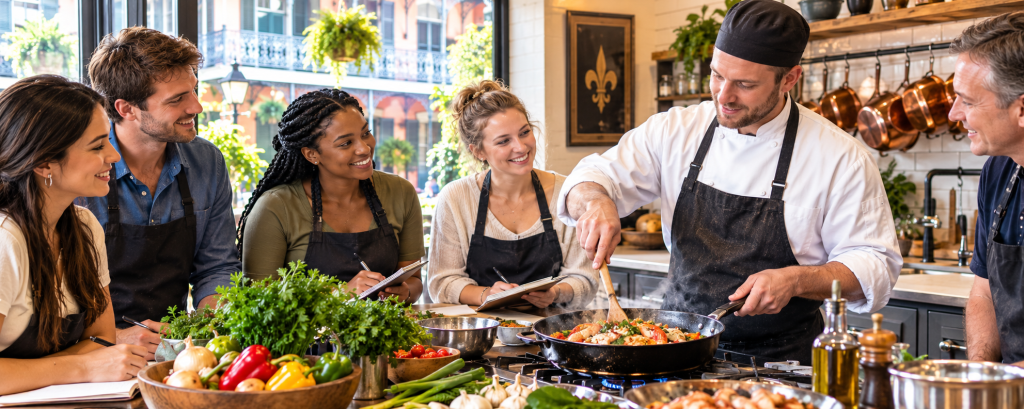
Louisiana cuisine stands out globally for its rich history, distinct aromatics, and deep cultural roots. Visitors traveling to the historic Crescent City often seek out immersive culinary adventures that go beyond standard restaurant dining. Understanding the heritage behind traditional dishes allows food enthusiasts to connect deeply with the soul of the region.
Stepping into a professional kitchen studio located right in the middle of historic neighborhoods offers participants an interactive way to master local gastronomy. Expert instructors guide attendees through every single step of meal preparation, sharing generations of accumulated wisdom.
Mastering the Art of Roux and Gumbo
The foundation of authentic southern Louisiana cooking relies heavily on mastering the perfect roux. Combining equal parts fat and flour requires patience, constant stirring, and precise heat management to achieve the desired nutty aroma and deep color. Expert instructors teach students how to watch the browning process carefully to avoid burning the flour mixture.
Beyond the roux, understanding how to layer spices and aromatic herbs defines the distinct character of local comfort food. Generous applications of cayenne, thyme, garlic, and file powder create layers of complexity that dance across the palate. Professional kitchen studios provide all the necessary ingredients and tools so that participants can focus entirely on perfecting their seasoning balance.
Why Culinary Experiences Make Travel More Meaningful
Travelling is not only about visiting attractions. It is also an opportunity to discover how people live, celebrate, and preserve their traditions. Food provides a practical way to explore these aspects of a destination.
In New Orleans, regional dishes reflect a complex history of cultural exchange and local adaptation. Gumbo, jambalaya, and red beans and rice are familiar examples, but their preparation varies between cooks and communities. Understanding these variations makes the culinary experience more interesting than simply sampling a finished meal.
A practical session can also introduce visitors to the decisions involved in cooking. Participants may learn how ingredients are prepared, how flavours develop, and why certain methods are used for particular dishes.
Understanding the City Through Its Ingredients
Local ingredients often provide clues about a region’s food culture. In Louisiana, rice, seafood, vegetables, herbs, and a variety of seasonings appear in many traditional preparations. The combination of onions, celery, and bell peppers known as the holy trinity is an important flavour base in numerous Louisiana recipes. Learning how to prepare and cook these ingredients helps explain why the order of preparation can influence the finished dish.
Seafood also plays a role in many regional meals, although its use varies according to the recipe and location. Understanding freshness, suitable cooking temperatures, and preparation methods is essential when working with fish and shellfish. These details demonstrate that regional cooking involves more than selecting local ingredients. Technique, timing, and careful handling all contribute to the result.
Match the Activity to Your Schedule
Before booking, consider how much time you can comfortably dedicate to the activity. A short session may fit a busy sightseeing itinerary, while a longer practical experience may suit visitors who want to develop several skills. Check the advertised duration and allow time for travel to and from the venue.
It is sensible to avoid scheduling another important activity immediately afterward in case the session runs slightly longer than expected. Availability may vary by date, so confirm the schedule before arranging other parts of your trip around the experience.
Consider Who Will Be Attending
The best format may depend on whether you are travelling alone, with a partner, with friends, or as part of a family group. Different participants may have different interests and levels of cooking experience.
Review any age requirements and participation rules before booking. If a group includes people with dietary restrictions, allergies, or accessibility needs, contact the provider in advance to discuss suitable arrangements.
How to Compare Available Culinary Experiences
A clear class description should explain the menu, learning objectives, session length, and practical arrangements. Look for information about whether participants cook themselves, watch a demonstration, or combine both approaches.
When researching new orleans cooking classes, compare the actual experience offered rather than relying on a broad label. Consider whether the session focuses on local cuisine, basic techniques, specialised preparation, or a combination of these elements.
It is also worth reviewing the booking terms carefully. Check what the price includes, whether ingredients and equipment are supplied, and how cancellations or schedule changes are handled.
A useful comparison checklist includes:
- The type of cuisine and dishes featured.
- The level of hands on participation.
- The experience level required.
- The location and total time commitment.
- The availability of suitable dietary accommodations.
- The final price and cancellation conditions.
These details make it easier to choose an activity that fits your expectations and travel plans.
Prepare for a Better Experience
Once you have booked, review any instructions supplied by the organiser. Confirm the meeting location, arrival time, clothing recommendations, and any items you are expected to bring.
Wear comfortable clothing suitable for a kitchen environment and follow the provider’s guidance about footwear and protective equipment. Avoid wearing loose accessories that could interfere with safe food preparation.
Think about what you would most like to learn before arriving. You might want to understand how a roux is prepared, how to improve knife skills, or how to balance the flavours in a traditional sauce. Having a few questions in mind can help you make better use of the session.
Learn the Methods Behind Famous Louisiana Dishes
Gumbo and the Development of Flavour
Gumbo demonstrates how several ingredients and techniques can combine to create a distinctive dish. Depending on the recipe, it may include a roux, vegetables, stock, seafood, poultry, sausage, or other components.
Preparing the roux requires attention because its colour changes gradually as it cooks. The desired colour depends on the recipe, and the cook must balance flavour development with the risk of burning the mixture.
Participants can also learn how ingredient choices affect texture and seasoning. Different versions of gumbo use different combinations, so understanding the method helps explain why recipes vary.
Jambalaya and Rice Preparation
Jambalaya provides an opportunity to explore rice preparation, ingredient timing, and liquid management. The correct approach depends on the recipe and style, but controlling heat and following the recommended liquid ratio are important considerations.
Rice can become too soft when it absorbs excessive liquid or is cooked for too long. Insufficient liquid, on the other hand, can leave it undercooked. Learning to recognise these differences helps cooks improve consistency.
These techniques are useful beyond Louisiana cuisine. The same understanding of moisture, temperature, and timing can improve many everyday rice dishes.
Make Time for Questions and Practical Learning
A culinary session becomes more valuable when participants engage actively. Ask why ingredients are added in a particular order, what signs indicate that a stage is complete, and which mistakes beginners commonly make.
Observe how the instructor handles changes during cooking. For example, a sauce may need more time to reduce, or a pan may need its heat adjusted to prevent burning. Understanding these decisions helps you respond more confidently when preparing food independently.
If the session includes written recipes, note any explanations that are not obvious from the ingredient list. A recipe may tell you what to do, but the reasoning behind the method is often what makes the technique transferable.
Continue Exploring Food After the Class
A culinary activity can provide a starting point for further exploration. You might visit a local market, try a regional dish at a restaurant, or look for ingredients that allow you to practise the techniques you learned.
When tasting food elsewhere, pay attention to flavour, texture, and ingredient combinations. This does not mean every dish should be judged against a single standard. Regional cuisine contains considerable variation, and different cooks may approach the same dish in different ways.
After returning home, choose one recipe from the experience and prepare it again. Keep notes about the process and make small adjustments only after you understand the original method.
Keep the Experience Practical and Enjoyable
It is easy to become focused on reproducing a dish perfectly, especially after learning from an experienced cook. However, the purpose of the experience is to learn, explore, and enjoy the process rather than achieve professional results immediately.
Practise the skills that seem most useful first. Improving knife control, learning to manage heat, or becoming more comfortable with seasoning can have a noticeable effect on everyday meals.
You can expand your knowledge gradually by exploring additional dishes and techniques. This approach makes learning sustainable and allows confidence to develop naturally over time.
Conclusion
A culinary experience in New Orleans can bring together travel, culture, and practical learning in a memorable way. By exploring regional ingredients and preparation methods, participants gain a better understanding of the traditions behind the city’s distinctive food.
Choosing the right session requires attention to its menu, format, schedule, cost, and learning objectives. Preparing questions in advance and participating actively can help you gain more from the experience.