

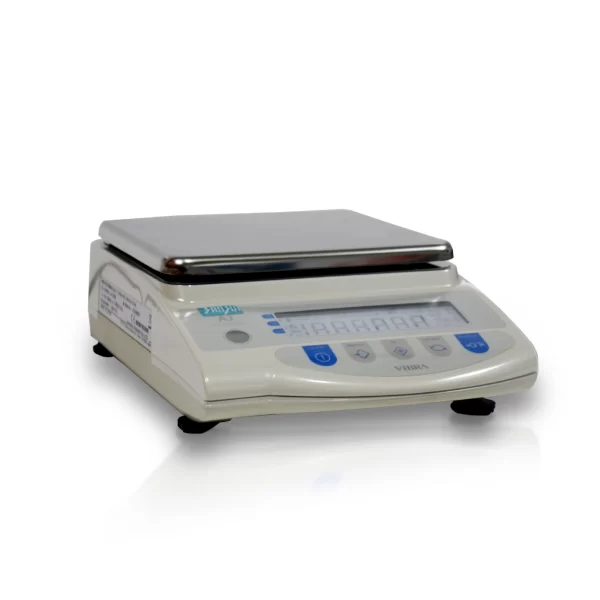
Tuning fork technology for weighing has revolutionized the way industries perform precise weight measurements. As businesses increasingly demand greater accuracy, reliability, and efficiency, advanced weighing systems equipped with tuning fork sensors have become the preferred choice across various sectors. From laboratories and manufacturing facilities to pharmaceutical production and quality control environments, this innovative technology delivers exceptional performance and consistent results.
What Is Tuning Fork Technology for Weighing?
Tuning fork technology utilizes a highly sensitive sensor designed similarly to a musical tuning fork. When weight is applied to the weighing platform, the tuning fork sensor detects minute changes in vibration frequency. These changes are instantly converted into accurate weight measurements through advanced electronic processing.
Unlike traditional strain gauge sensors, tuning fork sensors offer superior stability and are less affected by environmental factors such as temperature fluctuations, humidity, and mechanical stress. This allows weighing systems to maintain consistent accuracy even under demanding operating conditions.
Key Benefits of Tuning Fork Weighing Technology
Exceptional Accuracy
One of the most significant advantages of tuning fork technology for weighing is its remarkable precision. The sensor can detect extremely small weight variations, making it ideal for applications that require high-resolution measurements. Industries handling valuable materials, chemicals, or pharmaceutical ingredients benefit greatly from this level of accuracy.
Fast and Stable Measurements
Modern weighing systems equipped with tuning fork sensors provide rapid response times while maintaining measurement stability. Users receive accurate readings almost instantly, improving productivity and reducing waiting times during weighing operations.
Long-Term Reliability
Traditional weighing mechanisms may experience drift over time, requiring frequent recalibration. Tuning fork sensors are designed for long-term stability, minimizing measurement drift and reducing maintenance requirements. This results in lower operating costs and increased equipment lifespan.
Resistance to Environmental Changes
Environmental conditions can significantly affect weighing accuracy. Tuning fork technology is highly resistant to temperature changes, vibrations, and humidity, ensuring dependable performance in a wide range of industrial settings.
Applications of Tuning Fork Technology for Weighing
Pharmaceutical Industry
Pharmaceutical manufacturers rely on precise measurements to ensure product quality and regulatory compliance. Tuning fork weighing systems help accurately measure active ingredients, powders, and formulations during production processes.
Laboratory Research
Scientific laboratories require highly accurate balances for research, testing, and analysis. Tuning fork technology provides the precision needed for sensitive experiments and analytical procedures.
Manufacturing and Production
Manufacturers use advanced weighing systems to monitor raw materials, control production processes, and maintain product consistency. The speed and reliability of tuning fork sensors contribute to improved operational efficiency.
Food Processing
Food manufacturers depend on accurate weighing for portion control, ingredient measurement, and quality assurance. Tuning fork weighing systems support compliance with industry standards while reducing waste.
Chemical Processing
Chemical production often involves handling valuable or sensitive substances. Accurate weighing is essential for maintaining formulation consistency and ensuring safe operations. Tuning fork technology delivers the precision required for these demanding applications.
Why Businesses Choose Tuning Fork Weighing Systems
As industries continue to adopt automation and quality-focused manufacturing practices, the need for dependable measurement technology grows. Tuning fork weighing systems offer a combination of precision, speed, and durability that supports modern operational requirements.
The ability to deliver stable readings, reduce calibration frequency, and maintain performance under varying environmental conditions makes tuning fork technology a cost-effective investment. Businesses benefit from improved process control, enhanced product quality, and greater confidence in measurement results.
Conclusion
Tuning fork technology for weighing represents a significant advancement in precision measurement. Its superior accuracy, exceptional stability, and resistance to environmental influences make it an ideal solution for laboratories, manufacturing facilities, pharmaceutical companies, food processors, and chemical industries. By adopting advanced weighing systems with tuning fork sensors, organizations can achieve more reliable measurements, improve operational efficiency, and maintain the highest standards of quality and consistency. As precision continues to drive industrial success, tuning fork technology remains at the forefront of modern weighing innovation.