

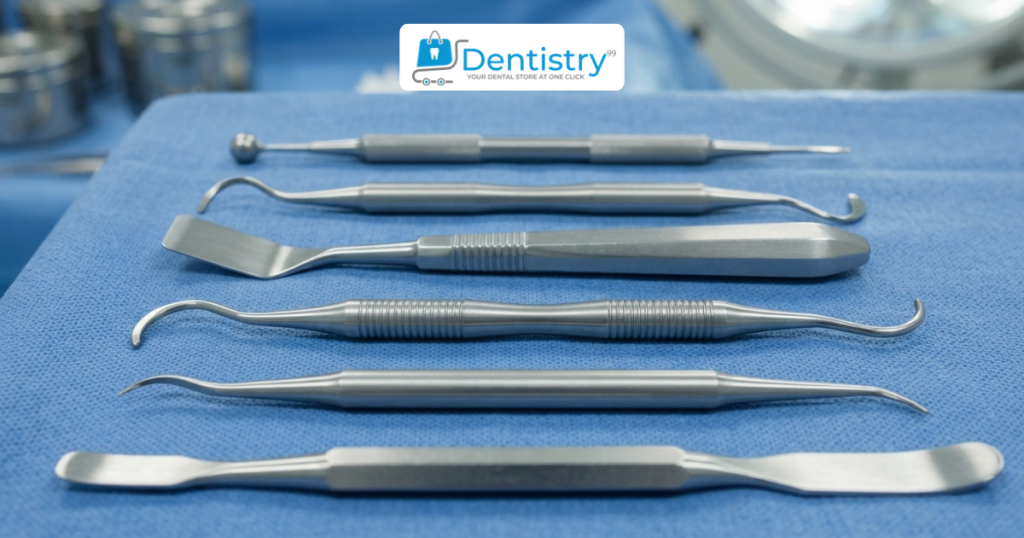
In the realm of oral and maxillofacial surgery, few instruments are as fundamentally important as the periosteal elevator. This hand-held surgical tool serves as the clinician’s primary means of separating the periosteum—the dense layer of connective tissue enveloping bone—from the underlying osseous structures. Whether performing a routine extraction, preparing an implant site, or executing complex reconstructive procedures, the periosteal elevator enables the precise tissue reflection essential for successful surgical outcomes.
At Dentistry99, we recognize that surgical excellence demands not only mastery of technique but also a comprehensive understanding of the instruments that make precision possible. Equally critical is the role of PPE—personal protective equipment—in safeguarding both clinician and patient during procedures that generate aerosols and splatter. This guide explores the periosteal elevator in depth while emphasizing the infection control protocols that must accompany every surgical intervention.
Understanding the Periosteal Elevator
Design and Function
The periosteal elevator is a hand-held, manual surgical instrument specifically designed to lift, separate, or tunnel under the periosteum during surgical procedures. While its origins lie in orthopedic surgery—particularly rib resection and trauma procedures—its application in dentistry has become indispensable for accessing retained roots, reflecting mucoperiosteal flaps, and preparing implant sites .
These instruments are typically one-piece devices manufactured from surgical-grade stainless steel or titanium, ensuring durability and corrosion resistance. They are available in a remarkable variety of sizes and blade designs, including straight and curved configurations, and are often double-ended with a central handle to provide multiple working tips in a single instrument.
The Science of Tissue Reflection
The periosteum is a highly vascularized membrane that provides nutrition to bone and serves as a source of osteogenic cells. When performing surgical procedures, preserving the integrity of this layer is paramount. The periosteal elevator accomplishes this by providing a blunt dissection interface—the instrument’s working end is inserted between the periosteum and bone, allowing the clinician to gently lift the tissue without tearing or excessive trauma.
The angle and sharpness of the blade determine the instrument’s specific application. Sharp-edged elevators facilitate clean incision and initial tissue separation, while rounded, non-cutting tips are designed for atraumatic reflection and retraction.
Common Periosteal Elevator Patterns
Understanding the various patterns available allows clinicians to select the appropriate instrument for each clinical scenario.
Molt Periosteal Elevator
The Molt pattern, particularly the #9, is perhaps the most universally recognized periosteal elevator in dentistry. It combines a large curved blade (7.5mm wide, rounded tip) with a smaller curved blade (3.5mm wide, pointed tip), both with non-cutting edges. This design makes it ideal for general full-thickness flap elevation, providing versatility across a wide range of procedures.
Freer Periosteal Elevator
The Freer pattern features two working ends—a large curved blade (7.5mm) and a smaller curved blade (3mm), both with rounded tips. Its delicate profile makes it particularly suited for microsurgical applications and aesthetic zone procedures where precision is critical. The Freer #9 is also referenced in clinical guidance for emergency tooth extraction, where its pointed tip is inserted between the gingival sleeve and tooth to facilitate tissue release.
Buser Periosteal Elevator
The Buser pattern combines an offset teardrop blade with a straight spear-shaped blade, both 4mm wide with sharp peripheries. This design offers excellent control for precise tissue separation and is favored for implant site preparation and ridge augmentation procedures.
Other Notable Patterns
- Goldman-Fox #14: Features two curved blades (4.5mm wide) with rounded tips; one end sharpened around the periphery.
- Prichard #3: Combines a large flat blade for retraction with a smaller curved tip for reflection.
- Seldin #23: A flat-handled instrument with two wide tips designed for broad tissue reflection.
- Kramer-Nevins #1: Features a curved blade (5mm) with rounded tip and a spear-shaped blade (3.4mm) with pointed tip.
Clinical Applications in Oral Surgery
Flap Elevation
The primary function of the periosteal elevator is to reflect the mucoperiosteum—the combined mucosal and periosteal layer—during surgical procedures. This involves making an incision through the gingival tissue, then using the elevator to gently separate the flap from the underlying bone. The instrument’s blade is inserted beneath the incised tissue and advanced along the bone surface, lifting the periosteum without damaging it.
Tooth Extraction and Root Retrieval
In extraction procedures, the periosteal elevator plays a critical role in mobilizing teeth and retrieving root fragments. According to clinical guidance, the pointed tip of a #9 periosteal elevator is inserted between the gingival sleeve and the tooth, then advanced along the root to detach the tissue circumferentially. This technique facilitates initial tooth mobilization and helps preserve the surrounding alveolar bone.
Implant Site Preparation
For dental implant placement, the periosteal elevator is essential for reflecting the flap and exposing the alveolar ridge. Precise elevation allows the clinician to visualize the bone topography, assess ridge dimensions, and prepare the osteotomy site with accuracy. The instrument is also used during bone grafting and ridge augmentation procedures to create subperiosteal tunnels and position graft materials.
Sinus Lift Procedures
In lateral window sinus augmentation, the periosteal elevator is used to access the sinus cavity through a lateral window in the maxilla. The instrument gently reflects the sinus membrane from the bony floor, creating space for bone graft placement without perforating the delicate Schneiderian membrane.
The Critical Role of PPE in Surgical Procedures
Why PPE Matters in Dentistry
Dental healthcare personnel are routinely exposed to blood, saliva, and other potentially infectious materials. Certain dental instruments—including handpieces and ultrasonic scalers—produce visible spray containing droplets, spatter, and aerosols. Surgical procedures involving periosteal elevators may also generate airborne particles when combined with high-speed instrumentation.
Personal protective equipment (PPE) serves as a barrier between the clinician’s skin and mucous membranes and potentially infectious materials. PPE also prevents microorganisms from spreading from clinician to patient, making it a fundamental component of Standard Precautions.
Essential PPE Components for Surgical Procedures
Gloves
Clinical gloves must be worn for all procedures involving contact with blood, saliva, or mucous membranes. Sterile surgical gloves should be used when hands may contact normally sterile areas, such as during implant placement or bone grafting. Gloves must be changed between patients and immediately if compromised by tears or punctures.
Masks and Eye Protection
Surgical masks covering both nose and mouth, combined with protective eyewear featuring solid side shields or face shields, are required during procedures likely to generate splashes or sprays. The mask’s outer surface can become contaminated with infectious droplets; therefore, it should be changed between patients or if it becomes wet during treatment. Prescription glasses and contact lenses are not adequate eye protection.
Protective Clothing
Long-sleeved disposable or reusable gowns or lab coats should cover skin and personal clothing likely to become soiled with blood, saliva, or infectious material. Protective clothing must be changed when visibly soiled or if penetrated by potentially infectious fluids. These garments should be removed before leaving the work area.
Safe Work Practices
In addition to wearing PPE, clinicians should adhere to safe work practices to minimize contamination risk:
- Keep hands away from the face and avoid touching or adjusting PPE
- Limit surfaces and items touched with contaminated gloves
- Remove all protective clothing before leaving patient care, instrument processing, or laboratory areas
- Perform hand hygiene immediately before donning and after removing gloves
Instrument Maintenance and Longevity
Cleaning and Sterilization
Periosteal elevators are reusable devices requiring proper reprocessing between patients. The following protocols ensure instrument integrity and patient safety:
- Cleaning: Use non-corrosive, neutral detergents. Ultrasonic cleaning is preferred for instruments with hinges or complex geometries
- Lubrication: Hinged instruments should be lubricated with approved instrument spray to prevent corrosion and stiff joints
- Sterilization: Steam autoclave is the standard method, with temperatures not exceeding 134°C. Hinged instruments should be sterilized in the open position to ensure steam penetration
Inspection and Retirement Criteria
Regular inspection of periosteal elevators is essential to identify wear that could compromise surgical outcomes. Clinicians should examine for:
- Visible corrosion, pitting, or rust
- Cracks, chips, or deformation of the working ends
- Dulling of cutting edges (where applicable)
- Loosening of handles or connections
Instruments showing signs of significant wear should be retired from service to ensure optimal performance and patient safety.
Conclusion
The periosteal elevator represents a convergence of surgical science and instrument craftsmanship. From the versatile Molt #9 to the precision-oriented Buser pattern, these instruments empower clinicians to perform tissue reflection with control and minimal trauma. Understanding the various patterns and their specific applications enhances surgical efficiency and patient outcomes.
Equally important is the commitment to safety through proper PPE protocols. Dental procedures generate aerosols and splatter that pose infection risks to both clinicians and patients. By adhering to evidence-based PPE guidelines—wearing gloves, masks, eye protection, and protective clothing—professionals can create a safer surgical environment while delivering exceptional care.
At Dentistry99, we support dental professionals with high-quality instruments and educational resources. Mastering the periosteal elevator and integrating rigorous safety practices ensures that every surgical procedure is performed with precision and protected by the highest standards of infection control.
Frequently Asked Questions (FAQs)
1. What is a periosteal elevator used for?
A periosteal elevator is used to lift, separate, or tunnel under the periosteum during surgery. In dentistry, it reflects mucoperiosteal flaps, accesses retained roots, and prepares implant sites.
2. What is the most common periosteal elevator pattern in dentistry?
The Molt #9 is the most widely used pattern, featuring a large curved blade and a smaller pointed blade for versatile tissue reflection.
3. What does PPE stand for in dentistry?
PPE stands for Personal Protective Equipment, which includes gloves, masks, eye protection, and protective clothing designed to protect clinicians and patients from exposure to infectious materials.
4. When should PPE be changed during dental procedures?
PPE should be changed between each patient, whenever it becomes visibly soiled, or if it becomes wet during treatment. Gloves must be changed if torn or punctured.
5. Can periosteal elevators be reused?
Yes, periosteal elevators are reusable devices that must be cleaned and sterilized between patients according to manufacturer instructions and infection control protocols.
6. What are the key features to look for in a quality periosteal elevator?
Look for surgical-grade stainless steel or titanium construction, appropriate blade pattern for your clinical needs, ergonomic handle design, and sharp yet atraumatic working tips.
7. Where can I find professional dental instruments and PPE supplies?
Dentistry99 offers a comprehensive range of dental instruments, disposables, and PPE designed for modern dental practices and surgical professionals.