

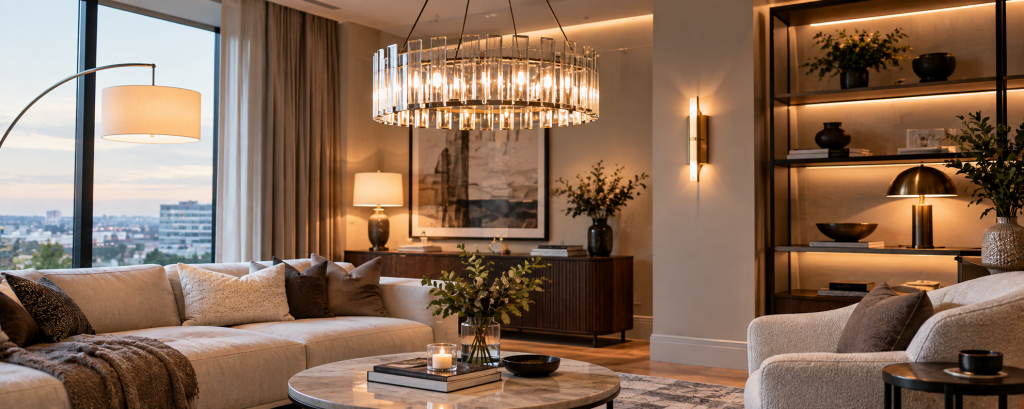
Lighting is one of the most influential elements in interior design because it affects both appearance and usability. Furniture establishes structure, colors create personality, and lighting ties the visual experience together. A room can have beautiful furniture and carefully selected accessories but still feel unfinished if the lighting is too harsh, too dim, or badly positioned. Modern lighting decor is increasingly focused on combining visual character with practical illumination.
Small rooms often create a lighting challenge because there is less wall and ceiling space for fixtures, furniture, and accessories. At the same time, proper lighting can make a compact area feel significantly more comfortable. The solution is not necessarily brighter light. Instead, the goal is to distribute light strategically so that the room feels open without becoming visually crowded.
Start With the Function of the Room
Before choosing a fixture, consider what the room is used for. A living room needs a different lighting arrangement from a reading corner, hallway, bedroom, dining space, or home office.
The most effective approach usually combines several sources instead of relying on a single central fixture. Different light levels can create flexibility throughout the day.
Selecting Modern Pieces
When exploring lighting decor, it helps to think beyond the shape of a fixture. Consider how its material, scale, finish, and light output will interact with the furniture and architecture already in the room.
That approach turns a lighting purchase into part of a complete design plan rather than an isolated decorative decision.
Use Vertical Space
Floor area is limited in small rooms, so lighting should make use of walls and ceilings. Wall sconces, pendant lights, and ceiling-mounted fixtures can provide illumination without occupying valuable surface space.
This approach is particularly useful in apartments, narrow hallways, compact bedrooms, and small home offices.
Understand the Three Basic Layers
Interior designers often think about lighting in three broad categories: ambient, task, and accent lighting. Ambient lighting provides general illumination. Task lighting helps with specific activities such as reading or working. Accent lighting draws attention to architectural features, artwork, furniture, or decorative objects.
Using all three can make a room feel more balanced.
Replace Bulky Floor Lamps
Floor lamps can be useful, but in tight spaces they sometimes interfere with movement. Wall-mounted or hanging lighting can provide similar functionality while preserving floor space. A small reading light next to a sofa, for example, can be mounted on the wall instead of taking up floor area beside the furniture.
Mirrors Can Extend the Effect
Mirrors do not create additional light, but they can help distribute existing light through a room. Positioning a mirror near a light source can make a space feel brighter and more visually open. This works especially well with decorative wall lights or windows.
Avoid a Single Bright Center Light
A single bright ceiling fixture can make a compact room feel flat. It often creates strong shadows, especially around furniture and corners.
Choose Fixtures That Match the Scale
A common mistake is selecting a light fixture based only on its appearance. Size matters just as much. A very small pendant can disappear in a large room, while an oversized fixture can dominate a compact space. The furniture arrangement should also be considered. A dining table with a long rectangular shape may work better with a linear pendant, while a round table might suit a central fixture.
Use Light to Define Zones
Open-plan rooms benefit from lighting that creates visual boundaries. A pendant can help establish a dining area, while floor or table lamps can create a separate reading zone. This makes lighting part of spatial planning rather than simple decoration.
Consider Height Carefully
The height at which a fixture is installed changes both appearance and function. A pendant positioned too low may obstruct views, while one placed too high may lose its visual relationship with the furniture beneath it. Ceiling height, room proportions, and the fixture’s actual size should all be considered together.
Material Changes the Character of Light
The material of a fixture affects how it interacts with the rest of the room. Metal shades may provide a cleaner architectural appearance, while glass can create a lighter and more open feeling. Wood, woven materials, ceramic, and textured surfaces can introduce warmth and visual depth. These choices matter particularly in rooms with neutral color palettes.
Decorative Lighting Can Become a Focal Point
A statement fixture can function almost like a piece of furniture. Sculptural chandeliers, oversized pendants, unusual table lamps, and artistic wall lights can add personality without changing the entire room. However, a focal light works best when the surrounding decor gives it enough visual space. Too many competing features can weaken the effect.
Warm Versus Cool Light
Color temperature affects mood. Warmer light often creates a relaxed atmosphere, while cooler light can feel cleaner and more energizing. Different rooms may benefit from different approaches. Bedrooms and living spaces often suit softer warmth, while work areas may require clearer task illumination.
Match Light to Activity
The right brightness depends on what people are doing. Reading, cooking, applying makeup, working, and relaxing all require different visual conditions. A flexible combination of ambient and task lighting lets one room serve several purposes without constantly changing the furniture arrangement.
Keep Fixtures Visually Light
In smaller spaces, large dark fixtures can sometimes appear heavy. Slim profiles, open structures, glass shades, and visually simple forms can help preserve a feeling of openness. This does not mean every small room needs minimal design. A dramatic piece can still work when its proportions are appropriate.
Mixing Fixtures Creates Depth
Using exactly the same type of fixture throughout a home can make the interior feel repetitive. A more layered approach combines ceiling lights, wall lights, floor lamps, and table lamps.These sources do not have to match perfectly. They should simply share enough visual characteristics to feel connected.
Conclusion
Effective lighting decor should make a room look better while also making it easier to use. The strongest results come from combining layers of light, choosing fixtures at the right scale, and considering how materials and color temperature affect the space.
A successful lighting plan does not need dozens of fixtures. It needs the right fixtures in the right places. When function and visual design work together, lighting can give even a simple room a more polished and comfortable character.