

A home exterior can collect months of dust, pollen, dirt, and organic buildup without the problem becoming obvious right away. Light-colored siding may slowly lose its brightness, trim can develop dark streaks, and entry areas may look dull even when the house is otherwise well maintained.
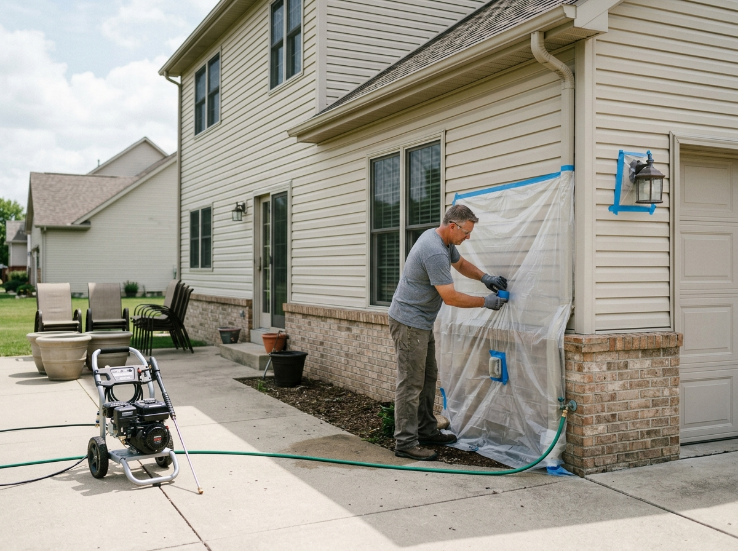
A careful professional house washing approach begins with preparing the property before water and cleaning equipment are used. Moving delicate items, checking surfaces, protecting nearby areas, and identifying problem spots can make the process safer and more effective.
Walk Around the Home Before Cleaning
Start by inspecting the exterior from several angles. Look for areas with visible staining, heavy buildup, damaged surfaces, loose materials, or places where water may already be entering around doors, windows, or other openings.
This inspection gives you a clearer idea of what needs the most attention. It also helps identify conditions that should be repaired or protected before cleaning begins. A walk around the property takes little time but can prevent problems during the actual washing process.
Remove Items That Should Not Get Wet
Outdoor furniture, decorations, toys, potted plants, electrical equipment, and other loose items can interfere with exterior cleaning. Removing them creates more room to work and keeps unnecessary objects away from the cleaning area.
Pay particular attention to items near walls, windows, entry doors, and corners where water may collect. Even objects designed for outdoor use may not need direct exposure to a strong cleaning stream.
Preparation makes the work area simpler and helps protect belongings.
Check Windows and Doors First
Windows and doors should close properly before the exterior is washed. Damaged seals, gaps, cracked frames, or poorly closed openings can allow water to enter areas that are normally protected from outside moisture.
Look around the edges of the windows and doors for visible deterioration. If something already appears damaged, note it before cleaning so it is not mistaken for damage caused during the washing process. A clean exterior should not create a new interior moisture problem.
Protect Nearby Plants
Plants near the home may be exposed to runoff, loosened debris, or cleaning materials during exterior washing. The level of protection needed depends on the landscaping and the cleaning process being used.
Covering or moving especially sensitive plants where practical can reduce unnecessary exposure. It is also helpful to understand where runoff will travel so loosened dirt does not simply collect in another part of the garden. Landscape protection should be considered before the first section of the exterior is washed.
Understand Why Cleaning Pressure Matters
Different exterior materials respond differently to water pressure. A hard surface may tolerate stronger cleaning, while delicate siding, painted wood, older masonry, or damaged areas may require a more controlled approach. Using excessive force can cause water to enter behind materials or damage a finish that already has weak spots. The goal is to remove buildup without treating the house as though every exterior surface were the same. The material itself should guide the cleaning method.
Look for Areas With Heavy Organic Buildup
Some sections of a house collect more organic material because they stay shaded, damp, or close to trees. These areas may develop darker discoloration and can become more noticeable after long periods without cleaning. Pay attention to shaded walls, lower sections of siding, corners, and other areas where moisture remains longer. These locations may need more careful treatment than the rest of the exterior. Cleaning should follow the pattern of the buildup instead of applying identical attention everywhere.
When Residential House Washing Is Useful
Residential house washing can help homeowners maintain the exterior without waiting until the entire property looks heavily stained. Regular cleaning can remove surface buildup and make it easier to notice physical problems that were previously hidden by dirt.
It can also make routine home maintenance more predictable. Instead of waiting until the exterior requires a major cleanup, homeowners can monitor the condition of different surfaces and address buildup as it returns. The objective is steady maintenance rather than occasional emergency cleaning.
Check the Foundation Area
The lower edge of the house deserves attention because it is close to soil, runoff, and splashing rainwater. Dirt can collect along this area, while drainage problems may leave the base of the exterior wetter than expected.
Look for standing water, soil that remains saturated, or stains that appear repeatedly in the same location. These conditions may tell you more about drainage than they do about the cleanliness of the wall. Cleaning should not hide a water-management problem that still needs to be addressed.
Pay Attention to Exterior Staining
Not every dark mark on a wall comes from the same source. Some stains are caused by ordinary dirt, while others may be related to organic growth, runoff, rust, or aging materials.
Knowing the likely source helps determine what kind of cleaning is appropriate. Repeated staining in one location may also indicate a nearby condition, such as water movement or a gutter problem, that should be corrected.
A surface that keeps becoming dirty in exactly the same place deserves more than repeated cleaning.
Clean Around the Most Used Areas
Front entrances, garage surroundings, steps, walkways, and other high-use areas often need more frequent attention because people and vehicles constantly bring dirt onto or near them.
These areas can also be among the first places where the exterior starts looking worn. Keeping them clean can improve the overall appearance of the home even when other less visible surfaces are cleaned less often.
Maintenance should reflect how the property is actually used.
Think About Weather Before Scheduling
Weather affects both the cleaning process and what happens afterward. Strong wind can make runoff and overspray harder to control, while rain immediately after cleaning can move loosened dirt back across nearby surfaces.
Check the expected conditions before scheduling a large exterior cleaning project. A calm period with enough drying time can make the work more controlled and predictable.
Good timing is part of good preparation.
Do Not Ignore Existing Damage
Exterior washing can reveal loose paint, cracked surfaces, damaged caulking, deteriorated wood, or other conditions that were difficult to see under dirt.
These problems should be documented before cleaning so they can be separated from any changes that happen during the process. Cleaning is not a substitute for repairing a surface that has already begun failing.
The inspection before washing can therefore be just as valuable as the washing itself.
Use a Simple Maintenance Schedule
A home does not necessarily need the same cleaning frequency in every season. Areas under trees may collect debris quickly, while exposed walls may remain cleaner for longer.
Walk around the exterior periodically and look for changes rather than relying only on a fixed calendar. This allows homeowners to respond to the actual condition of the property.
A flexible schedule based on weather, landscaping, and surface condition is usually more practical.
Conclusion
Preparing a home for exterior washing involves more than moving a few outdoor items. Checking windows, doors, plants, drainage, surface condition, staining, and weather creates a safer and more controlled cleaning process.
A useful concept to understand is weathering, which describes the gradual breakdown or change of materials caused by environmental exposure. Knowing how weather affects exterior surfaces explains why regular cleaning and maintenance can be valuable over time.