

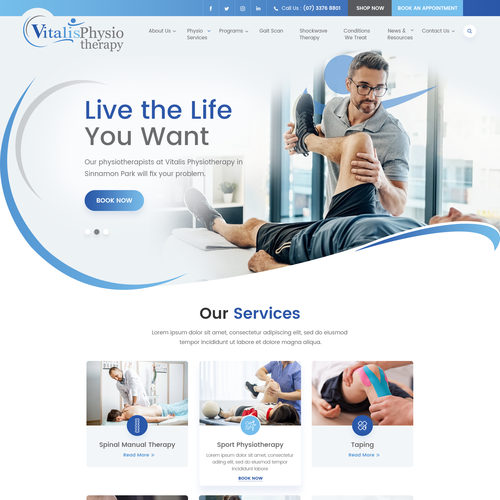
For many people looking for physiotherapy, the search for a clinic begins online. Before making an appointment, potential patients often visit a practice website to learn about its services, therapists, location, experience, and approach to care. This makes your website an important part of your first impression.
A professionally designed website can do much more than display your contact information. With the right physiotherapist website design, your website can communicate your expertise, build trust, improve the patient experience, and encourage more people to contact your practice.
Why Your Physiotherapy Website Matters
Your website represents your practice when you are not available to speak with a potential patient directly. If the website looks outdated, loads slowly, or makes information difficult to find, visitors may look elsewhere.
A modern physiotherapy website should immediately answer important questions:
- What services does the clinic provide?
- Who can benefit from those services?
- Where is the clinic located?
- Who are the physiotherapists?
- What should a new patient expect?
- How can an appointment be booked?
Clear answers help visitors understand your practice without making them search through multiple pages.
Build Trust With Professional Design
Trust is essential when someone is choosing a healthcare provider. Patients want to feel confident that they are contacting a professional and reliable practice.
Professional design can help establish that confidence from the moment someone lands on your website. A clean layout, consistent branding, high-quality imagery, readable content, and well-organized pages can make the practice appear approachable and established.
Your website should also introduce your therapists. Include relevant qualifications, professional experience, areas of specialization, and information about the clinic’s approach.
When visitors understand who will be treating them and what they can expect, they may feel more comfortable taking the next step.
Make Your Services Easy to Understand
Physiotherapy practices can offer a wide range of treatments and programs. However, listing services without explaining them may leave visitors confused.
Each important service should have its own clear section or page. Depending on your practice, this could include:
- Sports physiotherapy
- Manual therapy
- Post-surgery rehabilitation
- Back and neck care
- Injury rehabilitation
- Mobility programs
- Exercise therapy
- Pediatric physiotherapy
Explain each service using simple language. Tell visitors what the service involves, who it may be appropriate for, and what they can expect during their visit.
Well-structured service pages can make it easier for potential patients to identify the right service for their needs.
Create a Better Patient Journey
Good physiotherapist website design considers what visitors need at every stage of their online journey.
Someone discovering your clinic for the first time may want general information. Another visitor may already know which treatment they need and simply want to book an appointment.
Your website should support both types of visitors.
A logical navigation structure can guide people from your homepage to service pages, therapist profiles, frequently asked questions, and contact or booking options.
The fewer obstacles visitors face, the easier it becomes for them to interact with your practice.
Make Appointment Booking Simple
A beautiful website will not help much if visitors cannot figure out how to schedule an appointment.
Your booking options should be easy to find. Consider placing appointment buttons in your main navigation, homepage, service pages, and contact page.
Use clear calls to action such as:
Book an Appointment
Schedule Your Assessment
Contact Our Clinic
Start Your Recovery Journey
If online booking is available, make sure the process works smoothly on both desktop and mobile devices.
Mobile-Friendly Design Can Reach More Patients
People increasingly use smartphones to search for local healthcare services. If your website is difficult to use on a small screen, potential patients may leave before contacting you.
Responsive design allows your website to adapt to phones, tablets, and desktop computers.
A mobile-friendly physiotherapy website should have:
- Easy-to-read text
- Simple navigation
- Clearly visible buttons
- Fast-loading pages
- Mobile-friendly forms
- Properly sized images
- Accessible contact information
Visitors should be able to find your services, location, and booking options without zooming or constantly scrolling sideways.
Use SEO to Increase Online Visibility
Website design and search engine optimization should work together. A visually impressive website still needs to be discoverable by people searching for physiotherapy services.
An SEO-friendly website can include optimized page titles, relevant headings, descriptive URLs, internal links, useful service pages, optimized images, and location-specific information when appropriate.
A blog can also help answer common questions that potential patients search online.
For example, you might publish articles about:
- When to see a physiotherapist for back pain
- Exercises after a sports injury
- What happens during a physiotherapy assessment
- How physiotherapy supports recovery
- Common causes of neck pain
Useful content can provide value to visitors while creating additional opportunities for your practice to appear in search results.
Work With the Right Therapist Website Designer
Choosing an experienced therapist website designer can be valuable because healthcare and therapy websites have specific communication and usability requirements.
A designer who understands therapy-related practices can create a website that balances professional presentation with a welcoming patient experience.
The right designer should consider more than colors and layouts. They should understand navigation, mobile responsiveness, page structure, calls to action, accessibility, content organization, and SEO fundamentals.
Your website should reflect your practice rather than looking like a generic template.
Highlight Patient Experience
Potential patients often want to know what their first visit will be like.
Consider creating a dedicated “What to Expect” section that explains the process from booking to assessment and treatment.
You can also answer common questions about:
- Appointment duration
- What to bring
- Initial assessments
- Treatment plans
- Insurance or payment options
- Clinic location
- Parking or accessibility
Providing this information can reduce uncertainty and make new patients feel more prepared.
Choose Design Wellness for Your Physiotherapy Website
A professional website should represent your physiotherapy practice clearly while helping visitors move naturally from discovering your clinic to contacting your team.
Design Wellness specializes in website design solutions for therapy and healthcare professionals. Its approach can help physiotherapy practices create a professional digital presence that combines thoughtful design, user experience, and clear communication.
Whether you are launching a new physiotherapy practice or updating an existing website, a strategically designed website can provide a stronger foundation for your online presence.
Final Thoughts
Your website is an important part of how potential patients experience your physiotherapy practice before they ever walk through your doors.
Professional physiotherapist website design can help you present your services clearly, establish credibility, improve user experience, support search visibility, and make appointment booking easier.
When design, content, SEO, and usability work together, your website becomes more than an online brochure. It becomes a practical tool for connecting your practice with people looking for physiotherapy services.
For physiotherapists who want to create a professional and patient-focused online presence, working with a specialized therapist website designer can help turn your website into a valuable part of your practice’s growth strategy