

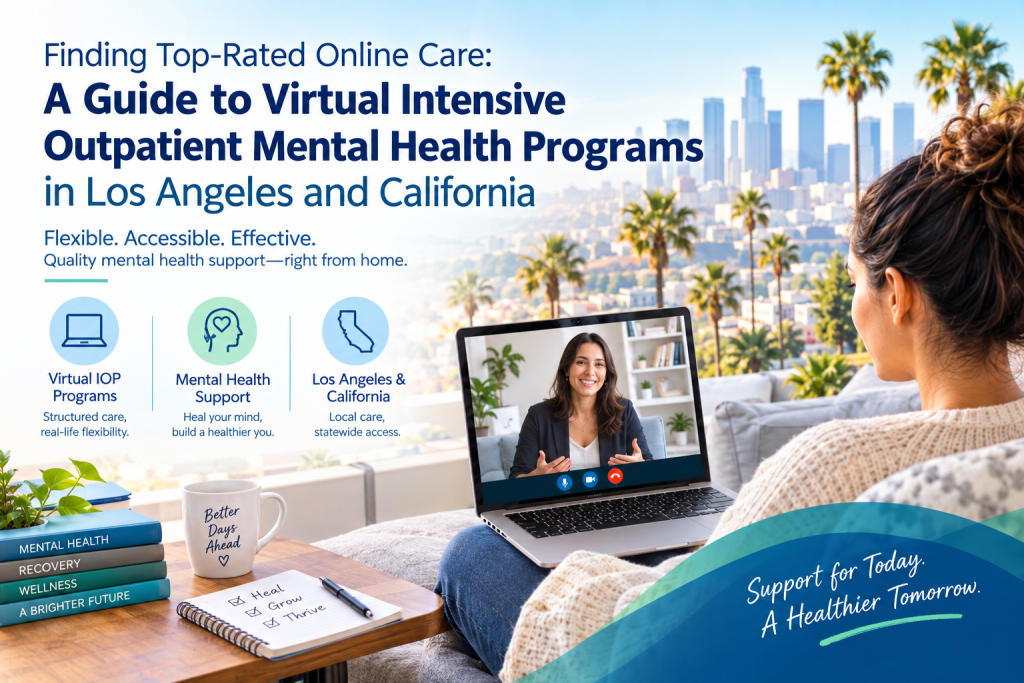
Access to mental health treatment has changed significantly with the growth of telehealth. For people in Los Angeles and throughout California, virtual behavioral healthcare can provide an alternative to traditional in-person treatment. Online programs allow eligible individuals to participate in structured therapy and support while remaining at home and continuing many of their everyday responsibilities.
Among the available options, Virtual Intensive Outpatient Programs (IOPs) can provide a level of structure between traditional outpatient therapy and more intensive forms of treatment. Understanding how these programs work and what to look for can help individuals and families make informed decisions when searching for online mental health support.
What Is a Virtual Intensive Outpatient Program?
An Intensive Outpatient Program is designed for individuals who need more structured support than a typical weekly therapy appointment but do not require 24-hour residential care. Treatment can involve multiple sessions each week and may include individual therapy, group counseling, psychiatric services, educational sessions, and recovery planning.
A Virtual iop mental health program in california delivers this type of structured outpatient support through telehealth. Instead of traveling to a treatment center for every appointment, eligible participants can connect with their providers online from an appropriate private location.
This approach can be particularly useful for adults who need regular behavioral health support while maintaining employment, education, family responsibilities, or other aspects of their daily routine.
Why Virtual Mental Health Care Is Growing in California
California’s large population and geographic size can create practical barriers to accessing specialized mental health services. Transportation, commuting time, work schedules, and distance from treatment providers can make frequent in-person appointments difficult.
Virtual treatment can reduce some of these barriers. A participant may be able to attend scheduled sessions without spending additional time traveling to and from a facility.
For people living in major metropolitan areas such as Los Angeles, this can be particularly relevant. Long commutes can make an already demanding treatment schedule harder to maintain. Online care offers an alternative delivery method for individuals who are clinically appropriate for telehealth.
However, convenience should not be the only consideration. A professional assessment is important when determining whether virtual IOP is appropriate for a person’s mental health needs, safety, and circumstances.
Exploring Virtual IOP in Los Angeles
Los Angeles offers a wide range of healthcare services, but finding a program that fits an individual’s schedule and treatment needs can still take research.
People specifically searching for Virtual iop los angeles options may want to compare the structure, services, scheduling, and clinical qualifications of different providers.
When evaluating an online IOP, prospective participants should consider whether the program provides both individual and group support. It is also useful to understand how frequently sessions take place and whether psychiatric or medication-management services are available when clinically appropriate.
Technology is another important consideration. Participants generally need a reliable internet connection, a compatible device, and a private environment for confidential conversations.
What to Look for in a Quality Virtual IOP
Searching for the Best virtual iop programs should involve more than simply comparing websites or convenience. The quality and structure of treatment are important factors to investigate.
Qualified Clinical Professionals
A reputable program should have appropriately qualified and licensed behavioral health professionals involved in treatment. Depending on the program, this may include therapists, psychiatrists, medical professionals, and other members of a clinical team.
Individualized Treatment
Mental health treatment should account for the individual’s symptoms, history, goals, and circumstances. Ask whether the provider develops personalized treatment plans rather than relying exclusively on a standardized schedule.
Individual and Group Therapy
Individual therapy provides an opportunity to discuss personal concerns privately, while group therapy can provide social connection, shared experiences, communication practice, and peer support.
Appropriate Treatment Frequency
IOP generally involves more frequent treatment than standard outpatient therapy. Prospective participants should understand the expected weekly schedule before enrolling and determine whether it can realistically fit into their routine.
Secure Telehealth Technology
Because mental health treatment involves sensitive personal information, privacy and security are essential. Individuals should understand how virtual appointments are conducted and what technology is used to protect confidential communications.
Potential Benefits of Virtual IOP
Virtual IOP can provide several practical advantages for people who are appropriate for this level of care.
Flexibility: Online sessions can eliminate travel time and may make it easier to coordinate treatment with work, school, or family responsibilities.
Accessibility: People who live farther from specialized behavioral health providers may be able to access services remotely.
Continuity: Virtual care can provide a consistent connection with a treatment team without requiring frequent trips to a physical location.
Real-world application: Participating from home can allow individuals to practice coping techniques and communication strategies within their everyday environment.
Structured support: Unlike occasional therapy appointments, IOP can provide a more consistent treatment schedule for individuals who need additional support.
Virtual IOP and Different Mental Health Needs
Virtual intensive outpatient programs may support people dealing with a range of behavioral health concerns. Depending on the provider, treatment may address conditions such as anxiety, depression, trauma-related concerns, substance use disorders, or co-occurring mental health and addiction issues.
The specific conditions and services treated vary between programs. This makes it important to discuss individual needs with the provider before beginning treatment.
Someone experiencing severe symptoms, requiring medical monitoring, or needing around-the-clock supervision may require a higher level of care. Virtual IOP should therefore be considered as one part of a broader continuum of behavioral healthcare rather than a universal solution.
Questions to Ask Before Enrolling
Before choosing a virtual program in Los Angeles or elsewhere in California, prospective participants can ask several practical questions:
- What conditions and concerns does the program treat?
- How many sessions are required each week?
- Are individual and group therapy included?
- Are psychiatric services available?
- Which professionals provide treatment?
- How are emergencies handled?
- What technology is required?
- Does the program accept insurance?
- Are there out-of-pocket costs?
- Is the program appropriate for the individual’s current level of need?
Getting clear answers can make it easier to compare programs based on meaningful factors rather than simply selecting the most convenient option.
Making Online Mental Health Treatment Part of Recovery
Treatment works best when it can be incorporated into a sustainable routine. Virtual IOP can allow eligible individuals to receive structured support while remaining connected to their homes and communities.
Participants can use skills learned during therapy in everyday situations, including managing stress, communicating with family members, establishing healthier routines, and identifying strategies for dealing with challenging emotions.
Support from family, friends, and other trusted individuals can also complement professional treatment when appropriate.
Finding the Right Virtual IOP in California
The growing availability of telehealth has expanded access to mental health services for many California residents. Virtual IOP provides an option for individuals who need structured outpatient support but may face barriers to attending treatment in person.
For people in Los Angeles, Orange County, and other California communities, researching providers carefully can help identify programs that align with their clinical needs, schedules, technology access, and financial circumstances.
The most appropriate treatment level depends on the individual. A qualified professional assessment can help determine whether virtual IOP, traditional outpatient therapy, partial hospitalization, residential treatment, or another service is suitable.
By looking beyond convenience and evaluating clinical support, treatment structure, provider qualifications, privacy, scheduling, and costs, individuals can approach the search for online mental health care with greater clarity and confidence.