


The answer lies in core drilling a specialised concrete cutting technique that’s become essential across Australian construction and renovation projects. Whether you’re planning a home renovation, commercial fit-out, or major infrastructure work, understanding core drilling can save you time, money, and plenty of headaches. This method uses diamond-tipped drill bits to cut through concrete, masonry, and even reinforced steel with remarkable accuracy.
We will explore everything you need to know about core drilling services. You’ll learn about the different types of core drilling available, common applications across residential and commercial projects, and how to choose the right equipment for your needs. We’ll also break down the costs involved, discuss safety considerations specific to Australian standards, and help you decide whether to tackle a project yourself or bring in the professionals. Let’s get stuck into it.
What Is Core Drilling and How Does It Work?
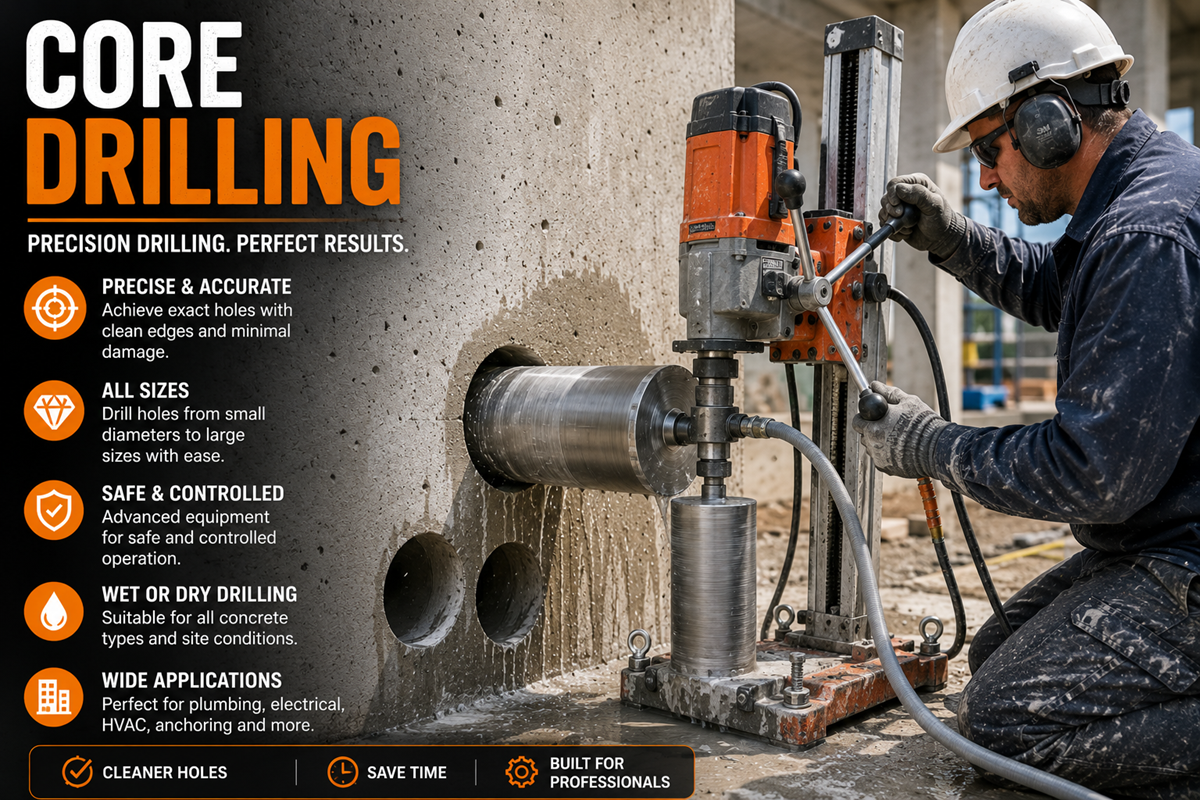
Core drilling is a precise cutting method that creates perfectly cylindrical holes in concrete, brick, stone, and other hard materials. Unlike traditional hammer drilling that pounds and chips away at material, core drilling uses a hollow, diamond-tipped bit that rotates at high speed to cut smooth, clean openings.
Precision matters enormously in concrete drilling. A poorly executed hole can weaken structural integrity, damage embedded services, or simply look unprofessional. Core drilling delivers accuracy within millimetres, which is critical when installing plumbing near electrical conduits or creating openings in load-bearing walls. This precision also means less material waste and faster installation times for follow-up trades.
Types of Core Drilling Services
Wet Core Drilling vs Dry Core Drilling
Wet core drilling uses water to cool the diamond bit and flush away debris during cutting. This method produces virtually no dust, extends bit life significantly, and allows for cutting through heavily reinforced concrete. It’s the go-to choice for most commercial and industrial applications.
Dry core drilling, on the other hand, relies on air circulation to cool the bit. While it creates more dust and puts greater wear on equipment, it’s ideal for situations where water damage is a concern like drilling near electrical installations or in areas without water access. Many contractors use vacuum attachments to manage the dust effectively.
Handheld vs Rig-Mounted Options
Handheld core drills offer flexibility for smaller projects and awkward positions. They’re perfect for creating holes up to about 100mm in diameter and work well for quick jobs like installing bathroom vents or running small pipe penetrations.
Rig-mounted core drilling equipment provides the stability and power needed for larger holes and deeper cuts. These units anchor securely to the work surface and can create openings exceeding 500mm in diameter. For heavy-duty applications in commercial construction, rig-mounted systems deliver unmatched accuracy and efficiency.
Diamond Core Drilling: The Industry Standard
Diamond core drilling has become the preferred method across the Australian construction industry. The diamond-impregnated bits cut faster, last longer, and produce cleaner results than any alternative. While the initial equipment cost is higher, the superior finish and reduced labour time make it cost-effective for professional applications.
Common Applications of Core Drilling
Core drilling serves countless purposes across residential, commercial, and industrial projects. Here’s where you’ll most commonly see it in action:
- Plumbing and Electrical Installations: Creating pathways for pipes, conduits, and cables through concrete floors, walls, and foundations. Core drilling ensures these penetrations are sized correctly for the services they’ll carry.
- HVAC System Penetrations: Air conditioning ducts, ventilation systems, and exhaust fans all require clean openings through building structures. Core drilling creates these penetrations without damaging surrounding materials.
- Structural Testing and Sample Extraction: Engineers regularly extract concrete cores to test structural integrity, strength, and composition. These samples provide crucial data for renovation projects and building assessments.
- Creating Openings for Windows, Doors, and Vents: While larger openings typically require concrete sawing, core drilling creates the starting points and handles smaller ventilation openings efficiently.
- Anchoring and Dowelling: Core drilling creates precise holes for anchor bolts, dowels, and structural connections in concrete construction projects.
What Size Core Drill Do I Need?
Choosing the correct drill bit size depends entirely on your project requirements. Core drill bits range from as small as 14mm up to over 1000mm in diameter for specialist applications.
For plumbing work, common sizes include 65mm for standard waste pipes, 100mm for larger drainage lines, and 150mm for main sewer connections. Electrical conduit penetrations typically need 25mm to 50mm holes, while HVAC applications often require 100mm to 300mm openings.
Depth capacity varies with equipment type. Handheld drills typically cut up to 300mm deep, while rig-mounted systems can penetrate depths exceeding 1000mm. For extremely deep holes, operators use extension bars to reach the required depth in stages.
Benefits of Professional Core Drilling Services
Accuracy and Clean Finishes
Professional core drilling delivers precision that’s simply unachievable with conventional methods. The clean, smooth edges require minimal finishing work and provide proper sealing surfaces for pipes and cables.
Minimal Dust and Vibration
Unlike hammer drilling or concrete cutting, core drilling produces far less dust and virtually no vibration. This matters hugely in occupied buildings, near sensitive equipment, or when working close to existing services that could be damaged by excessive vibration.
Faster Project Completion
An experienced core drilling contractor can complete in hours what might take days using alternative methods. This efficiency translates directly to lower overall project costs and reduced disruption to building occupants.
Reduced Risk of Structural Damage
The controlled cutting action of core drilling eliminates the cracking and spalling that often accompanies impact-based drilling methods. This is particularly important when working on heritage buildings or structures with existing condition concerns.
DIY vs Professional Core Drilling
Is Core Drilling a DIY Job?
For small holes in non-reinforced masonry using a handheld drill, experienced DIYers can achieve acceptable results. However, most core drilling applications benefit enormously from professional expertise.
Risks of DIY Core Drilling
Without proper training, you risk hitting underground services, damaging structural elements, or injuring yourself with powerful equipment. Core drills can bind and kick back dangerously if not handled correctly. Plus, working without knowing what’s behind the concrete can lead to catastrophic outcomes especially with electrical and gas services.
Safety Considerations
Core drilling demands strict safety protocols. In Australia, contractors must comply with SafeWork guidelines and relevant state regulations.
Before any drilling, professionals conduct service location surveys using electromagnetic locators and ground-penetrating radar. This identifies underground utilities, post-tension cables, and embedded electrical services.
Why Core Drilling Is the Smart Choice
Core drilling offers unmatched precision, cleaner results, and less structural risk compared to any alternative concrete penetration method. Whether you’re running new plumbing through a concrete slab or extracting samples for structural testing, this technique delivers professional results every time.
For Australian homeowners and builders, investing in professional core drilling services makes solid sense. The accuracy saves time during follow-up trades, the clean finishes look better, and the reduced vibration protects existing structures. While DIY might seem tempting for small jobs, the safety risks and equipment costs often outweigh any savings.