

1. Introduction: The Evolving GCC Industrial Landscape
The member states of the Gulf Cooperation Council—comprising the United Arab Emirates, Saudi Arabia, Qatar, Oman, Bahrain, and Kuwait—are undergoing a massive industrial transformation. As national vision frameworks like UAE Vision 2031, Saudi Vision 2030, and Qatar National Vision 2030 take center stage, heavy manufacturing, logistics, civil construction, marine engineering, and chemical processing are expanding at an unprecedented rate.
Behind the massive scale of gigaprojects, automated processing plants, offshore platforms, and commercial transport hubs lies a vital class of materials that keeps operations moving safely and efficiently: industrial rubber products.
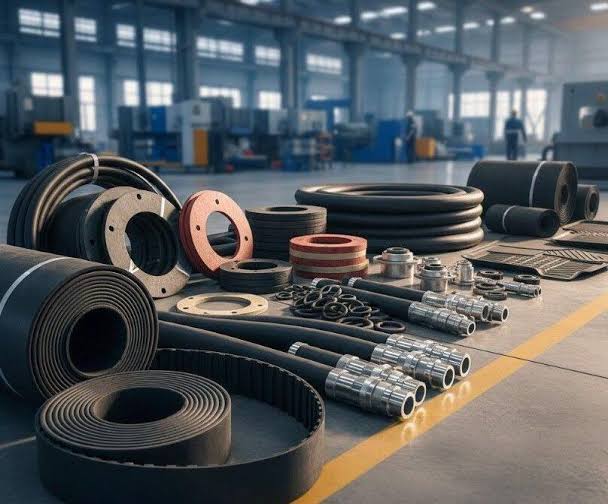
From customized extruded profiles, high-pressure gaskets, and heavy-duty O-rings to vibration isolation mounts, conveyor belt systems, and marine fenders, rubber engineering is fundamental to everyday operational continuity across the Middle East. Choosing a reliable, high-capacity rubber products supplier GCC industries can count on is no longer just a routine procurement decision; it is a critical strategy for mitigating costly downtime, ensuring regulatory compliance, and protecting long-term capital investments in harsh desert and maritime environments.
2. Operating Challenges in the Middle East Environment
Industrial operations within the Arabian Gulf face some of the most aggressive working environments anywhere in the world. Equipment operating in North America or Western Europe rarely encounters the simultaneous combination of extreme thermal fluctuations, intense solar ultraviolet exposure, and abrasive particulate loads typical of the GCC.
Thermal Extremes and Heat Degradation
Ambient shade temperatures across summer months in the Gulf regularly exceed 45°C to 50°C, with direct surface temperatures on exposed machinery surpassing 70°C. For standard elastomeric compounds, prolonged heat exposure leads to thermal degradation, chain scission, severe compression set, hardening, and loss of tensile strength. Industrial applications require specialized rubber compounds capable of maintaining structural elasticity across extended temperature cycles without cracking or failing under dynamic loads.
Chemical Exposure and Sour Environments
The region’s vast oil refineries, petrochemical processing plants, gas fractionating facilities, and desalination units routinely subject sealing components to aggressive chemicals. Exposure to aromatic hydrocarbons, sour gas ($H_2S$), synthetic turbine oils, concentrate brine, and process steam quickly breaks down low-grade rubber. Material engineers must select advanced fluoroelastomers and synthetic polymers tailored to specific media compositions.
Abrasive Dust and Mechanical Wear
Sandstorms and fine windborne particulate matter act as abrasive grinding media. If dynamic seals, wipers, or conveyor belting lack adequate wear resistance and tear strength, ingress occurs rapidly. Fine dust entering fluid lines causes dynamic seal scoring, hydraulic fluid contamination, and accelerated pump or cylinder wear.
Marine and Offshore Salinity
Offshore rigs, marine ports, and coastal infrastructure require rubber materials that withstand constant saltwater immersion, marine growth, tidal movement, and intense coastal sunlight. Standard materials degrade rapidly under high salinity combined with ozone exposure.
3. Core Materials and Polymer Engineering
Understanding the distinct properties of different rubber polymers is crucial for selecting the correct product for specific operational requirements. A reputable rubber products supplier GCC procurement teams work with must stock and fabricate products using a broad spectrum of elastomeric compounds:
+-----------------------------------------------------------------------------------------+
| Polymer        | Temp Range       | Primary Strengths               | Common GCC Uses   |
+-----------------------------------------------------------------------------------------+
| Viton (FKM)    | -20°C to +200°C  | High heat, fuel, acid, $H_2S$    | Oilfield, Refinery|
| NBR (Nitrile)  | -30°C to +100°C  | Oil & abrasion resistance       | Hydraulics, Seals |
| EPDM           | -45°C to +150°C  | Ozone, UV, steam, weather       | MEP, Water, Marine|
| Silicone (VMQ) | -60°C to +230°C  | Wide thermal stability, non-toxic| Food, Pharma, HVAC|
| Neoprene (CR)  | -40°C to +120°C  | Flame, weather, oil balance     | Marine, Construction|
| Natural Rubber | -50°C to +80°C   | Exceptional tear & tensile      | Anti-vibration, Belts|
+-----------------------------------------------------------------------------------------+
Viton (FKM / Fluoroelastomer)
- Thermal Performance: Excellent stability up to +200°C (and higher during short peak bursts).
- Chemical Profile: Superior resistance to petroleum-based fluids, aromatic hydrocarbons, aggressive acids, and sour gas compounds ($H_2S$).
- Application Focus: Critical downhole tools, valve stems, chemical transport gaskets, and refinery sealing assemblies.
NBR (Nitrile / Buna-N)
- Thermal Performance: Reliable operating envelope between -30°C and +100°C.
- Chemical Profile: Outstanding resistance to mineral oils, greases, hydraulic fluids, and diesel fuels.
- Application Focus: Standard hydraulic cylinder seals, pneumatic seals, fuel hose liners, and heavy equipment oil seals.
EPDM (Ethylene Propylene Diene Monomer)
- Thermal Performance: Outstanding weatherability from -45°C up to +150°C.
- Chemical Profile: Highly resistant to ozone aging, direct sunlight, polar solvents, steam, hot water, and diluting acids. Incompatible with mineral oils or fuels.
- Application Focus: HVAC expansion joints, water distribution gaskets, building curtain wall glazing profiles, and outdoor enclosure seals.
Silicone (VMQ)
- Thermal Performance: Broad temperature envelope from -60°C to +230°C.
- Chemical Profile: Inert, food-safe, non-toxic, with high resistance to ozone, UV exposure, and thermal degradation.
- Application Focus: Food processing lines, medical facilities, lighting enclosure seals, high-temperature fluid delivery lines, and cleanroom gaskets.
Neoprene (Polychloroprene / CR)
- Thermal Performance: Moderate operational envelope from -40°C to +120°C.
- Chemical Profile: Balanced physical toughness, moderate oil resistance, good flame resistance, and excellent adhesion to metals.
- Application Focus: Marine dock fenders, elastomeric bridge bearings, expansion joint fills, and marine hatch seals.
4. Key Sector Applications Across GCC Industries
Oil, Gas, and Petrochemicals
The hydrocarbon sector forms the backbone of heavy industry in Saudi Arabia, Abu Dhabi, Kuwait, Qatar, and Oman. Rubber engineering in this domain demands absolute precision and strict adherence to international standards (such as NACE MR0175 / ISO 15156 for sour gas service). Key components include:
- High-Pressure Rotary and Reciprocating Seals: Designed to handle abrasive drilling fluids and high mechanical shear.
- Flange Gaskets and Valve Seats: Formulated with Viton, FFKM, or spirally wound metallic-elastomeric hybrids to prevent fugitive chemical emissions.
- Blowout Preventer (BOP) Elements: Heavy elastomer assemblies engineered to seal wellbores under extreme pressure differentials.
Marine and Port Infrastructure
With major maritime trade hubs like Jebel Ali (Dubai), King Abdulaziz Port (Dammam), Khalifa Port (Abu Dhabi), and Sohar Port (Oman), marine equipment demands robust rubber protection:
- Marine Fenders: Heavy-duty cylindrical, arch, cell, and cone rubber fenders installed along quay walls to absorb massive kinetic energy during ship berthing.
- Hatch Cover Seals and Door Profiles: Sponge and solid extruded profiles designed to maintain watertight integrity on cargo vessels and offshore support craft.
- Dredging Hoses and Floating Pipes: Thick, steel-reinforced rubber hoses designed for sediment removal and coastal reclamation projects.
Civil Construction and Architectural Infrastructure
The construction sector throughout Riyadh, Dubai, Doha, and Muscat requires specialized rubber products to maintain structural flexibility and energy efficiency:
- Elastomeric Bridge Bearings: Laminated steel-and-rubber pads designed to absorb horizontal thermal expansion and vertical dynamic live loads from heavy traffic.
- Facade and Curtain Wall Seals: Precision EPDM extrusions that maintain air, dust, and water seals around glass panels on high-rise structures under wind load stresses.
- Pipe Joint Seals and Waterstops: Molded elastomeric rings and PVC-rubber waterstops embedded in concrete joints for basements, tunnels, and water reservoir structures.
Water Desalination, Utilities, and MEP
Given the arid climate of the Gulf, water desalination plants and power generation facilities are critical lifelines:
- Butterfly Valve Seats and Diaphragms: EPDM and NBR liners designed to handle high-salinity seawater, reverse osmosis chemical treatments, and potable distribution water.
- Vibration Dampeners and Flexible Connectors: Rubber expansion joints installed on high-capacity pumping lines to absorb motor vibration and reduce pipe stress.
5. Quality Standards and Technical Procurement Best Practices
Selecting high-performance industrial components requires clear criteria beyond basic price evaluations. Low-cost, non-standard rubber components often deteriorate within months when subjected to Gulf operating conditions, leading to unexpected plant shutdowns and costly secondary equipment damage.
+------------------------------------------------------------------------------------+
| Evaluation Criteria   | Key Standards & Indicators                                 |
+-----------------------+------------------------------------------------------------+
| Polymer Integrity     | ASTM D2000 specification system, batch tracing             |
| Quality Management    | ISO 9001:2015 certified manufacturing facilities           |
| Dimensional Accuracy  | ISO 3302-1 tolerance standards (E1/E2 classes for profiles)|
| Testing Standards     | ASTM D395 (Compression Set), ASTM D412 (Tensile Properties)|
| Industry Approvals    | WRAS (Potable water), FDA (Food grade), API standards      |
+-----------------------+----------------------------------------------------+
Key Procurement Checklist:
- Verify ASTM D2000 Specifications: Request material certificates that verify compound line callouts according to the ASTM D2000 standard. This ensures the rubber compound meets specified hardness, tensile strength, heat resistance, and fluid immersion standards.
- Evaluate Compression Set Resistance: In static and dynamic seals, low compression set (determined via ASTM D395 testing) is crucial to ensure the elastomer returns to its original thickness after compression, maintaining a reliable seal over years of operation.
- Inspect Dimensional Tolerances: Precision profiles and gaskets should comply with recognized tolerance classes like ISO 3302-1. Accurate dimensions prevent installation binding or poor seal compression.
- Demand Full Traceability: Leading industrial suppliers maintain comprehensive lot batch numbers, compound batch reports, and origin tracking from raw polymer mixing to final molding or extrusion.
6. Maintenance and Storage Best Practices for Hot Climates
To maximize the shelf life and operational performance of rubber products stored in regional warehouses, facilities teams must follow strict storage guidelines outlined in standards like ISO 2230 and DIN 7716:
- Control Storage Temperatures: Elastomer stock should ideally be stored in temperature-controlled spaces (below 25°C). Avoid storing inventory in unventilated metal containers or direct exposure to desert sunlight.
- Protect Against Ozone and Electric Discharge: Store rubber products away from high-voltage electrical equipment, electric motors, arc welding gear, or ozone generators, as ozone attacks double bonds in unsaturated elastomers (like natural rubber and NBR) causing rapid surface cracking.
- Minimize Stress and Deformity: O-rings, gaskets, and long extruded profiles should be stored relaxed—avoid hanging small O-rings on hooks under tension, which causes permanent deformation and strain cracking over time.
- Practice First-In, First-Out (FIFO) Stock Management: Maintain accurate inventory rotation schedules, paying close attention to shelf-life limits for different polymer classes (e.g., standard NBR shelf life vs. extended-life Viton or Silicone).
7. Strategic Advantages of Working with a Regional GCC Supplier
Partnering with an established regional supply partner offers clear operational advantages over relying exclusively on overseas imports:
- Rapid Emergency Dispatch: Unplanned machinery downtime costs industrial operations thousands of dollars per hour. Regional stock availability in hubs like Dubai, Sharjah, Dammam, or Doha ensures replacement gaskets, O-rings, and seals reach job sites within hours instead of weeks.
- Custom Extrusion and On-Demand Fabrication: Local manufacturing facilities equipped with modern vulcanization, waterjet cutting, and profile extrusion lines can quickly produce custom gaskets and profiles tailored to legacy or bespoke machinery.
- On-Site Engineering Consultations: Regional technical specialists can visit operating sites, analyze failed components, conduct material compatibility audits, and recommend engineered compound upgrades to improve service life.
8. Conclusion
As industrial infrastructure throughout the United Arab Emirates, Saudi Arabia, Qatar, Oman, Bahrain, and Kuwait continues to expand, maintaining operational efficiency requires high-integrity components built to withstand local conditions. Industrial rubber products—though often modest in size—play a vital role in preventing leaks, absorbing structural stress, and maintaining heavy mechanical systems across the region.
By prioritizing polymer quality, adhering to rigorous material standards, and partnering with an experienced rubber products supplier GCC industries rely on, maintenance engineers and procurement teams can protect critical equipment, improve plant safety, and drive long-term operational success across the region.