

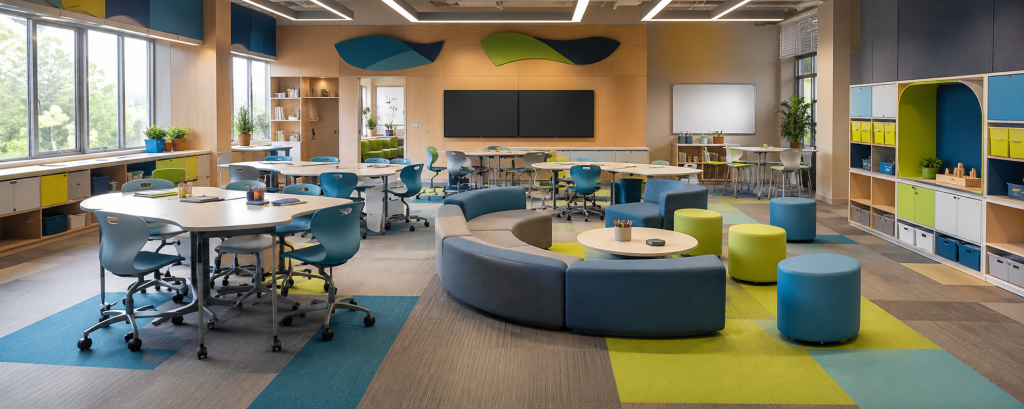
Educational facilities are shifting away from traditional layouts toward dynamic and versatile learning environments. Modern schools, colleges, and universities require spaces that foster collaboration, encourage critical thinking, and adapt to diverse teaching methodologies. Designing these spaces effectively involves understanding student behavior, utilizing ergonomic principles, and selecting durable materials that withstand high traffic while maintaining a professional aesthetic.
When planning the layout of an educational facility, the focus must extend beyond standard desks and chairs. Modern institutions are prioritizing multi purpose zones that can easily transition from direct instruction to collaborative group work. Integrating flexible elements into these environments helps educators implement varied pedagogical strategies, ultimately improving engagement and student outcomes.
Implementing innovative classroom furniture design allows schools to maximize their square footage while creating inclusive spaces for all learners. Modular desks, mobile storage units, and agile seating options enable rapid room reconfigurations, saving valuable instruction time. By investing in scalable and highly adaptable furniture solutions, educational institutions create environments that support both immediate teaching goals and long term developmental needs.
Crucial Pillars of Ergonomics in Student Furniture
Student well being directly impacts academic performance and focus duration. Ergonomic furniture solutions prevent physical strain, reduce fatigue, and support proper posture throughout extended learning sessions. Tailoring furniture to the developmental stages of students ensures that physical comfort actively aids the cognitive process rather than hindering it.
High quality educational seating must provide adequate lumbar support, proper seat depth, and height options that keep feet flat on the floor. When students are physically comfortable, their attention spans increase, behavioral disruptions decrease, and overall information retention improves. Incorporating active seating choices, such as wobble stools or chairs with gentle natural flex, helps younger learners channel energy constructively while maintaining concentration.
For older students and higher education environments, adjustable height workstations provide similar physiological benefits. Allowing students to alter their posture from sitting to standing during long lectures or research sessions stimulates blood circulation and combats the lethargy often caused by static seating.
Fostering Collaboration Through Flexible Learning Zones
The modern economy values collaboration and communication, traits that are nurtured early through group activities and peer to peer learning. Traditional rows of heavy, static desks often act as physical barriers to team projects and interactive discussions. Modern layouts solve this issue by introducing adaptive collaboration clusters.
Configuring learning spaces with teardrop, crescent, or wave shaped tables allows instructors to combine individual pieces into larger collaborative pods. These geometric shapes facilitate easy group formations without leaving awkward dead zones or leaving students isolated. When group work finishes, the furniture separates quickly to accommodate independent study or test taking configurations.
Beyond the core classroom, common areas and hallways are transforming into secondary learning zones. Equipping these breakout zones with soft modular lounge seating, built in charging stations, and mobile media carts turns underutilized real estate into productive hubs for group study, casual mentoring, and student socialization.
Selection Criteria for High Traffic Educational Environments
Educational furniture represents a substantial capital investment, making durability, safety, and longevity critical selection criteria. School environments subject furniture to intense daily use, requiring commercial grade materials that resist scratching, staining, and impact damage.
Specifying high pressure laminates, heavy duty steel frames, and solid core materials ensures that desks and tables retain their structural integrity for decades. Edge banding technology is another crucial factor, as robust, tamper resistant edges prevent moisture infiltration and peeling over time. Selecting easy to clean materials helps maintenance staff keep surfaces sanitized with minimal effort, supporting overall campus health.
Sustainability is another essential consideration for forward thinking institutions. Partnering with manufacturers that utilize recycled materials, low emitting finishes, and sustainable manufacturing processes helps schools meet environmental compliance standards while fostering a healthier indoor air quality for students and staff.
Integrating Technology for Seamless Interactive Learning
Technology is deeply embedded in modern education, requiring spaces designed to support digital tools without creating physical clutter or tripping hazards. From interactive displays to individual student laptops, furniture must seamlessly accommodate power, data, and device storage.
Smart student tables equipped with integrated power hubs, flip up charging ports, and concealed cable management channels keep workspaces orderly and functional. This integration eliminates the safety risks associated with extension cords running across aisles, creating a neat and distraction free environment.
Higher education lecture halls and seminar rooms benefit greatly from media integrated tables that facilitate easy connection to shared display screens. This setup allows students to share screen content directly from their personal devices during group presentations, creating a participatory learning dynamic.
Designing Specialty Spaces and Advanced STEM Labs
Science, Technology, Engineering, and Math fields require distinct spatial planning due to specialized equipment, strict safety regulations, and unique spatial needs. STEM labs, makerspaces, and art studios demand robust, specialized furniture solutions that differ significantly from general lecture environments.
These high demand spaces require chemical resistant surfaces, heavy duty casters, and height adjustable workbenches that accommodate both precision assembly tasks and large scale collaborative projects. Mobile storage towers and pegboards keep tools organized, visible, and easily accessible, optimizing project efficiency and maintaining strict workshop safety standards.
Flexibility remains paramount even within specialized laboratories. Utilizing mobile instructor demonstration stations and overhead power drops allows a single room to serve as a chemistry lab in the morning, a robotics workshop in the afternoon, and an evening community education space.
Enhancing Campus Appeal Through Unified Design Aesthetics
While functionality and durability remain the top priorities, the visual design of an educational facility plays a vital role in institutional branding and student enrollment. A cohesive, modern design aesthetic reflects a progressive academic culture and creates an inspiring environment that students enjoy visiting every day.
Thoughtful use of color psychology can stimulate creativity in makerspaces, foster calmness in testing centers, and encourage lively discussion in dining commons. Coordinating furniture finishes, fabrics, and frame colors with the school color palette reinforces institutional identity and builds community pride.
Selecting timeless designs ensures that the interior spaces look modern and relevant for years to come. Clean lines, minimalist structures, and sophisticated neutral bases paired with vibrant accent pieces create a balanced environment that feels mature, professional, and welcoming.
Frequently Asked Questions
What are the core benefits of using modular furniture in classrooms?
Modular furniture allows educators to quickly reconfigure room layouts to support different teaching styles, such as independent testing, collaborative group work, or direct lectures. This adaptability maximizes classroom utilization, improves student engagement, and accommodates varying class sizes with ease.
How does ergonomic furniture improve student learning outcomes?
Ergonomic furniture reduces physical discomfort, fatigue, and restlessness by supporting natural body alignment and blood circulation. When students are physically comfortable, they experience fewer distractions, maintain focus for longer durations, and absorb information more effectively.
What materials are most suitable for high traffic educational furniture?
High traffic educational furniture should utilize high pressure laminates, heavy duty powder coated steel frames, solid wood cores, and impact resistant edge bands. These commercial grade materials resist scratches, stains, and mechanical wear, ensuring long term durability and value.
How can classrooms effectively manage technology and power cables?
Modern educational furniture addresses technology integration through built in power hubs, surface level charging docks, and integrated wire management trays. These features route cords safely down table legs or through floor tracks, minimizing tripping hazards and maintaining clutter free workspaces.
What is active seating and how does it help students?
Active seating options, such as wobble stools, balance balls, or flexible chairs, permit slight, controlled bodily movement while sitting. This subtle physical movement helps students expend excess energy constructively, which improves attention spans and concentration, particularly for individuals with high tactile sensory needs.
Conclusion
Creating an effective modern educational environment requires a strategic balance between ergonomic support, flexible furniture configurations, technological integration, and structural durability. By replacing static layouts with agile furniture solutions, educational institutions create responsive learning spaces that accommodate diverse teaching methods and enhance student collaboration.
Investing in commercial grade, beautifully designed spaces not only safeguards the physical well being of the student body but also reinforces the long term academic mission and aesthetic value of the entire institution.