

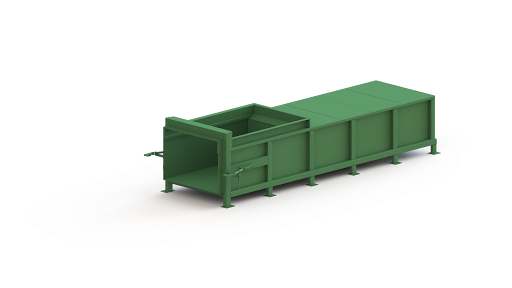
Managing large volumes of waste requires equipment that can reduce material volume, improve handling and support efficient transport. At transfer stations, compactors form an important part of the overall processing system by compressing loose material into denser loads. This can help facilities make better use of available space while preparing waste for transportation, recovery or further processing. Australian waste facilities can also integrate compaction with sorting and material recovery systems to create more coordinated workflows.
How Compaction Supports Waste Operations
Loose waste can occupy substantial space, particularly when materials arrive continuously throughout the day. A stationary compactor reduces the volume of this material, allowing more waste to be processed within the available facility footprint.
Modern Waste Compactors can also support more efficient loading and transportation. By increasing the density of material, facilities can make better use of available payload capacity and potentially reduce the number of transport movements required for a given volume of waste.
This is particularly relevant for transfer stations handling substantial quantities of municipal, commercial, industrial or construction-related waste.
Choosing Equipment for the Waste Stream
Different facilities have different throughput requirements, so compaction equipment needs to correspond with the volume and type of material being handled. Feed arrangements can also vary, with systems designed to work with push pits, moving floors, conveyors and front-end loaders.
The TS4 has a 4.0 m³ chamber and a stated working capacity of up to 240 m³ per hour, while the TS8 has an 8.0 m³ chamber and a working capacity of up to 480 m³ per hour.
These specifications illustrate why throughput should be considered alongside chamber size, feed method and available site space when planning a compaction system.
Connecting Compaction With Recycling
Compaction does not have to operate as an isolated process. In an integrated transfer station, incoming material can move through conveyors and sorting equipment before residual waste reaches a compactor. Recyclable materials such as cardboard, paper, plastics and metals can be separated for further processing.
This approach can make recycling solutions more effective by connecting material separation with subsequent handling and transport stages.
The exact equipment combination depends on the material being processed and the recovery objectives of the facility.
Improving Transport Efficiency
Transport can represent a significant operational consideration for waste facilities. When loose material is compacted into denser loads, more material can potentially be moved within applicable vehicle payload limits.
The compaction process can therefore contribute to more organised loading and fewer transport movements, depending on the waste type, equipment configuration and transport requirements.
Facilities should assess these factors alongside local transport regulations and their own waste volumes when determining the appropriate equipment configuration.
Supporting Cleaner Work Areas
Waste handling can create operational challenges when loose materials accumulate around processing areas. Effective compaction can reduce the volume of loose waste and help minimise issues such as windblown debris, obstructions and material spillage.
Good site design remains important, however. Equipment positioning, access routes, maintenance areas and worker safety should all be considered during the planning stage.
Considering the Complete Processing System
A compactor is only one component within a modern waste facility. Depending on the material stream, a complete system may include bag openers, conveyors, screens, shredders, optical sorters, magnets, balers and other processing technologies.
Considering these processes together can help facilities determine where compaction fits within their overall material flow rather than selecting machinery in isolation.
Conclusion
Compactors can play an important role in Australian waste facilities by reducing material volume, improving handling and supporting more efficient transport. Facilities considering stationary compaction equipment can explore the engineering, manufacturing and installation services provided by OGTEC for transfer station and resource recovery applications.