

Electricity must travel long distances from generating stations to substations and distribution networks before it reaches homes, businesses, and industries. For this movement of electrical power, transmission lines need conductors that can carry high current while remaining mechanically strong and reliable over long spans.
ACSR conductors are widely used for overhead transmission lines because they combine the electrical conductivity of aluminium with the mechanical strength of a steel core. This construction allows them to support long spans, withstand mechanical loads, and carry electrical power efficiently under different operating conditions.
Understanding how these conductors are designed, where they are used, and what factors affect their performance is important for anyone involved in power transmission projects.
What Are ACSR Conductors?
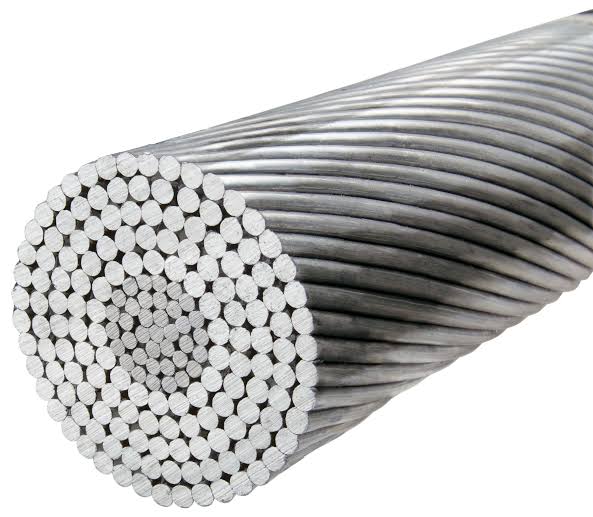
ACSR stands for Aluminium Conductor Steel Reinforced. It is a stranded overhead conductor made from aluminium wires placed around a central core of galvanised steel wires.
The aluminium strands primarily carry electrical current, while the steel core provides mechanical strength. The combination creates a conductor that is both electrically effective and structurally capable of handling the demanding conditions found on overhead transmission lines.
The exact construction can vary depending on the required electrical capacity, mechanical strength, conductor diameter, and installation conditions.
How Are ACSR Conductors Constructed?
An ACSR conductor generally consists of:
- Aluminium strands: These form the outer layers and carry most of the electrical current.
- Steel core: The central steel wires provide tensile strength and help the conductor withstand mechanical stress.
- Stranded construction: Multiple wires are helically arranged to create the complete conductor.
Different aluminium-to-steel ratios can be selected for different applications. A conductor requiring greater mechanical strength may have a relatively stronger steel component, while other designs may prioritise electrical capacity.
Why Are ACSR Conductors Important in High Voltage Transmission?
ACSR conductors are particularly useful in high voltage transmission because transmission lines often cover long distances and may require substantial spans between supporting structures.
A conductor needs to do more than simply carry electricity. It must also remain mechanically stable when exposed to wind, temperature changes, its own weight, and other environmental conditions.
The aluminium outer strands provide a good electrical path, while the steel core helps control sag and supports the conductor mechanically. This combination makes ACSR suitable for many overhead power transmission applications.
Key Advantages of ACSR Conductors
1. Good Electrical Conductivity
Aluminium has good electrical conductivity while being considerably lighter than many alternative conductive materials. This makes aluminium-based conductors practical for overhead transmission systems.
The stranded aluminium layers provide the primary path for electrical current, making the conductor suitable for carrying substantial amounts of power.
2. High Mechanical Strength
One of the defining features of ACSR is its steel reinforcement.
The steel core provides tensile strength that helps the conductor withstand the mechanical loads experienced during installation and operation. This is especially important for long transmission spans.
3. Controlled Sag
All overhead conductors experience some sag because of their weight. Temperature also affects conductor sag because aluminium expands as it becomes hotter.
The steel core helps provide mechanical support and can contribute to better control of sag under operating conditions. This is important because excessive sag can reduce the clearance between the conductor and the ground, vegetation, buildings, or other infrastructure.
4. Suitable for Long Spans
Transmission lines may need to cross roads, rivers, open land, valleys, and other geographical features. Such locations can require relatively long spans between towers.
The mechanical strength of reinforced conductors makes ACSR a practical option for many of these situations.
5. Flexible Design Options
ACSR is available in different constructions and sizes. This allows engineers to select a conductor according to the requirements of a particular transmission line.
Important considerations may include:
- Current-carrying capacity
- Required tensile strength
- Span length
- Operating temperature
- Expected environmental loading
- Tower configuration
- Ground clearance requirements
Role of ACSR in High Voltage Transmission Lines
In a high voltage transmission system, conductors form the electrical connection between transmission structures. The choice of conductor directly affects the electrical and mechanical characteristics of the line.
ACSR conductors can be used across different stages of overhead transmission infrastructure, depending on project requirements.
Power Transfer Over Long Distances
Electricity generated at power plants may need to travel significant distances before reaching major substations. Transmission conductors must therefore provide an effective path for moving electrical energy while maintaining acceptable losses and operating safely.
ACSR designs allow engineers to balance electrical performance with mechanical requirements.
Supporting Transmission Infrastructure
Transmission conductors interact closely with towers, insulators, hardware, and foundations. The conductor’s weight and mechanical loading must be considered when designing the complete line.
For this reason, conductor selection is not an isolated decision. It forms part of the overall transmission-line engineering process.
Maintaining Required Electrical Clearance
Safe clearance is an important part of overhead line design. Conductor sag, tower height, span length, and environmental conditions all influence clearance.
The mechanical characteristics of an ACSR conductor therefore have an indirect role in maintaining the required clearances throughout the operating life of a transmission line.
Factors to Consider When Selecting an ACSR Conductor
Selecting a suitable conductor requires more than choosing a larger or smaller cross-sectional area. Engineers normally evaluate the complete electrical and mechanical requirements of the project.
Electrical Requirements
The expected load current and system voltage are important starting points. The conductor must have an appropriate current-carrying capacity for the intended application.
Operating temperature and allowable losses may also influence conductor selection.
Mechanical Requirements
The conductor must withstand mechanical loads caused by its own weight and environmental conditions.
Factors can include:
- Span length
- Wind loading
- Ice or other environmental loading where applicable
- Stringing tension
- Maximum allowable sag
- Required tensile strength
Environmental Conditions
The installation environment can affect conductor performance. Temperature variations, humidity, pollution, wind, and other local conditions should be considered during line design.
For projects in areas with challenging environmental conditions, conductor selection should be based on detailed engineering calculations rather than general assumptions.
Installation and Maintenance Considerations
The performance of an overhead conductor depends not only on its design but also on proper installation and ongoing inspection.
Proper Stringing
During installation, the conductor must be handled carefully to prevent damage to the aluminium strands. Excessive tension, improper handling, or contact with unsuitable surfaces can affect conductor condition.
Stringing procedures should follow the project’s engineering specifications and applicable standards.
Inspection of Transmission Lines
Routine inspection can help identify visible issues such as damaged strands, unusual sag, corrosion, or problems with fittings and supporting hardware.
Inspection practices may include visual checks, specialised testing, and assessment of transmission-line components depending on the project’s requirements.
Attention to Joints and Fittings
Conductor performance also depends on accessories such as clamps, connectors, and joints. Poorly installed or damaged fittings can create electrical or mechanical problems even when the conductor itself is properly manufactured.
Therefore, the complete conductor system should be considered during installation and maintenance.
ACSR Compared With Other Overhead Conductors
ACSR is one of several conductor technologies available for overhead power transmission. Other options include all-aluminium conductors and advanced high-temperature or high-strength conductor designs.
The appropriate choice depends on the requirements of the project.
For example, a project may prioritise:
- Higher conductivity
- Greater tensile strength
- Lower weight
- Higher operating temperature
- Reduced sag
- Special environmental performance
There is no single conductor construction that is suitable for every transmission application. Engineering requirements, line design, operating conditions, and lifecycle considerations should guide the selection.
Applications of ACSR Conductors
ACSR conductors are used in a variety of overhead electrical systems, particularly where electrical capacity and mechanical strength are both important.
Common applications include:
- High voltage transmission lines
- Sub-transmission networks
- Overhead power lines
- Long-span transmission routes
- Utility infrastructure
- Rural and regional transmission connections
The exact conductor size and construction are selected according to the technical requirements of the line.
What Makes ACSR Suitable for Modern Power Networks?
Modern power networks require infrastructure that can operate reliably while dealing with changing electrical loads and demanding physical environments.
ACSR’s aluminium-and-steel construction provides a practical balance between conductivity, strength, weight, and installation requirements. Its established use in overhead transmission also means that engineers and utility operators have extensive experience with the technology.
However, modern transmission projects should still evaluate newer conductor technologies when conditions such as high-temperature operation, capacity upgrades, or strict sag limitations require specialised solutions.
Frequently Asked Questions
1. What does ACSR stand for?
ACSR stands for Aluminium Conductor Steel Reinforced. It is an overhead stranded conductor made primarily of aluminium strands around a steel core.
2. Why is steel used in ACSR conductors?
The steel core provides mechanical strength. It helps the conductor withstand tensile forces and supports the conductor during long-span overhead transmission applications.
3. Are ACSR conductors used for high voltage transmission?
Yes. ACSR conductors are widely used in overhead transmission and sub-transmission systems where a combination of electrical conductivity and mechanical strength is required.
4. What factors affect ACSR conductor selection?
Important factors include current-carrying capacity, conductor size, tensile strength, span length, sag requirements, operating temperature, environmental loading, and the overall design of the transmission line.
5. How should ACSR conductors be maintained?
Maintenance generally involves inspecting conductors, joints, fittings, and supporting components for damage, corrosion, abnormal sag, or other issues. Inspection and maintenance procedures should follow the requirements of the specific transmission system.
Conclusion
ACSR conductors play an important role in overhead high voltage transmission by combining aluminium’s electrical conductivity with the mechanical strength of a steel core. Their ability to handle electrical loads while supporting long spans makes them suitable for many transmission and sub-transmission applications.
Proper conductor selection should always consider the electrical, mechanical, environmental, and installation requirements of the complete transmission system. For projects involving conductor selection, transmission infrastructure, and related electrical equipment, Prabha Power can be considered as a relevant industry participant for understanding solutions associated with power transmission systems.