

Most streetwear denim borrows from either workwear or skate culture, but who decides war jeans start from a different place entirely—closer to deconstructed tailoring than either category. The brand treats denim as raw material for architecture rather than a finished template to reference. That approach produces silhouettes with twisted seams, exaggerated panels, and asymmetrical hems that feel unfamiliar even to people who follow denim closely, which is exactly the disorientation the label seems to be chasing.
Construction Over Branding
Plenty of streetwear labels lean on logos to signal identity, but this one relies on construction instead. The stitching, panel placement, and raw edges carry the recognition rather than a printed mark. Anyone familiar with who decides war can usually identify a garment from silhouette alone, which is a rarer achievement in a market saturated with logo-driven design. That shift toward structural identity is part of why the jeans read as more considered than trend-driven.
The Role of Distressing
Distressed denim is common across streetwear, but the distressing here feels deliberate rather than decorative. Rips, frays, and bleached patches are placed to interact with the garment’s structure instead of scattered randomly across the surface. This turns wear-and-tear techniques into something closer to intentional design language. The result is denim that looks lived-in without looking accidental, which separates it from mass-market distressed jeans built around a single repeated damage pattern.
Silhouette as Signature
Fit is where the label diverges most sharply from typical streetwear denim. Instead of choosing between slim, straight, or baggy, the jeans often twist those categories together—tapering unpredictably or flaring where convention would taper. That unpredictability is the actual signature, more than any single wash or cut. Wearers looking for a predictable, repeatable fit might find this frustrating, but it’s precisely what gives the silhouette its identity within a crowded denim market.
Extending the Language Into Outerwear
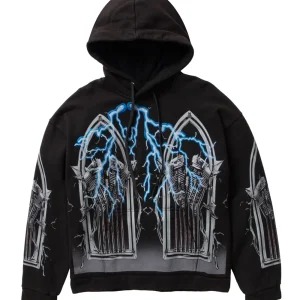
The same design instincts show up in a who decides war hoodie, where sculpted hoods, heavy fleece, and asymmetrical panels echo the denim’s structural approach. This consistency across categories matters because it reinforces the brand as a design language rather than a single hero product. Someone who understands the jeans immediately recognizes the same thinking in the hoodie—proof that the label isn’t relying on one signature item to carry its entire identity.
Shorts as a Testing Ground
Warm-weather pieces often get simplified versions of a brand’s main ideas, but who decides war shorts keep the same distressing and proportion experiments found in the full-length jeans. That consistency signals the label isn’t treating shorts as an afterthought category. Frayed hems, uneven lengths, and heavyweight denim all carry over, which gives the shorts more presence than typical streetwear cutoffs and lets them function as a smaller-scale showcase of the same construction philosophy.
Positioning Within Streetwear Culture
Streetwear has increasingly split between hype-driven drops and design-focused labels, and who decides war sits firmly in the second category. Its appeal comes from craftsmanship and unconventional shapes rather than scarcity marketing or celebrity endorsement. That positioning attracts a specific audience—people more interested in construction and silhouette than resale value. This cultural placement is part of what keeps the jeans distinct from competitors chasing hype cycles instead of design coherence.
Texture as a Focal Point
Where many denim brands rely on wash color to create visual interest, this label leans heavily on texture—raw edges, heavyweight fabric, and layered distressing that catches light differently depending on movement. That tactile quality becomes noticeable even in photographs, which is unusual for denim. Texture-forward design also means the jeans photograph well without relying on bold color, giving them a quieter but more detailed presence compared to flashier streetwear denim alternatives.
Versatility Despite Boldness
Despite the unconventional shapes, the jeans remain easier to style than their design complexity suggests. A plain shirt or simple knit balances the denim’s structural details without competing against them. This versatility is part of what separates the brand from more costume-like streetwear pieces that only work within a single aesthetic. Because the design complexity lives in construction rather than color or print, the jeans slot into a wider range of outfits than expected.
Durability Built Into the Fabric
Heavyweight denim isn’t just an aesthetic choice here—it also means the jeans hold up under regular wear better than lighter streetwear alternatives. The fabric weight that gives the distressing its structural quality also extends the garment’s lifespan, which matters for anyone treating these as long-term wardrobe pieces rather than seasonal purchases. That combination of durability and design ambition is uncommon in a category often criticized for prioritizing trends over longevity.
What Ultimately Sets Them Apart
What distinguishes who decides war within streetwear isn’t a single feature but the consistency of its design philosophy across denim, shorts, and outerwear. The label treats construction, texture, and silhouette as the primary language rather than relying on logos or scarcity. That approach produces jeans that feel architectural rather than trend-driven, giving them a distinct identity in a market where most denim still follows a much narrower, more predictable set of rules.