

The counterintuitive truth about cross-chain swaps is that the swap itself is often not the hardest part to secure. The greater danger lies in everything surrounding it: the bridge message, the token approval, the destination-chain transaction, the website requesting a signature, and the user’s assumption that one familiar wallet screen represents one simple operation. A transaction can look routine while depending on several independent systems with different security models.
That distinction matters for US-based DeFi users, where a mistaken signature may create an irreversible financial loss rather than a normal consumer dispute. A browser wallet can improve visibility and reduce avoidable errors, but it cannot turn an experimental protocol into a regulated bank or reverse a malicious contract call. Good security therefore begins with a mental model: a wallet is an interface and a signing authority, while the protocols and networks underneath determine what the transaction actually does.
Why cross-chain swaps became a distinct security problem
Early DeFi activity was comparatively easier to reason about because many users stayed on one network. A swap generally meant calling a decentralized exchange contract, exchanging one asset for another, and paying a network fee. The risks were still serious—fake tokens, unlimited approvals, thin liquidity, price impact, and malicious contracts—but the transaction path was relatively compact.
Cross-chain activity changed that structure. A user might begin with an asset on one network, send it through a bridge or liquidity network, and receive a related asset on another. Some systems lock assets on a source chain and mint or release representations elsewhere. Others use pools of liquidity, market makers, or relayers to make the destination transfer appear immediate. These designs are not interchangeable. They distribute trust among smart contracts, validators, relayers, liquidity providers, and the security assumptions of each chain.
This is the first important correction to a common misconception: “cross-chain” is not a single technology. A bridge, a cross-chain message system, and a liquidity-based swap may all produce a similar user experience while exposing the user to different failure modes. In one design, the central concern may be whether a message is authenticated correctly. In another, it may be whether destination liquidity is sufficient. In both cases, a wallet can show the request, but it cannot independently prove that every off-chain component behaved honestly.
Cross-chain systems also inherit the weaknesses of their weakest meaningful dependency. If the source chain has one security profile and the destination chain has another, the combined application does not automatically possess the stronger profile. Finality—the point at which a transaction is considered sufficiently irreversible—can also differ across networks. A swap that appears complete in a front end may still depend on confirmation, relaying, or settlement conditions that users do not see immediately.
What a secure wallet can and cannot do
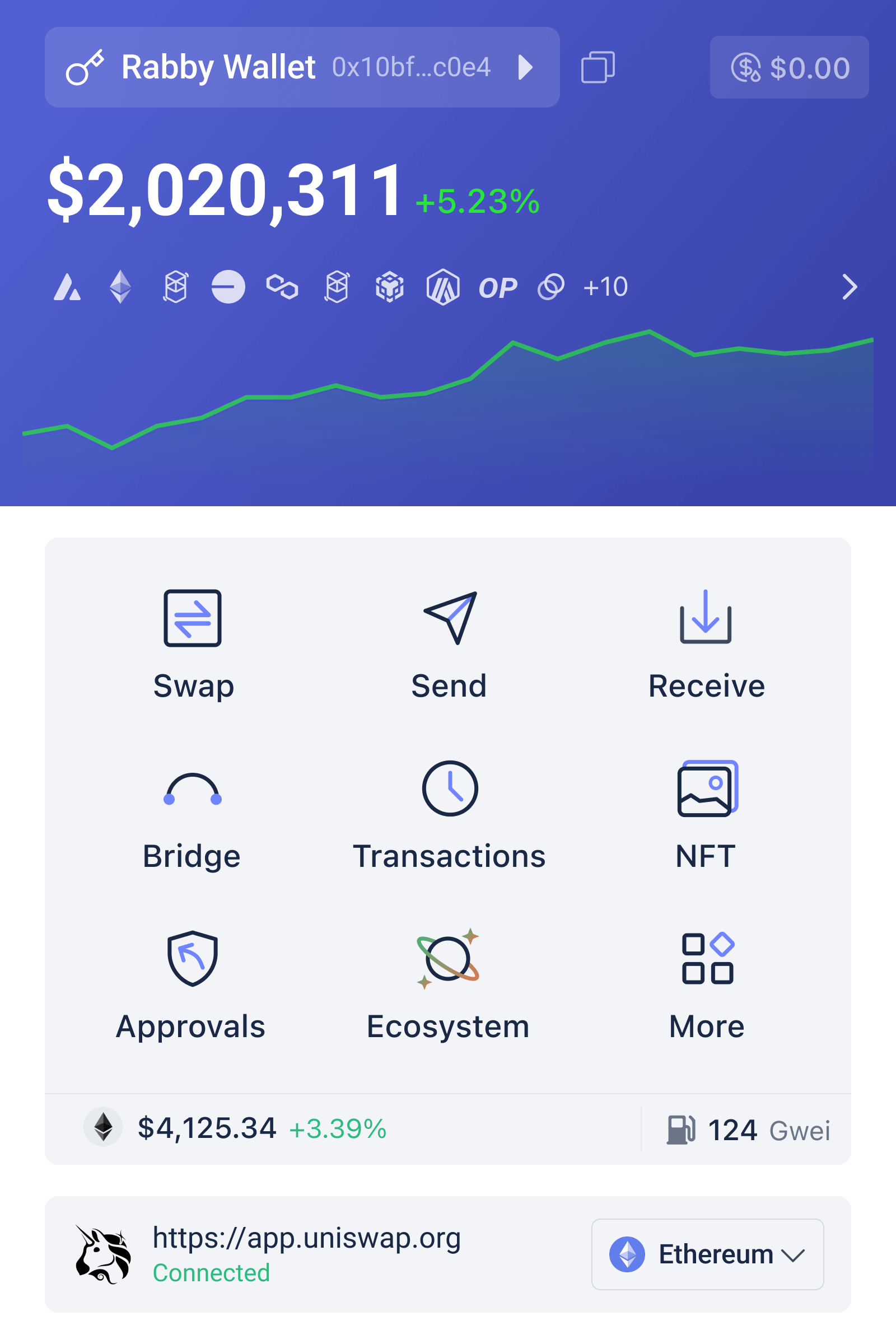
A browser wallet such as Rabby is best understood as a control surface for reviewing and authorizing blockchain actions. During a rabby wallet extension installation, the security question is not simply whether the extension opens a wallet window. The user should verify that the download source is authentic, inspect the browser’s extension permissions, create or import a wallet only in the intended environment, and protect the recovery phrase offline. A convincing imitation can be more dangerous than a visibly broken application.
Once installed, a wallet may help users inspect the network, contract, assets, fees, approvals, and requested signatures. Transaction simulation or warning features, where available, can make a proposed result easier to interpret before the user confirms it. This is valuable because raw calldata—the encoded instruction sent to a smart contract—is not meaningful to most people. Human-readable context narrows the gap between what a website claims will happen and what the blockchain call requests.
The limitation is fundamental. A wallet warning is evidence to consider, not an insurance policy. Simulations can be incomplete, a contract can behave differently under changing state, and a malicious site can manipulate the surrounding explanation even when the underlying request is technically valid. A transaction may successfully execute and still produce an economically harmful result. Security tools reduce uncertainty; they do not eliminate it.
There is also a crucial difference between signing a transaction and signing a message. A transaction changes blockchain state and normally consumes network fees. A message signature may not cost a fee, but it can authorize an off-chain action, prove control of an address, or approve a permit-style operation that a protocol later uses. “No gas fee” does not mean “no risk.” Users should read the wording and purpose of a signature rather than treating free signatures as harmless.
The main failure points in a cross-chain swap
Consider the complete route rather than the button labeled “Swap.” First, the user chooses an asset and a destination network. A wrong-chain selection can lead to an asset that is technically present but difficult to use, or to a token with a similar name and no meaningful liquidity. Network names and token symbols are not sufficient identity checks; contract addresses and the intended destination matter.
Second, the user may grant an approval. An approval allows a contract to spend a specified token amount on the user’s behalf. Unlimited approvals are convenient, but they enlarge the potential loss if the approved contract is later exploited or if the user interacts with a counterfeit application. Limiting approval amounts, reviewing existing allowances, and revoking unnecessary permissions can reduce exposure, although revocation itself is another transaction and may involve fees.
Third, the route may involve slippage. Slippage is the difference between the expected exchange rate and the minimum result the user accepts. It is not merely a technical setting. A high tolerance can allow execution during volatile conditions, but it can also make a trade easier to sandwich or fill at a poor price. A low tolerance protects the price but increases the chance of failure. The appropriate setting depends on liquidity, volatility, and urgency—not on a universal percentage copied from a tutorial.
Fourth, the destination result may differ from the source asset in ways that are easy to overlook. The received token could be a bridged representation rather than the native asset, or it may require a separate transaction to become usable in a particular application. Fees can be deducted in different assets, and a user who arrives on the destination chain without its native gas token may be unable to move the funds afterward. “The transfer completed” and “the funds are ready for the next action” are not always the same statement.
Finally, cross-chain routes can create a false sense of atomicity. A traditional atomic swap is designed so that either both sides occur under defined conditions or neither does. Many modern cross-chain user experiences are not atomic in that strict sense. They may contain sequential steps, asynchronous messages, or intermediary liquidity. If one stage is delayed or fails, recovery may depend on the protocol’s support process, refund logic, or a manual claim. The user should know what happens when the happy path breaks before sending a large amount.
A practical review process before clicking Confirm
A reusable security framework is to review identity, intent, authority, economics, and recovery. Identity asks: am I on the genuine application domain, using the correct wallet account, network, token contract, and destination address? Intent asks: can I state in plain language what this transaction will do? If the answer is “I am not sure, but the website says it is required,” stop there.
Authority asks what the contract is allowed to spend or change. Look closely at token approvals, permit requests, operator permissions, and signatures that appear unrelated to the visible swap. Economics asks whether the quoted result remains sensible after gas, bridge fees, relayer fees, slippage, liquidity depth, and possible destination costs. Recovery asks what evidence exists if the transaction stalls: a transaction hash, a documented status process, a claim mechanism, or a realistic way to contact the protocol.
For a first interaction, a small test transfer is often more informative than an elaborate assumption about safety. It can reveal whether the correct token arrives, whether the destination chain is configured properly, and whether the user can pay for the next transaction. Testing does not prove that a protocol is safe, but it limits the amount exposed to an unknown route.
Operational security deserves equal attention. Store recovery phrases offline, never enter them into a website or support chat, and treat anyone requesting them as hostile. Separate long-term holdings from experimental activity when practical. A dedicated wallet for unfamiliar applications can limit the blast radius of a compromised approval or deceptive signature. Hardware signing devices can protect key extraction, but they cannot prevent a user from approving the wrong contract; secure custody and transaction comprehension solve different problems.
What has changed, and what has not
The history of DeFi security shows a shift from obvious contract exploits toward more complex combinations of interface deception, permission misuse, bridge assumptions, and economic manipulation. Better warnings and simulations can address the visibility problem. They do not eliminate governance risk, oracle dependence, liquidity stress, or bugs in the underlying protocol. Nor do they settle the question of how much trust users should place in systems that coordinate several chains and intermediaries.
The likely near-term direction is conditional rather than guaranteed. If wallets and cross-chain applications expose route details, approval scope, destination outcomes, and failure recovery in a consistent way, users may make fewer avoidable mistakes. If interfaces continue to compress complicated paths into a single attractive button, convenience may grow faster than understanding. Signals worth watching include clearer signing standards, more precise risk explanations, reliable allowance management, and better disclosure when an asset is a representation rather than a native token.
The durable lesson is not that cross-chain swaps are inherently unsafe or that a particular wallet can certify every protocol. It is that security is a chain of reasoning. Confirm the identity of the application, understand the authority being granted, price the economic risks, distinguish sequential settlement from atomic exchange, and plan for failure. A wallet extension can make that reasoning more visible. The responsibility to interpret it remains with the signer.
Frequently Asked Questions
Is a cross-chain swap safer when it uses a familiar wallet?
A familiar wallet can improve transaction visibility and help prevent some network, approval, or signing mistakes, but it does not guarantee the safety of the protocol being used. The bridge, router, liquidity provider, relayer, token contract, and destination chain still carry independent risks. Treat the wallet as a review and authorization tool, not as a certification of the application.
What should I do if a cross-chain transfer appears stuck?
Do not immediately repeat the transaction or connect to an unsolicited support link. Save the source transaction hash, confirm the destination address and network, review the protocol’s documented status and recovery process, and check whether the route requires a claim or a later confirmation. Never share a recovery phrase or private key while seeking assistance.
Should I always revoke token approvals after a swap?
Revocation can reduce future exposure to a contract, especially when an application is no longer needed, but it is not a universal emergency measure. It requires another transaction and may cost gas. Review whether the approval is limited or unlimited, whether the contract is still trusted, and whether retaining it is worth the convenience. For unfamiliar or experimental applications, reducing unnecessary permissions is generally the more conservative choice.