

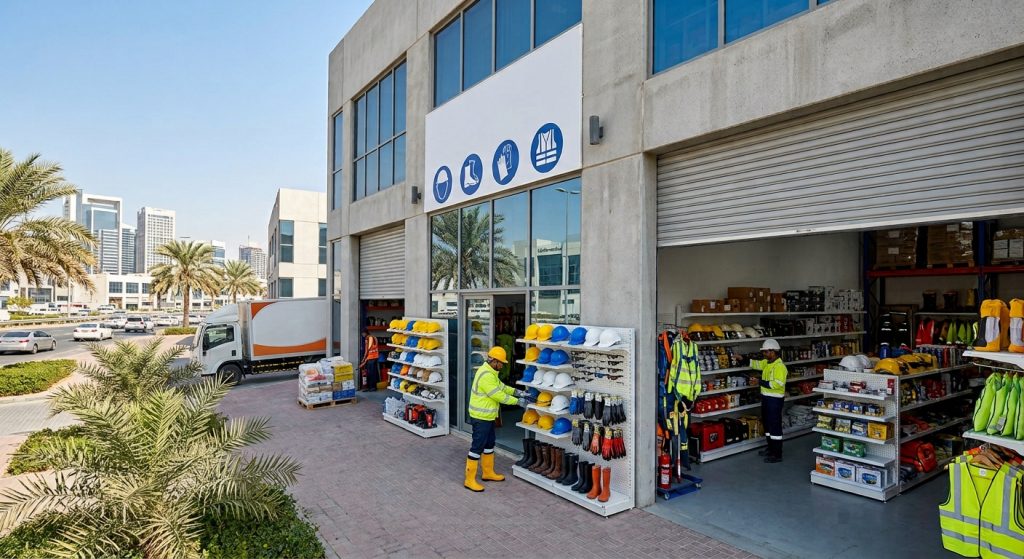
Industrial sites across the United Arab Emirates operate under demanding environmental conditions and strict workplace safety regulations. From oil fields in Abu Dhabi to manufacturing hubs and construction sites across Dubai and Sharjah, maintaining high safety standards is an everyday requirement. Protecting workers from physical, chemical, and thermal hazards requires gear engineered specifically to handle high heat, heavy wear, and continuous use.
Selecting the right Personal Protective Equipment (PPE) goes beyond simple compliance; it directly influences site productivity, worker morale, and project timelines. Working with a dependable Canasafe safety supplier UAE gives procurement teams access to certified gear that satisfies local municipal mandates and global performance standards.
1. Navigating the Industrial Safety Landscape in the UAE
Workplace safety in the United Arab Emirates is governed by regulations set by bodies like the Ministry of Human Resources and Emiratisation (MoHRE) alongside municipal health and safety departments. These rules require companies to evaluate job site hazards and provide appropriate protection to every worker.
Operating in the Gulf region introduces distinct challenges that influence equipment choices:
- Extreme Heat and Sun Exposure: Outdoor workers face high ambient temperatures. Safety gear must offer breathability and lightweight design so workers can wear it comfortably throughout long shifts without removing it due to heat distress.
- Dust and Fine Sand: Fine airborne sand particles quickly wear down mechanical joints, scratch clear lenses, and clog air filters. Gear must be constructed from durable materials that withstand abrasive dust.
- Chemical and Marine Corrosion: Coastal industrial operations and offshore platforms face exposure to saltwater, humidity, and volatile chemicals, requiring corrosion-resistant materials and liquid-proof barriers.
2. Core PPE Categories and Technical Standards
Eye and Face Protection
Eye injuries remain common across construction and fabrication activities, yet most are preventable with proper safety glasses or goggles. Modern safety eyewear uses high-impact polycarbonate lenses that shield against flying debris, dust particles, and harmful ultraviolet radiation. Special surface treatments—such as anti-scratch coatings to protect against fine sand and anti-fog technology to handle humidity—keep vision clear during active work.
Fall Protection Equipment
Working at height on scaffolds, roofing structures, and elevated platforms carries inherent risk. A complete fall arrest system relies on integrated components designed to absorb impact energy during a fall:
- Full Body Harnesses: Ergonomic webbing distributes fall forces safely across the hips, chest, and shoulders.
- Shock-Absorbing Lanyards: Energy absorbers deploy during a fall to keep deceleration forces within safe limits for the human body.
- Self-Retracting Lifelines (SRLs): These devices allow freedom of movement while locking automatically during sudden acceleration.
Hand Protection
Hands perform delicate assembly as well as heavy material handling, exposing them to cuts, impacts, and chemical burns. Safety gloves feature specialized material construction based on the specific job task:
- Cut-Resistant Gloves: High-Performance Polyethylene (HPPE) and aramid fibers guard against sharp metal edges and glass.
- Impact-Resistant Gloves: Thermoplastic Rubber (TPR) pads along the back of the hand and fingers absorb shocks from heavy tools.
- Chemical-Resistant Gloves: Nitrile, neoprene, or PVC layers protect skin against solvents, oils, and acids.
Thermal and Fire Protective Gear
Sectors handling flammable materials, high-voltage electrical setups, or welding operations require flame-resistant clothing. Materials like Nomex and treated cotton do not melt or drip when exposed to direct heat or electric arc flashes, shielding the user from severe burn injuries.
3. PPE Selection Matrix by Industry Sector
| Industry Sector | Primary Site Hazards | Recommended PPE Solutions | Key Technical Features |
| Construction & Scaffolding | Falling objects, heights, flying dust | Hard hats, fall arrest harnesses, anti-scratch glasses | High-impact ABS shell, EN 361 fall protection, UV protection |
| Oil & Gas / Offshore | Flash fires, heavy impact, chemical spills | Flame-resistant coveralls, impact gloves, chemical boots | Nomex/FR fabric, TPR back-of-hand guards, EN 374 chemical barrier |
| Manufacturing & Assembly | Sharp edges, pinch points, repetitive wear | Cut-resistant gloves, low-profile safety shoes | HPPE fiber blend, steel or composite toe caps, breathable liners |
| Facility Maintenance | Electrical arc flash, slip risks, dust inhalation | Arc-flash suits, slip-resistant footwear, dust respirators | Arc rating (Cal/cm²), SRC slip-rated outsoles, N95/FFP2 filtration |
4. Best Practices for Procurement and Lifecycle Management
Buying quality equipment is only the first step in maintaining a safe work environment. Managing gear throughout its lifecycle preserves safety and controls costs over time:
- Regular Risk Assessments: Review site hazards whenever new machinery, tools, or chemical processes are introduced. Gear specifications must match current working conditions.
- Proper Storage and Care: UV light, chemical vapors, and moisture can weaken harness fibers and hard hat plastics over time. Store gear in cool, dry areas away from direct sunlight when not in use.
- Pre-Use Inspections: Train workers to inspect their equipment daily. Webbing with frays, cracked hard hat shells, or scratched lenses should be removed from service immediately.
- Reliable Supply Chains: Sourcing gear through an established Canasafe safety supplier UAE guarantees access to authentic, certified products, clear documentation, and steady stock availability for large projects.
5. Building a Culture of Workplace Safety
Equipping teams with compliant safety gear protects workers, lowers site liability, and keeps projects running smoothly across all major sectors in the UAE. When companies combine quality equipment with practical safety training and routine inspections, safety becomes a natural part of daily operations rather than an added task.
6. Strategic Value of Certified Safety Partnerships
Maintaining a complete safety setup requires an uninterrupted supply of certified equipment that meets global standards such as EN, ANSI, and local UAE municipal regulations. Working closely with an experienced Canasafe safety supplier UAE gives companies direct access to compliant products, batch certifications, and technical advice tailored to complex industrial operations.
When safety management combines reliable supply channels, structured training, and routine inspections, industrial organizations protect their most valuable asset—their workforce—while maintaining high operational efficiency and regulatory compliance.