

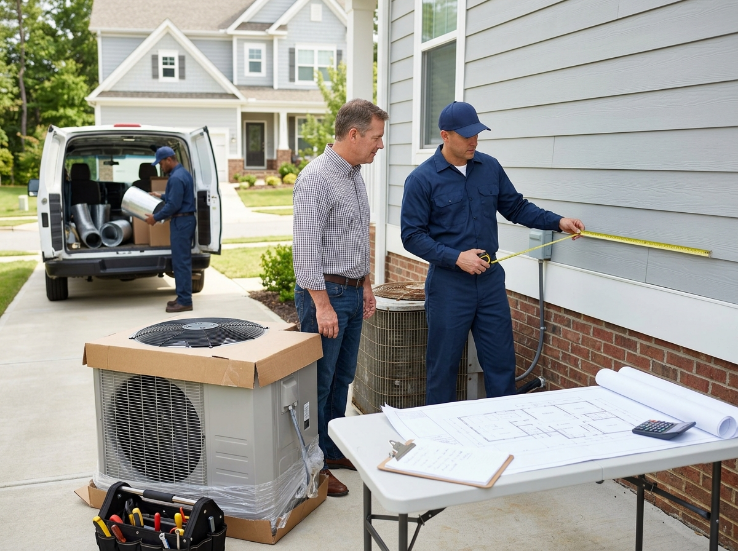
Replacing or installing a cooling system is a decision that can affect comfort, operating costs, and household reliability for years. Many homeowners focus mainly on the equipment itself, but the installation process and the condition of the home also matter. The right system needs to work with the property’s size, layout, airflow, insulation, electrical setup, and daily comfort needs.
Choosing equipment based only on its advertised capacity can create problems. A system that is too large may cycle differently from what the home needs, while an undersized system may struggle during hot weather. Professional planning helps connect the equipment choice with the actual conditions of the property. That makes the installation more than a simple equipment swap.
Start With the Home, Not Just the Equipment
A new air conditioner should be selected after considering the space it needs to serve. Room size is only one factor. Ceiling height, windows, insulation, sun exposure, airflow paths, and the number of people normally using the home can all affect cooling demand. Two houses with similar floor areas may still need different equipment because their layouts and building conditions are not identical.
The condition of the existing ductwork can also influence performance. Leaks, restrictions, damaged sections, or poor distribution can prevent the new system from delivering the comfort expected from it. Replacing equipment without considering these issues may leave some rooms uncomfortable even though the new unit is operating normally.
The goal should be a complete system assessment. Equipment, airflow, controls, electrical requirements, and the home’s physical conditions all work together. Looking at the whole setup before the work begins can prevent avoidable problems later.
Why Proper Sizing Matters
Capacity plays an important role in comfort and system performance. A cooling system needs enough capacity to handle the home’s expected heat load without being selected simply by rough square-foot estimates. Proper sizing takes into account factors such as the building envelope, windows, orientation, insulation, and internal heat sources.
An oversized system may reach its temperature setting quickly but still create comfort issues. Shorter cycles can affect moisture control and may not provide the steady operation the home needs. An undersized system can have the opposite problem, running for long periods while struggling to maintain the desired indoor temperature.
Professional sizing helps reduce guesswork. It provides a reasoned basis for choosing equipment capacity and can help avoid paying for more equipment than the home actually needs. The final selection should support the property’s real requirements rather than relying on a single measurement.
What Happens During HVAC Installation
A successful HVAC installation involves more than placing new equipment in the same location as the old system. The technician must work through several connected steps, from removing existing equipment to checking connections and confirming that the new system operates correctly.
The exact process varies by property and equipment, but the work can involve:
- Confirming equipment specifications and placement
- Preparing electrical and refrigerant connections
- Checking drainage and airflow requirements
- Connecting controls and system components
- Testing operation before completing the job
Attention to detail during these steps matters because installation errors can affect performance even when the equipment itself is new. Poor connections, incorrect setup, or overlooked airflow issues may create service problems later. The final testing stage helps confirm that the system responds correctly and delivers the intended operation.
Common Installation Problems Homeowners Should Avoid
Installation mistakes can reduce the benefits of a new cooling system. One common problem is treating the equipment as a standalone product instead of part of a larger system. If existing ductwork, airflow, controls, or electrical components are not compatible with the new equipment, the finished installation may not perform as expected.
Homeowners should also be cautious about choosing equipment based only on the lowest initial cost. Price matters, but installation quality and system suitability affect long-term value. A lower-priced option may not be appropriate for the home’s layout or operating needs.
The installation also should not be rushed simply to finish the project quickly. Proper preparation, careful connections, testing, and final checks take time. A methodical process reduces the chance that a hidden issue will be overlooked.
How the Home Affects Cooling Performance
Even a properly installed system may struggle when the building itself creates excessive heat gain. Poor insulation, air leakage, direct sun through large windows, or restricted airflow can increase the cooling demand placed on the equipment. These factors should be considered when evaluating why a system is working harder than expected.
Duct condition is another important consideration. Damaged or poorly connected ducts can lose conditioned air before it reaches the room. Restrictions can also reduce airflow and make the system work differently from the way it was designed. When comfort problems remain after installation, the issue may not always be the equipment.
This is why a good installation assessment should include the surrounding system. The objective is not simply to make the new equipment run. It is to help the equipment serve the home effectively under normal conditions.
Preparing for a New System
Homeowners can make installation easier by clearing access to the work area and identifying any rooms that have experienced comfort problems. Sharing this information with the technician can help focus attention on areas that may need additional evaluation.
It is also useful to have realistic expectations about what the new system can change. New equipment may improve comfort and operating performance, but it cannot automatically correct structural issues such as damaged ductwork or serious insulation gaps. Those conditions may require separate attention.
A well-planned installation starts with good information. The more accurately the home and its existing system are understood, the easier it becomes to select equipment and complete the work correctly.
Final Thoughts
A new cooling system should be chosen around the home’s actual conditions, not just a product label or room-size estimate. Proper sizing, careful equipment selection, sound ductwork, suitable connections, and thorough testing all influence the final result. Understanding the basics of air conditioning can also help homeowners ask better questions and recognize why installation quality matters as much as the equipment itself.