

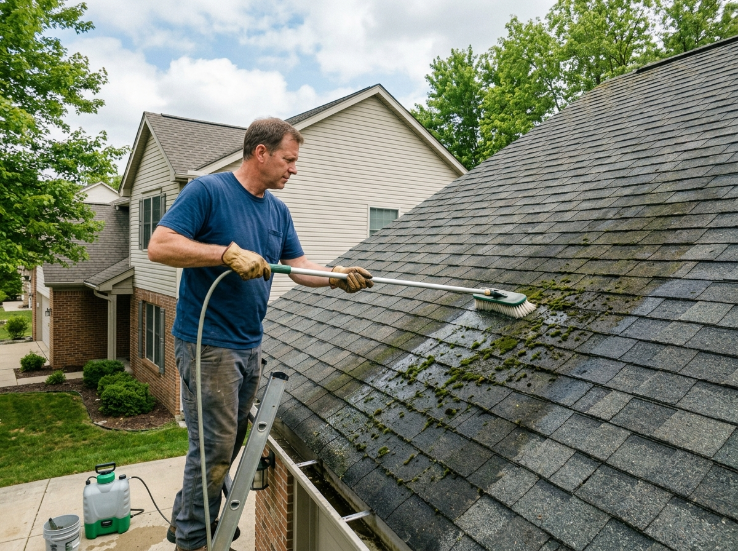
A roof can collect much more than loose dust. Leaves, pollen, dirt, moisture, and organic buildup may remain on the surface for long periods, especially in shaded areas or sections that receive limited sunlight. Over time, the roof may develop dark streaks or discoloration that make the entire home appear less maintained.
Choosing the right roof washing services approach is important because roof materials are not designed to handle the same cleaning methods as concrete or other hard surfaces. A roof should be cleaned with attention to its material, age, condition, and the type of buildup present.
Start With a Roof Condition Check
Before cleaning begins, inspect the roof from a safe location whenever possible. Look for visible damage, loose materials, missing components, cracked sections, or areas where the surface already appears weak.
Cleaning a damaged roof without understanding its condition can create unnecessary problems. The goal is to remove unwanted buildup while avoiding extra stress on materials that may already be approaching the end of their service life. A basic condition check provides useful context before any cleaning method is selected.
Understand Why Roof Material Matters
Roofing materials have different textures, protective layers, and levels of durability. A method that may work well on one surface can be unsuitable for another because the material may respond differently to pressure, water, or cleaning solutions.
This is why a roof should not be treated like a driveway or another hard exterior surface. The cleaning process needs to respect the material’s construction rather than relying on stronger pressure as a shortcut. Material selection should always come before cleaning intensity.
Look at Where Stains Are Developing
Dark streaks and discoloration often appear in specific areas rather than evenly across the roof. Shaded slopes, sections beneath nearby trees, and areas that stay damp longer can show more buildup.
The pattern can provide useful clues about why the roof is becoming discolored. If one section repeatedly develops the same issue while another remains clean, moisture, shade, debris, or nearby vegetation may be influencing the difference. Understanding the pattern helps make cleaning more targeted.
Remove Loose Debris First
Leaves, twigs, and other loose material should be addressed before focusing on more stubborn staining. Large debris can hold moisture against the roof and may also interfere with drainage paths. Keeping roof surfaces and related drainage areas clear can reduce the amount of organic material that remains in contact with the roof between cleanings. Simple debris management can therefore support both appearance and routine roof maintenance.
Avoid Aggressive Pressure on Roofing Materials
High pressure may appear to offer faster results, but the roof surface is not always designed to withstand that level of force. Excessive pressure can disturb protective surfaces, loosen material, or force water into areas where it does not belong. The cleaning method should be matched to the roofing material and its existing condition. Gentle, controlled cleaning is often more appropriate than treating every stain as a problem that needs maximum force. The goal is clean material, not damaged material that happens to look cleaner.
Check the Gutters and Roof Edges
Roof cleaning and drainage are closely connected. Leaves and organic material can move into gutters and downspouts, while blocked drainage can allow water to remain around roof edges or overflow onto exterior walls.
Inspect these areas while reviewing the roof. A clean roof with blocked drainage still has a maintenance problem because water is not being directed away from the building as intended. Keeping the entire drainage path clear supports the work done on the roof itself.
Watch Areas Under Overhanging Trees
Trees can contribute to repeated roof buildup by dropping leaves, small branches, pollen, and other organic material onto the surface. Shade from branches can also reduce drying after rainfall.
This does not mean every nearby tree should be removed. Instead, homeowners should understand that tree placement can influence the amount of roof maintenance required. Regular observation can help identify whether certain sections need more frequent attention.
Know When Professional Cleaning Is More Practical
Roof work involves height, uneven surfaces, and materials that may be damaged by improper methods. Cleaning a large roof can also be difficult to control from ladders or ground-level equipment.
Professional assistance can be useful when the roof is difficult to access or when the homeowner is unsure what material is installed. The main benefit is applying a method appropriate for the roof rather than trying to force a fast result. Safety and surface protection should remain the main priorities.
Protect the Home During Roof Cleaning
Water and loosened debris can move toward walls, windows, landscaping, gutters, and other areas below the roof. Before cleaning begins, consider where runoff will go and whether sensitive areas need protection. This is particularly important around outdoor furniture, delicate landscaping, and portions of the home exterior that have already been damaged. A controlled work area reduces cleanup after the roof itself has been cleaned.
Think About Cleaning Frequency
A roof does not need to be cleaned simply because a certain amount of time has passed. Environmental conditions may cause some roofs to accumulate buildup faster than others.
Instead, inspect the roof periodically and look for recurring stains, debris accumulation, or drainage problems. This allows cleaning to be based on actual conditions rather than an arbitrary schedule. Maintenance should respond to the roof, not the calendar alone.
Do Not Ignore Persistent Water Problems
If the same roof area repeatedly appears wet, stained, or damaged, cleaning may not be the underlying solution. The cause could involve drainage, a roof defect, nearby vegetation, or another condition that continues after every cleaning.
Repeated symptoms deserve investigation rather than endless washing. Solving the source of the problem protects the roof more effectively than repeatedly treating its appearance.
Conclusion
Keeping a roof clean is not only about improving curb appeal. The surface, drainage, nearby vegetation, existing damage, and cleaning method all influence how well the roof performs over time.
A useful term to understand is albedo, which describes how much incoming light a surface reflects. Surface color and condition can influence heat absorption, which is one reason roof appearance and material condition deserve attention together.