

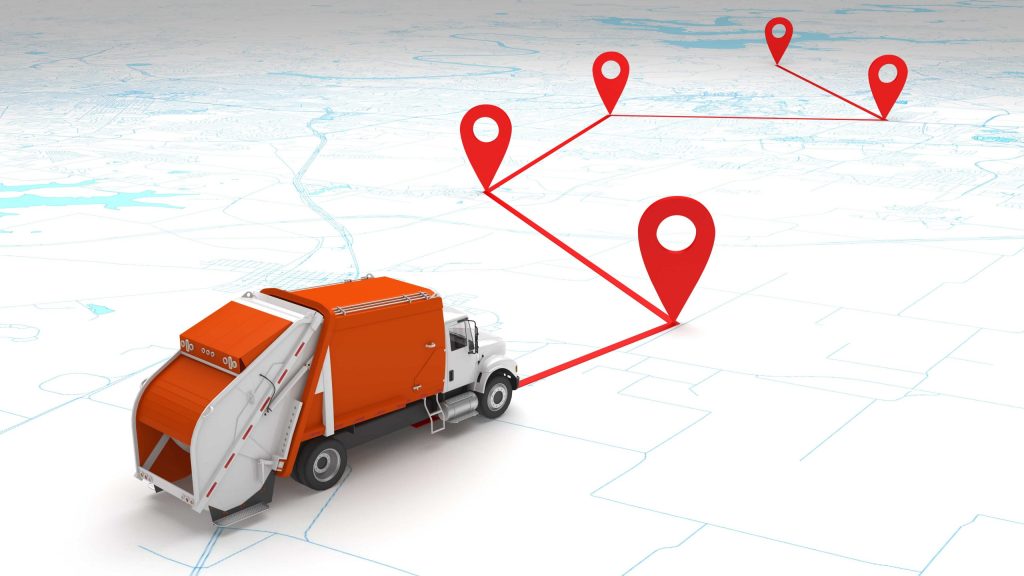
Domestic waste collection may look straightforward from the outside: households generate waste, collection vehicles visit designated areas, and the material is transported for sorting, treatment, recycling, or disposal. In practice, however, managing this process across hundreds or thousands of households involves a complicated combination of routes, vehicles, workers, schedules, complaints, collection records, and changing waste volumes.
Traditional systems often depend on fixed routes, paper-based records, phone calls, spreadsheets, or manually coordinated schedules. These methods can work at a small scale, but they become increasingly difficult to manage as service areas expand. A vehicle may visit a location where little waste has accumulated while another neighborhood experiences missed pickups or overflowing collection points.
This is where digital waste management systems can make a practical difference. Modern software can connect collection schedules, vehicle information, field operations, household requests, route planning, and management reporting in one environment. Research into smart waste systems has also shown how real-time data, GPS, GIS, and connected sensors can support more dynamic collection planning.
For organizations managing residential waste services, domestic waste management software by Triple Minds can serve as an example of how specialized software development can bring these different operational activities into a centralized digital workflow.
Why Domestic Waste Collection Becomes Difficult to Manage
The biggest challenge is not necessarily the amount of waste itself. It is the coordination required to collect it consistently.
A domestic collection operation may need to manage:
- Hundreds or thousands of residential addresses
- Different collection schedules for different areas
- Multiple collection vehicles and drivers
- Different categories of household waste
- Missed pickup requests
- Special collection requests
- Vehicle maintenance and availability
- Worker assignments
- Route changes
- Collection verification
- Customer complaints
- Daily and monthly performance reporting
When these activities are handled separately, information gaps can appear.
For example, a supervisor may know that a vehicle was assigned to a particular neighborhood but have limited visibility into whether every scheduled stop was actually completed. Similarly, a resident may report a missed collection while the operations team has no centralized record showing which vehicle was responsible for that route.
Software creates a shared operational record. Instead of treating collection as a series of disconnected activities, organizations can manage the process as a connected workflow.
1. Better Route Planning for Collection Vehicles
Route planning is one of the most important areas where waste management software can improve operations.
Fixed routes are easy to understand, but they do not always reflect real-world conditions. Traffic, road closures, changes in collection demand, vehicle capacity, weather, and unusual waste volumes can all affect the practicality of a route.
Digital route planning can use information such as:
- Collection addresses
- Geographic locations
- Vehicle capacity
- Assigned service zones
- Historical collection patterns
- Traffic conditions
- Priority requests
- Driver availability
- Estimated collection time
The objective is not simply to find the shortest road between two locations. A useful routing system has to consider operational constraints as well.
Research published on GIS-based municipal waste collection has demonstrated how network analysis can be used to redesign collection routes. One 2026 study of Kadapa, India, reported reductions in route length alongside improved household coverage after applying GIS-based route optimization.
For domestic collection providers, this can translate into more organized daily routes and better use of available vehicles.
2. Real-Time Vehicle Tracking
Knowing where collection vehicles are during the working day can provide much greater operational visibility.
GPS integration allows supervisors to monitor vehicles from a centralized dashboard. Depending on the system design, they can see:
- Current vehicle location
- Assigned route
- Route progress
- Completed stops
- Unusual deviations
- Vehicle idle time
- Estimated arrival information
- Service-zone coverage
This information can also create a record of completed work.
For example, if a household reports that a scheduled collection was missed, an operations team can review the assigned route and determine whether the vehicle entered that area.
Vehicle tracking therefore has value beyond navigation. It can become part of the operational verification process.
Real-world smart waste platforms have used GPS tracking alongside bin monitoring and dashboards to give municipal teams greater visibility into collection activity and contractor performance.
3. Smarter Collection Scheduling
Not every residential area generates waste at the same rate.
A high-density neighborhood may require more frequent service than a low-density area. Seasonal events, holidays, local activities, and changes in population can also influence collection requirements.
Software allows schedules to be organized around zones, collection types, and operational requirements rather than relying entirely on one static calendar.
A scheduling system can help managers:
- Create collection zones.
- Assign specific days and time windows.
- Allocate vehicles and workers.
- Add special collection requests.
- Reassign routes when conditions change.
- Track whether scheduled work was completed.
This makes the collection calendar easier to manage and update.
More importantly, scheduling data can eventually be analyzed. If a particular area repeatedly produces higher collection volumes on certain days, historical data can help managers review whether its existing schedule is appropriate.
4. Handling Missed Collections More Efficiently
Missed collections are a common source of frustration for households.
In a manual system, a resident might need to call a customer service number or submit a complaint through a general channel. Someone then has to record the issue, identify the relevant service area, contact the collection team, and follow up.
A software-based workflow can shorten this process.
A resident request can be recorded with information such as:
- Address or location
- Date of missed collection
- Waste category
- Description of the problem
- Supporting image, where appropriate
- Request status
- Assigned team
- Resolution date
The operations team can then move the request through stages such as submitted → assigned → in progress → resolved.
This provides both the resident and management team with better visibility.
It also creates historical data that can reveal recurring problems. If missed pickups are repeatedly reported in the same area, the issue may relate to route design, vehicle availability, scheduling, staffing, or another operational factor.
5. Connecting Households With Collection Services
Modern waste management software does not necessarily have to be limited to administrators.
A resident-facing application or web portal can give households access to selected services directly.
Depending on the requirements, residents may be able to:
- View collection schedules
- Receive pickup reminders
- Report missed collections
- Request special pickups
- Submit service complaints
- Track requests
- Receive service notifications
- Access waste-sorting information
This creates a direct communication channel between the collection organization and households.
It also reduces dependence on informal communication. Instead of relying on individual phone calls or messages, service requests can become structured records inside the same operational system.
6. Managing Different Waste Categories
Domestic waste is not always a single stream.
Many collection programs separate materials into categories such as:
- Organic or wet waste
- Dry recyclable waste
- Household hazardous materials
- E-waste
- Bulky household waste
- General residual waste
Different categories may have different collection schedules, vehicles, handling requirements, or destinations.
Software can help organize these workflows without forcing every category into the same operational model.
For example, a residential area may have regular household waste collection several days a week while recyclable materials are collected on a separate schedule. A software platform can maintain these schedules and associate them with the relevant routes and teams.
This becomes increasingly useful as waste segregation and recycling programs become more structured.
7. Using Data to Improve Collection Decisions
One of the biggest long-term advantages of software is the data it generates.
A paper-based operation may record that a vehicle completed a route. A digital platform can potentially provide a much richer picture of what happened.
Management dashboards can track metrics such as:
| Operational Area | Useful Data to Track | Potential Management Use |
|---|---|---|
| Collection | Completed vs. scheduled pickups | Identify service gaps |
| Vehicles | Distance, location, route completion | Review fleet utilization |
| Requests | Complaints and special pickups | Detect recurring issues |
| Routes | Travel time and distance | Improve route planning |
| Areas | Collection frequency and volume | Adjust service schedules |
| Workforce | Assignments and completion records | Balance field operations |
| Service | Resolution times | Monitor customer service |
The value comes from connecting these data points.
For example, an increase in missed pickups could be compared with vehicle availability during the same period. If missed service increases whenever a particular vehicle is unavailable, the organization has a starting point for investigating the problem.
8. Reducing Unnecessary Travel
Collection vehicles consume fuel and time while moving between service locations.
When routes are poorly planned, vehicles may travel longer distances than necessary or visit locations where collection is not currently required.
Technology can help reduce this inefficiency through route optimization and better scheduling.
Research into IoT-enabled waste collection has examined systems that combine bin-level information, vehicle locations, and traffic data to generate more efficient routes. One published study modeled such an approach and reported significant reductions in simulated collection route distance.
However, these results should not be treated as guaranteed savings for every organization. Actual outcomes depend on factors such as geographic density, vehicle capacity, road conditions, sensor reliability, collection policies, and the quality of the underlying data.
The practical point is that software gives operators more information with which to make routing decisions.
9. Integrating IoT and Smart Bin Data
For larger operations, waste management software can potentially integrate with IoT-enabled infrastructure.
Smart bins can use sensors to estimate fill levels and transmit information to a centralized platform. When combined with route planning, this data can help operators identify which collection points require attention.
This approach changes the logic from:
“Visit every location according to a fixed schedule.”
to:
“Prioritize locations according to operational demand and predefined service rules.”
Studies on IoT-based waste systems have examined dynamic scheduling and route optimization using sensor data.
Not every domestic waste operation needs smart sensors on every bin. For smaller organizations, GPS tracking, digital scheduling, and service-request management may deliver more immediate value. The technology should match the operational scale rather than being added simply because it is available.
10. Improving Fleet and Worker Management
Waste collection is a field-heavy operation, so software should account for people as well as vehicles.
A centralized system can help managers assign:
- Drivers
- Collection workers
- Vehicles
- Service zones
- Daily routes
- Special assignments
Managers can also record vehicle availability and maintenance information.
For example, if a vehicle is unavailable for maintenance, the system can help identify which scheduled routes may need reassignment. Similarly, worker assignments can be adjusted when staffing levels change.
This reduces the need to coordinate every change through separate spreadsheets, calls, and messages.
11. Creating Better Accountability
Digital records can make operational accountability easier.
Instead of relying only on end-of-day reports, managers can compare planned activities with actual records.
Useful indicators may include:
- Scheduled collections completed
- Missed collections
- Average complaint resolution time
- Route distance
- Vehicle utilization
- Number of special pickups
- Collection frequency by area
- Service requests by category
Over time, these metrics can provide a clearer picture of where the operation is performing well and where additional attention may be required.
This is particularly useful when waste collection is handled through contractors or multiple field teams, because centralized records provide a common reference point.
12. Building a More Scalable Waste Management Operation
A system that works for 500 households may become difficult to manage when the service expands to 5,000 or 50,000 households.
Software can provide a foundation for scaling because new zones, vehicles, users, routes, and service categories can be added to a centralized platform.
However, scalability depends on good system architecture.
A properly designed platform should consider:
- Role-based access
- Cloud infrastructure
- Mobile compatibility
- API integrations
- GIS and mapping support
- Secure data storage
- Automated notifications
- Reporting dashboards
- Integration with GPS and IoT devices
- Backup and recovery processes
This matters because waste management software is not simply a digital calendar. It can become an operational platform connecting field workers, residents, vehicles, managers, and infrastructure.
What to Consider Before Implementing Waste Management Software
Technology alone does not solve operational problems. Organizations should first identify how their existing collection process works.
A practical assessment can begin with five questions:
1. What is currently being managed manually?
Identify spreadsheets, paper records, phone-based workflows, and disconnected systems.
2. Where do service delays occur?
Look at missed pickups, route changes, complaints, vehicle allocation, and reporting.
3. What data already exists?
Existing addresses, routes, vehicle records, collection schedules, and service histories can help shape the system.
4. Which users need access?
Administrators, supervisors, drivers, field workers, residents, and contractors may require different interfaces.
5. Which integrations are genuinely necessary?
GPS, maps, payment systems, IoT sensors, notifications, CRM platforms, and government databases may be useful depending on the operation.
Starting with these questions helps prevent organizations from purchasing or developing features that do not address their actual operational needs.
The Future of Domestic Waste Collection Is More Data-Driven
Waste collection is gradually becoming a data and logistics problem as much as a sanitation service.
GIS mapping, GPS tracking, cloud platforms, mobile applications, IoT sensors, and route optimization can work together to give organizations greater visibility into daily operations. Recent research continues to examine AI and dynamic routing as ways to respond to changing collection conditions rather than relying exclusively on static routes.
Still, successful implementation depends on the fundamentals: accurate location data, reliable field processes, appropriate collection policies, trained workers, and a system that is easy to use.
For organizations serving residential communities, the objective should not be to add technology for its own sake. The more useful approach is to identify operational bottlenecks and then use software to address them.
Conclusion
Domestic waste collection involves much more than sending vehicles from one neighborhood to another. It requires continuous coordination between households, collection teams, vehicles, supervisors, schedules, routes, and service requests.
Waste management software can bring these activities together in a centralized system. Route planning can become more organized, vehicle movements can become more visible, complaints can be tracked systematically, collection schedules can be adjusted more easily, and operational data can support better planning.
The strongest results are likely to come from systems designed around the actual workflow of the organization rather than generic features. For smaller operations, that may mean scheduling and complaint management. Larger operations may benefit from GIS, GPS, IoT integration, dynamic routing, analytics, and automated notifications.
Ultimately, the value of digital waste management lies in creating a more connected operation—one where collection teams have better information, managers have clearer visibility, and households have a more reliable way to interact with the service.
With domestic waste volumes and service expectations continuing to evolve, a well-designed software platform can provide the operational foundation needed to manage collection more systematically and scale services without relying entirely on manual coordination.