

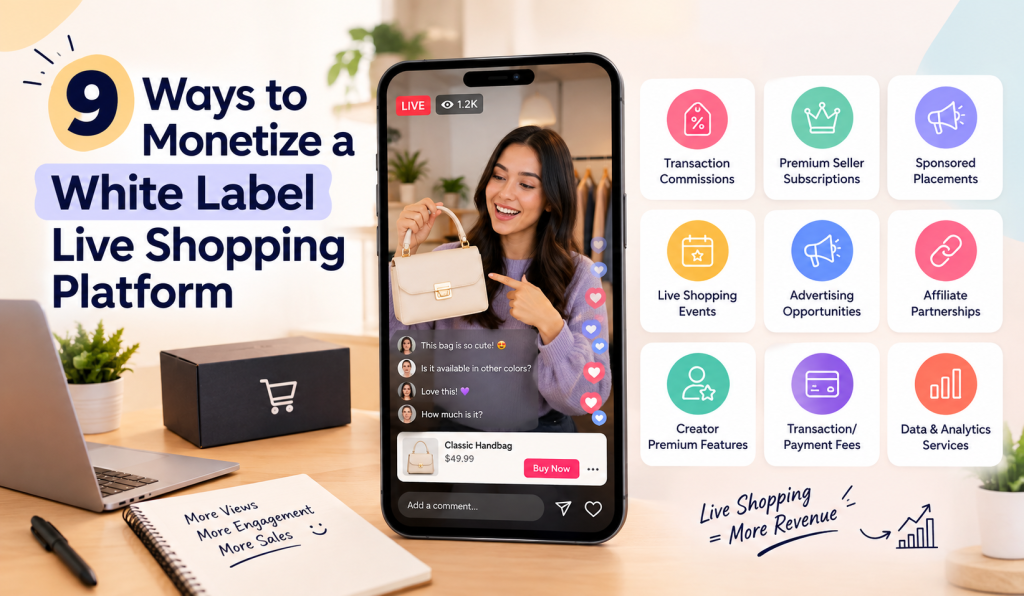
Live shopping has changed the way people discover and purchase products online. Instead of browsing a traditional product page, customers can watch a live stream, interact with the host, ask questions, and make a purchase while the conversation is happening.
This combination of entertainment, interaction, and ecommerce creates several opportunities for businesses looking to build new revenue streams. A well-planned live shopping business can earn money not only from product sales but also through subscriptions, advertising, commissions, partnerships, and other monetization models.
For entrepreneurs and ecommerce businesses, the challenge is turning the idea into a platform without spending excessive time and resources on development. This is where a White Label Live Shopping Platform can provide a practical starting point.
What Is a White Label Live Shopping Platform?
A White Label Live Shopping Platform is a ready-made live commerce solution that businesses can customize and launch under their own brand.
Rather than developing every feature from the ground up, businesses can start with an existing platform structure that may include live streaming, product catalogs, seller accounts, customer interaction, shopping carts, payments, notifications, and analytics.
The concept is similar to launching a branded live marketplace where sellers and creators can host shopping sessions while viewers discover and purchase products in real time.
A platform inspired by the live-commerce model of services such as Whatnot can also be developed as a Whatnot Clone, allowing entrepreneurs to create their own branded version of a live selling marketplace while adapting the features and business model to their target audience.
Why Monetization Matters in Live Commerce
Building a live shopping platform is only one part of the business. The bigger question is how the platform will generate sustainable revenue.
Different businesses can use different monetization models depending on their audience, product categories, seller base, and platform size.
Here are nine practical ways to monetize a live shopping platform.
1. Take a Commission From Every Sale
One of the most straightforward monetization methods is charging sellers a commission on completed transactions.
For example, if a seller generates $1,000 in sales during a live shopping event and the platform charges a 5% commission, the platform earns $50 from that transaction.
The commission percentage can vary depending on the category and business model.
You can also create different commission structures for:
- New sellers
- High-volume sellers
- Premium sellers
- Featured brands
- Professional creators
This model connects platform revenue directly with seller performance. When sellers generate more sales, the platform also has the opportunity to generate more revenue.
2. Offer Premium Seller Subscriptions
Another option is to introduce subscription plans for sellers.
A basic seller account could provide access to standard features, while premium plans could unlock additional tools.
Potential premium features include:
- Advanced analytics
- Increased product listings
- Promotional tools
- Audience insights
- Custom storefronts
- Automated notifications
- Priority customer support
- Advanced sales reports
For example, you could offer monthly plans for small sellers, growing businesses, and larger brands.
This creates recurring revenue instead of relying entirely on individual transactions.
3. Charge for Featured Product Placement
Sellers may be willing to pay for additional visibility if your platform attracts a strong audience.
You can create sponsored placement options where sellers pay to have their products appear in prominent areas of the platform.
Examples include:
- Featured products
- Homepage promotions
- Recommended live streams
- Sponsored categories
- Featured seller profiles
- Promotional banners
The key is to make sponsored placements clearly identifiable while ensuring that they fit naturally into the shopping experience.
As the platform grows, visibility can become a valuable service for sellers competing for customer attention.
4. Monetize Live Shopping Events
Special live shopping events can become another source of revenue.
Instead of treating every stream as a standard session, businesses can organize larger events around specific themes or occasions.
Examples could include:
- New product launches
- Seasonal sales
- Fashion events
- Collectibles auctions
- Beauty demonstrations
- Technology showcases
- Holiday shopping events
Brands can pay to participate, sponsor specific sessions, or promote their products during these events.
A successful event can also bring new users to the platform, creating opportunities for additional revenue later.
5. Introduce Advertising Opportunities
Advertising can become an important revenue channel once the platform develops a consistent audience.
Brands could advertise products through different areas of the platform, such as:
- In-feed advertisements
- Sponsored live streams
- Product recommendations
- Display banners
- Category sponsorships
- Promotional notifications
Advertising should be designed carefully so it does not interrupt the live shopping experience.
Relevant advertisements can actually complement the shopping journey when they are connected to the products or categories users are already exploring.
6. Create Affiliate Partnerships
Affiliate marketing provides another way to generate revenue without requiring the platform to own every product being sold.
The platform can partner with brands, retailers, or affiliate networks and earn a commission when users purchase qualifying products through tracked links.
For example, a creator could host a live session featuring several products. If viewers purchase those products through affiliate links, the platform or creator can receive a percentage of the resulting sales, depending on the partnership arrangement.
This approach can work particularly well for categories where product discovery plays a major role in purchasing decisions.
7. Offer Premium Features to Creators
Creators can become an important part of a live shopping ecosystem.
Instead of monetizing only sellers, the platform can offer paid tools to creators who use live streams to promote products.
Premium creator features could include:
- Advanced audience analytics
- Stream customization
- Multiple-host support
- Audience engagement tools
- Product performance reports
- Promotional features
- Custom creator pages
You can offer these tools through monthly subscriptions or additional paid packages.
This gives creators more control over their live shopping activities while creating another recurring revenue stream for the platform.
8. Charge Transaction or Payment Fees
Another monetization option is adding a small platform or transaction fee to eligible purchases.
For example, the platform could charge a fixed fee, percentage-based fee, or a combination of both depending on the transaction.
However, payment-related pricing should be transparent. Users and sellers should understand what they are being charged and why.
Businesses should also account for payment processing costs, refunds, chargebacks, taxes, and other operational expenses when designing their fee structure.
A carefully structured transaction model can provide consistent revenue as platform activity increases.
9. Sell Data and Analytics as a Premium Service
Live shopping generates useful business data.
Sellers may want to understand which products attract the most attention, when audiences are most active, and how viewers behave during live events.
A platform can turn these insights into premium analytics tools.
For example, sellers could receive reports covering:
- Viewer engagement
- Product clicks
- Conversion rates
- Sales performance
- Peak viewing times
- Repeat customers
- Live event performance
- Product-level trends
Instead of simply providing raw numbers, the platform can organize the information into easy-to-understand dashboards.
This can make analytics a valuable premium feature for professional sellers and brands.
How a Whatnot Clone Can Support Live Commerce
The growing interest in live commerce has encouraged entrepreneurs to explore platforms based on established live-shopping concepts.
A Whatnot Clone can provide a foundation for creating a branded live shopping marketplace with features designed around real-time product discovery and purchasing.
However, cloning the concept should not mean simply copying another platform. Businesses can adapt the model to a specific niche, audience, region, or product category.
For example, an entrepreneur could build a specialized live marketplace for:
- Fashion
- Electronics
- Beauty products
- Collectibles
- Sports merchandise
- Handmade products
- Home decor
- Automotive products
The niche-specific approach can help define the platform’s seller experience, audience strategy, and monetization model.
Watch How a Live Shopping Platform Works
Before launching a live commerce business, it can be useful to understand how the overall concept works in practice.
The following video provides an overview of launching a live shopping platform for ecommerce and D2C brands:
The video also demonstrates the broader idea behind a Whatnot-style live shopping platform and how businesses can use live commerce to connect product discovery with real-time engagement.
Features That Can Support Monetization
Monetization becomes easier when the platform includes features that support both sellers and customers.
Some useful features include:
Live Video Streaming
Reliable live streaming is the foundation of the platform. Sellers and creators should be able to host interactive sessions without unnecessary technical complexity.
Real-Time Chat
Live chat allows viewers to communicate with hosts and other shoppers during a stream. It can make the shopping experience more interactive.
Product Pinning
Hosts can highlight products during a live session so viewers can quickly see what is being discussed and move toward purchasing.
Secure Payments
A smooth checkout process is essential. Customers should be able to purchase products without leaving the live shopping experience unnecessarily.
Seller Dashboard
Sellers need a central place to manage products, orders, sales, live sessions, and performance metrics.
Analytics
Analytics can help sellers understand which streams and products are generating engagement and sales.
Notifications
Push notifications and other alerts can remind users about upcoming live sessions, product launches, and special events.
How to Choose the Right Monetization Model
You do not necessarily need to use all nine monetization strategies from the beginning.
A better approach is to select models that match your platform’s audience and business structure.
For example:
Marketplace-focused platform:
Transaction commissions and seller subscriptions may be suitable.
Creator-focused platform:
Creator subscriptions, premium tools, and affiliate partnerships could be incorporated.
Brand-focused platform:
Sponsored placements, advertising, and premium analytics may provide additional opportunities.
Niche marketplace:
Commissions, event sponsorships, and premium seller accounts can be combined around the needs of a specific industry.
Testing different models can help you understand what sellers and customers are willing to pay for without unnecessarily complicating the initial platform.
Why Businesses Are Exploring White Label Solutions
Developing a live commerce platform entirely from scratch can require significant planning, development resources, testing, and ongoing maintenance.
A white-label approach can provide a starting framework that businesses can customize around their own branding and requirements.
For companies that want to enter live commerce more quickly, a ready-made solution can potentially reduce some of the work involved in building fundamental platform functionality.
This is where Triple Minds can be considered by businesses exploring white-label technology solutions for launching digital platforms.
The important thing is to evaluate the platform’s features, customization options, scalability, security, integrations, support, and overall business requirements before making a decision.
Final Thoughts
Live shopping brings together ecommerce, video, entertainment, and community interaction in one experience. As more businesses experiment with this format, platform owners have several ways to generate revenue beyond simply selling products.
From transaction commissions and seller subscriptions to advertising, affiliate partnerships, sponsored placements, and premium analytics, there is no single monetization strategy that fits every business.
A White Label Live Shopping Platform can provide a foundation for entrepreneurs and businesses that want to create their own branded live commerce experience. By combining the right technology with a clear audience and carefully selected revenue streams, businesses can build a platform designed around their specific market.
The key is to start with the needs of sellers and shoppers, then build monetization into the experience without making the buying journey complicated.